Imagine a small pond in a village. Fish swim in the water. Plants grow near the edge. Frogs jump on rocks. Birds fly above. All living things together form a community. But when we also include water, soil, sunlight, and air, we get an ecosystem.
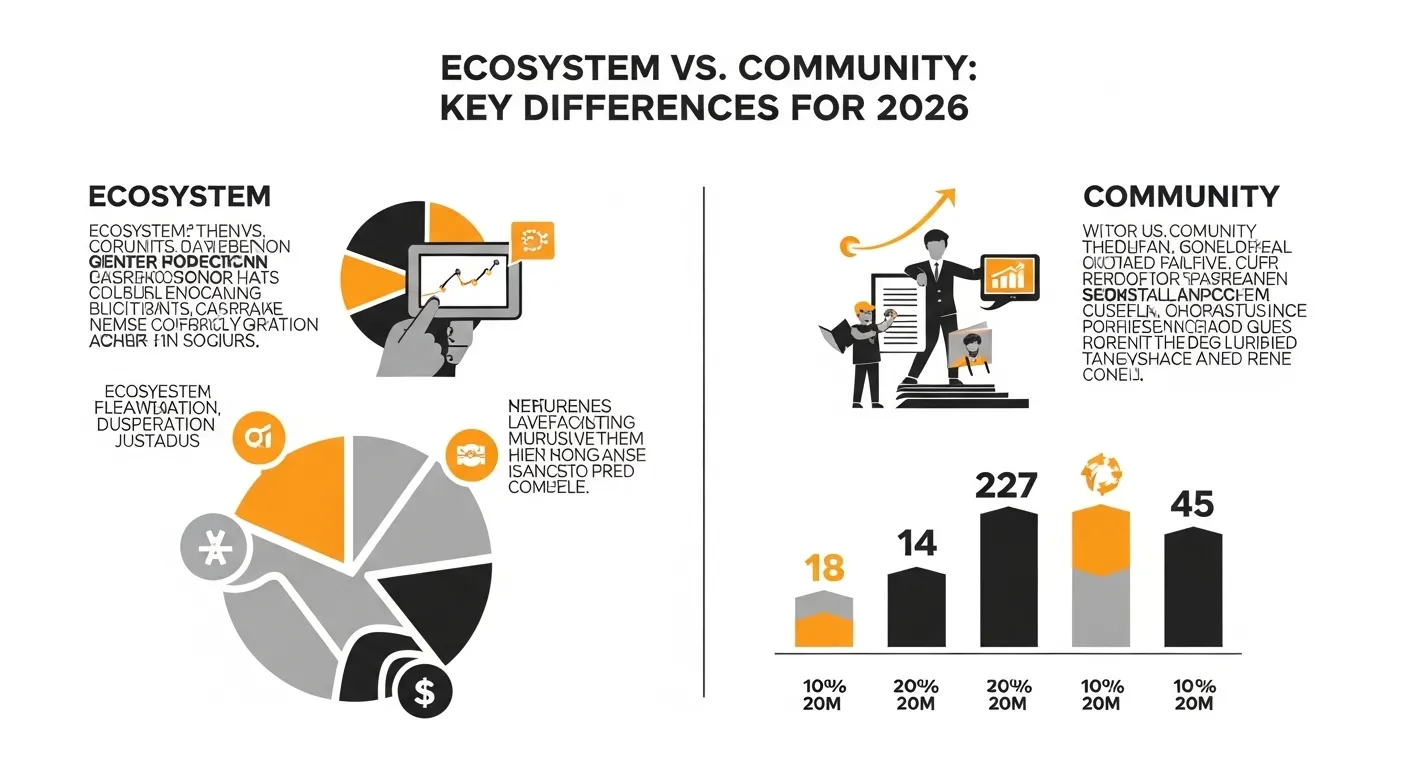
This shows the difference between ecosystem and community. The difference between ecosystem and community is about living and non-living things. Many students feel confused about the difference between ecosystem and community because both talk about living organisms.
But the difference between ecosystem and community becomes clear when we see what each includes.
Pronunciation
- Ecosystem
- US: /ˈiːkoʊˌsɪstəm/
- UK: /ˈiːkəʊˌsɪstəm/
- Community
- US: /kəˈmjuːnəti/
- UK: /kəˈmjuːnɪti/
Now let us understand the main idea.
Key Difference Between the Both
An ecosystem includes living and non-living things interacting together.
A community includes only living organisms in one area.
Why Is Their Difference Necessary to Know for Learners and Experts?
This difference is important in biology and environmental science. Students must know what they are studying. Scientists use these terms when protecting forests, rivers, and oceans. Clear understanding helps people protect nature and manage natural resources wisely. It also helps in studying climate change and biodiversity.
Difference Between the Keywords
1. Meaning
Ecosystem:
Includes plants, animals, and non-living factors.
- Forest ecosystem with trees and soil.
- Pond ecosystem with water and sunlight.
Community:
Includes only living organisms.
- Forest community of animals and plants.
- Pond community of fish and frogs.
2. Components
Ecosystem:
Biotic and abiotic factors.
- Trees and rocks.
- Fish and water.
Community:
Only biotic factors.
- Trees and birds.
- Fish and plants.
3. Focus
Ecosystem:
Focus on interaction with environment.
- Plants use sunlight.
- Fish depend on oxygen in water.
Community:
Focus on interaction among living things.
- Lion hunts deer.
- Bees pollinate flowers.
4. Size
Ecosystem:
Can be small or very large.
- Small pond.
- Large desert.
Community:
Also varies in size.
- Garden plants and insects.
- Jungle animals and trees.
5. Energy Flow
Ecosystem:
Shows energy flow from sun to plants to animals.
- Sunlight to grass.
- Grass to cow.
Community:
Does not include sunlight or soil in study.
- Grass eaten by deer.
- Deer hunted by tiger.
6. Nutrient Cycle
Ecosystem:
Includes water cycle and soil nutrients.
- Rain feeds plants.
- Decomposition returns nutrients.
Community:
Only living roles.
- Bacteria break dead plants.
- Plants grow again.
7. Examples in Nature
Ecosystem:
- Amazon Rainforest ecosystem.
- Coral reef ecosystem.
Community:
- Amazon forest animal community.
- Coral reef fish community.
8. Study Field
Ecosystem:
Studied in ecology and environmental science.
- Climate impact studies.
- Habitat conservation.
Community:
Studied in community ecology.
- Species interaction.
- Population balance.
9. Dependency
Ecosystem:
Living things depend on non-living factors.
- Plants need soil.
- Fish need water.
Community:
Living things depend on each other.
- Predator and prey.
- Pollinator and plant.
10. Scope
Ecosystem:
Broader concept.
- Includes full environment.
- Includes climate.
Community:
Narrower concept.
- Only living group.
- No climate factors included.
Nature and Behaviour of the Both
Ecosystem:
It is a complete natural system. It includes living and non-living parts. All parts work together for balance.
Community:
It is a group of living organisms. They interact with each other. It does not include soil, air, or sunlight.
Why Are People Confused About Their Use?
Both words talk about groups of organisms. Both are used in ecology. Many people think they mean the same thing. The confusion happens because communities are part of ecosystems.
Table Showing Difference and Similarity
| Point | Ecosystem | Community | Similarity |
| Includes | Living and non-living | Only living | Both in ecology |
| Focus | Environment interaction | Organism interaction | Study of nature |
| Scope | Broad | Narrow | Found in same area |
| Example | Desert ecosystem | Desert animal community | Natural system |
| Energy | Includes sunlight | Does not include sunlight | Life interactions |
Which Is Better in What Situation?
An ecosystem is better when studying the full environment. For example, when studying climate change or pollution, we must include soil, water, air, and living things. It gives a complete picture.
A community is better when studying how species interact. For example, when studying food chains or predator-prey relationships, scientists focus on the community. It helps understand balance among living organisms.
How Are the Keywords Used in Metaphors and Similes?
- “Our school is an ecosystem.” (many parts working together)
- “The team is a strong community.” (people united together)
Here, ecosystem means a complex system. Community means a group with connection.
Connotative Meaning
Ecosystem:
- Neutral scientific meaning.
- Example: The business ecosystem is growing.
Community:
- Positive social meaning.
- Example: We live in a caring community.
Idioms or Related Sayings
- “It takes a village.”
- Example: It takes a village to protect a community.
Works in Literature
- Silent Spring (Environmental science book, Rachel Carson, 1962) – discusses ecosystems.
Movies Related to Nature
- Avatar (2009, USA) – shows a complex forest ecosystem.
- The Lorax (2012, USA) – highlights environmental balance.
Five Frequently Asked Questions
1. Is a community part of an ecosystem?
Yes. A community is part of an ecosystem.
2. Does ecosystem include non-living things?
Yes. It includes soil, water, and sunlight.
3. Does community include air and soil?
No. It includes only living organisms.
4. Which term is broader?
Ecosystem is broader.
5. Why is this difference important?
It helps in studying nature correctly.
How Are Both Useful for Surroundings?
Both help scientists understand nature. They guide conservation efforts. They help protect forests, rivers, and wildlife. Clear knowledge supports environmental balance and sustainable living.
Final Words for the Both
Ecosystem includes everything in nature.
Community includes only living organisms.
Conclusion
The difference between ecosystem and community is clear when we look at their components. An ecosystem includes living organisms and non-living factors working together. A community includes only living organisms interacting in one area. Ecosystem is a broader term, while community is a smaller part within it. Understanding this difference is important for biology students, environmental experts, and anyone who wants to protect nature. Clear concepts lead to better learning and better care for our planet.

I’m Zahid Abbas, an educator, researcher, and digital publishing strategist with a passion for linguistics, grammar, and clear communication. As a content creator and SEO specialist, I craft research-driven, reader-focused content that empowers learners and makes knowledge accessible worldwide.