A man once visited a doctor because of a small lump in his arm. The doctor ran some tests and explained that cancers can start in different body tissues.
Some cancers begin in soft tissues like muscles and bones. Others start in organs such as the lungs or skin. The doctor used two important words: sarcoma and carcinoma.
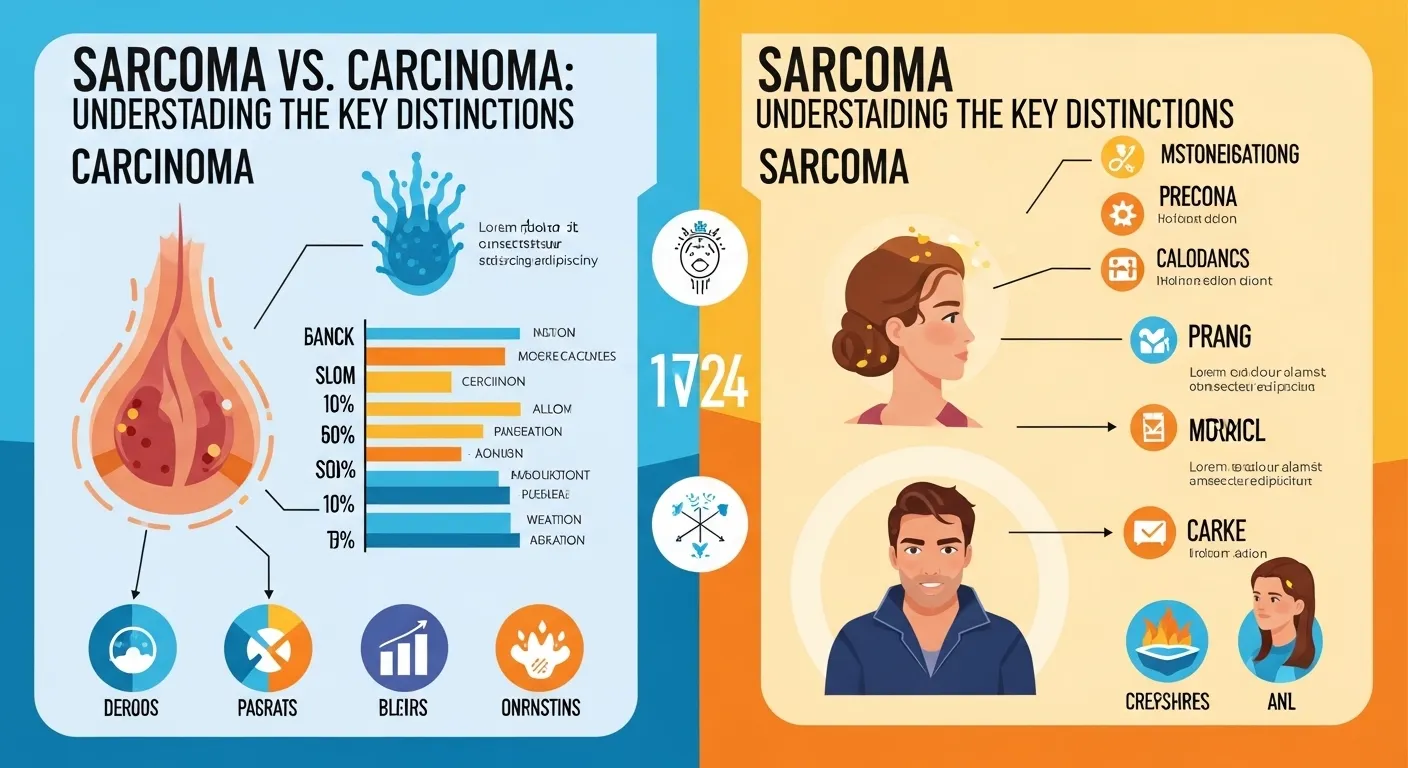
Understanding the difference between sarcoma and carcinoma helps people know how cancers begin and how doctors treat them. Sarcoma is a cancer that starts in connective tissues like bone, fat, or muscle. Carcinoma is a cancer that begins in epithelial tissues such as skin or organs.
The difference between sarcoma and carcinoma is important in medical science and public health. Doctors, students, and researchers must know this difference to diagnose disease correctly. Learning the difference between sarcoma and carcinoma also helps people understand how cancer behaves and spreads in the body.
Key Difference Between the Both
The main difference between sarcoma and carcinoma is the tissue where the cancer begins.
Sarcoma starts in connective tissues such as bones, muscles, or fat.
Carcinoma starts in epithelial tissues such as skin and the lining of organs.
Why Their Difference Is Necessary to Know for Learners and Experts
Knowing the difference between sarcoma and carcinoma helps medical students understand cancer classification. It helps doctors choose the correct treatment.
Researchers also study these cancers to develop new medicines. For society, this knowledge increases awareness about different types of cancer. When people understand the difference between sarcoma and carcinoma, they can recognize symptoms early and seek medical help quickly.
Pronunciation
Sarcoma
US: /sɑːrˈkoʊ.mə/
UK: /sɑːˈkəʊ.mə/
Carcinoma
US: /ˌkɑːr.sɪˈnoʊ.mə/
UK: /ˌkɑː.sɪˈnəʊ.mə/
Before exploring treatment and behavior, let us clearly examine the difference between sarcoma and carcinoma step by step.
Difference Between Sarcoma and Carcinoma
1. Tissue of Origin
Sarcoma begins in connective tissues.
Examples:
- Bone cancer (osteosarcoma)
- Muscle cancer (rhabdomyosarcoma)
Carcinoma begins in epithelial tissues.
Examples:
- Skin cancer
- Lung cancer
2. Body Location
Sarcoma usually appears in bones or soft tissues.
Examples:
- Tumor in the leg muscle
- Tumor in bone tissue
Carcinoma appears in organs and skin.
Examples:
- Cancer in the lungs
- Cancer in the breast
3. Frequency
Sarcoma is rare.
Examples:
- Only a small percentage of cancers are sarcomas
- Sarcomas are less common in adults
Carcinoma is very common.
Examples:
- Many cancers are carcinomas
- Most skin cancers are carcinomas
4. Age Group
Sarcoma often appears in children and young adults.
Examples:
- Bone sarcoma in teenagers
- Soft tissue sarcoma in young patients
Carcinoma usually appears in older adults.
Examples:
- Lung carcinoma in smokers
- Colon carcinoma in older people
5. Tissue Type
Sarcoma affects supportive tissues.
Examples:
- Fat tissue tumors
- Blood vessel tumors
Carcinoma affects protective tissues.
Examples:
- Skin cell cancer
- Organ lining cancer
6. Spread Pattern
Sarcoma spreads through blood vessels.
Examples:
- Spread to lungs
- Spread to distant bones
Carcinoma spreads through lymph nodes.
Examples:
- Spread to lymph nodes
- Spread to nearby organs
7. Diagnosis
Sarcoma diagnosis often uses imaging and biopsy.
Examples:
- MRI scans
- Tissue biopsy
Carcinoma diagnosis often uses screening tests.
Examples:
- Mammography for breast cancer
- Skin examination
8. Treatment
Sarcoma treatment may involve surgery and radiation.
Examples:
- Surgical removal of tumor
- Radiation therapy
Carcinoma treatment often includes surgery and chemotherapy.
Examples:
- Tumor removal surgery
- Drug therapy
9. Cell Structure
Sarcoma cells look like connective tissue cells.
Examples:
- Bone cell-like tumors
- Muscle cell-like tumors
Carcinoma cells resemble epithelial cells.
Examples:
- Skin cell tumors
- Organ lining tumors
10. Medical Classification
Sarcoma belongs to connective tissue cancers.
Examples:
- Osteosarcoma
- Liposarcoma
Carcinoma belongs to epithelial cancers.
Examples:
- Adenocarcinoma
- Squamous cell carcinoma
Nature and Behaviour of Both
Sarcoma
Sarcoma usually grows in deep tissues like muscles and bones. It may grow quietly at first. Because it is rare, diagnosis may take time.
Carcinoma
Carcinoma develops in skin or organ linings. It often spreads through lymph nodes. Many common cancers belong to this group.
Why People Are Confused About Their Use
Many people confuse sarcoma and carcinoma because both are types of cancer. Both involve abnormal cell growth. They may also share symptoms like lumps or pain.
However, the key difference lies in the tissue where the cancer begins.
Table Showing Difference and Similarity
| Feature | Sarcoma | Carcinoma | Similarity |
| Origin | Connective tissues | Epithelial tissues | Both are cancers |
| Frequency | Rare | Common | Both need medical treatment |
| Age Group | Often young patients | Often older adults | Both can affect anyone |
| Spread | Bloodstream | Lymph system | Both may spread |
| Treatment | Surgery and radiation | Surgery and chemotherapy | Both require medical care |
Which Is Better in What Situation?
Sarcoma is not “better” or “worse” than carcinoma. Both are serious diseases. However, sarcoma is rare, so it may require specialized doctors and treatment centers.
Carcinoma is more common and often has established screening programs. Early detection programs such as skin checks or breast screening can help detect carcinoma earlier.
How the Keywords Are Used in Metaphors and Similes
Sarcoma and carcinoma are sometimes used metaphorically to describe harmful problems.
Example:
“Corruption spread through the system like carcinoma in a body.”
Example:
“The conflict grew silently like a hidden sarcoma.”
Connotative Meaning
Sarcoma
Connotation: Negative (serious disease)
Example:
“The diagnosis of sarcoma worried the family.”
Carcinoma
Connotation: Negative (dangerous illness)
Example:
“Early detection of carcinoma can save lives.”
Idioms or Proverbs Related to the Idea
A stitch in time saves nine
Example:
“Early testing for carcinoma follows the idea that a stitch in time saves nine.”
Prevention is better than cure
Example:
“Regular health checks help prevent late diagnosis of sarcoma.”
Works in Literature Related to Cancer Themes
- The Emperor of All Maladies — Medical nonfiction, Siddhartha Mukherjee, 2010
- When Breath Becomes Air — Memoir, Paul Kalanithi, 2016
- The Cancer Journals — Memoir, Audre Lorde, 1980
Movies Related to Cancer Themes
- The Fault in Our Stars — 2014, USA
- 50/50 — 2011, USA
- My Sister’s Keeper — 2009, USA
Frequently Asked Questions
1. What is the main difference between sarcoma and carcinoma?
Sarcoma starts in connective tissues, while carcinoma begins in epithelial tissues.
2. Which type of cancer is more common?
Carcinoma is much more common than sarcoma.
3. Can sarcoma affect bones?
Yes. Many sarcomas start in bones or soft tissues.
4. Does carcinoma affect organs?
Yes. Carcinoma often develops in organs such as lungs, breast, or colon.
5. Can both cancers spread to other parts of the body?
Yes. Both sarcoma and carcinoma can spread if not treated early.
How Both Are Useful for Surroundings
Although sarcoma and carcinoma are diseases, studying them helps society. Medical research improves treatments and detection methods. Doctors learn more about how cells grow and spread.
Research on these cancers also leads to new medicines and better healthcare systems.
Final Words for Both
Sarcoma and carcinoma represent two major groups of cancer. They differ mainly in the tissues where they begin, but both require early diagnosis and treatment.
Conclusion
The difference between sarcoma and carcinoma mainly lies in their origin. Sarcoma develops in connective tissues such as bone, muscle, and fat, while carcinoma begins in epithelial tissues such as skin and organ linings.Understanding the difference between sarcoma and carcinoma is important for students, doctors, and the public. It helps improve diagnosis, treatment planning, and cancer awareness. Although both conditions are serious, modern medical research continues to improve survival rates and treatment methods. By learning the difference between sarcoma and carcinoma, people gain better knowledge about cancer and the importance of early medical care.

I’m Zahid Abbas, an educator, researcher, and digital publishing strategist with a passion for linguistics, grammar, and clear communication. As a content creator and SEO specialist, I craft research-driven, reader-focused content that empowers learners and makes knowledge accessible worldwide.