Winter weather can be beautiful, but it can also be confusing. You look outside and see frozen precipitation falling from the sky. Is it snow? Is it sleet? Many people use these words as if they mean the same thing, but they describe two very different types of winter weather. That is why understanding the difference between snow and sleet is important for travel, safety, clothing choices, and weather awareness.
Both snow and sleet happen in cold conditions, and both can cover roads, roofs, and trees. However, the real difference between snow and sleet lies in how each forms, how it looks, how it feels, and the dangers it can create. Snow falls as soft ice crystals, while sleet falls as small frozen pellets.
Knowing the difference between snow and sleet helps drivers prepare for slippery roads, helps families dress properly, and helps everyone understand weather forecasts more clearly. If you have ever wondered about the difference between snow and sleet, this complete guide explains it in simple language.
Key Difference Between Snow and Sleet
The main difference between snow and sleet is how the frozen precipitation forms.
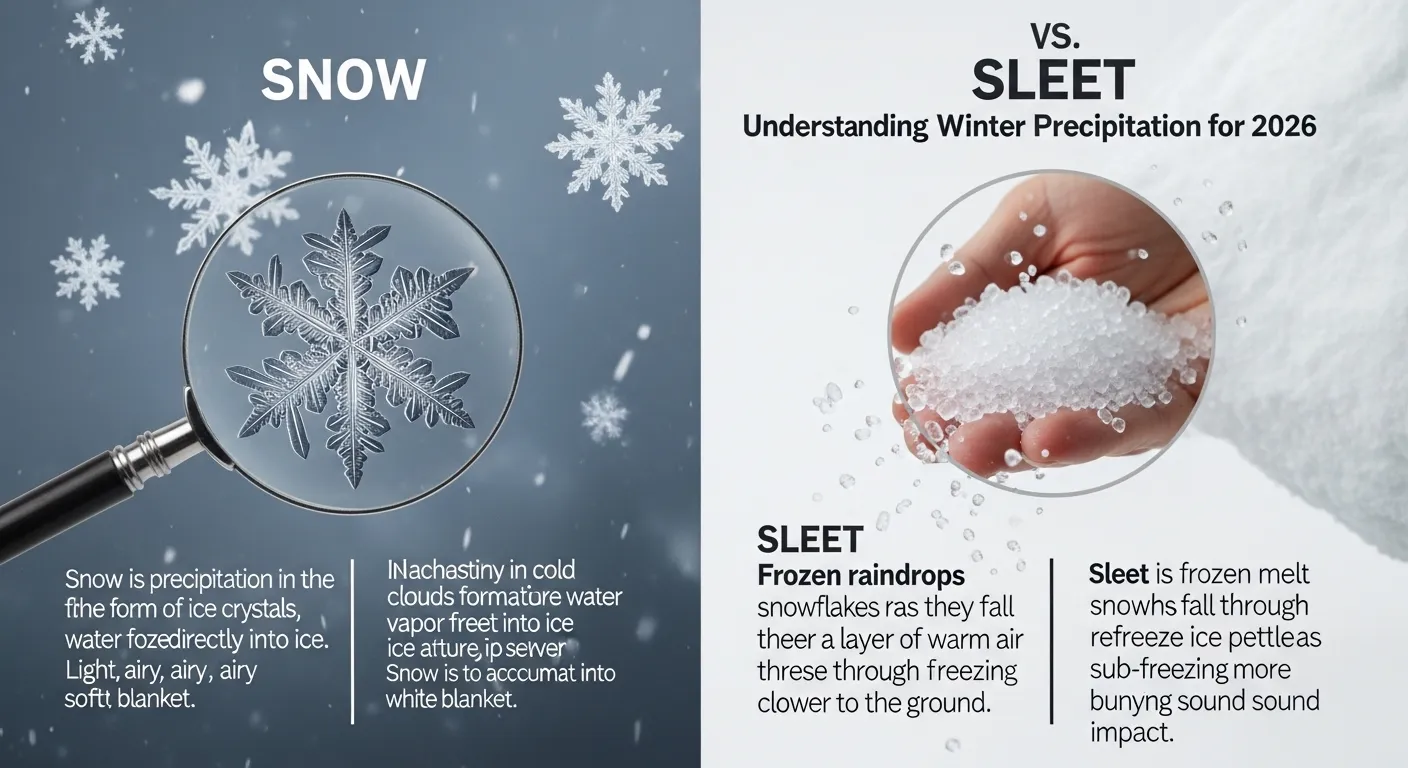
- Snow forms when water vapor freezes into ice crystals in clouds and stays frozen until it reaches the ground.
- Sleet forms when snow melts into rain in a warm layer of air, then refreezes into ice pellets before hitting the ground.
Simple Summary
- Snow = soft flakes
- Sleet = hard ice pellets
Why This Difference Matters
Knowing the difference between snow and sleet matters for many reasons.
For Drivers
Road conditions can become more dangerous during sleet.
For Families
It helps decide clothing and outdoor plans.
For Travelers
It improves understanding of weather warnings.
For Students
It teaches how temperature layers affect weather.
For Society
Better weather knowledge supports safety and preparedness.
Pronunciation of Both
Snow
- US: snoh
- UK: snoh
Sleet
- US: sleet
- UK: sleet
Now let us compare both forms of winter precipitation.
Difference Between Snow and Sleet
1. Meaning
Snow
Frozen water crystals that fall as flakes.
Examples:
- Light snowfall
- Heavy snowstorm
Sleet
Small frozen rain pellets.
Examples:
- Ice pellets bouncing on pavement
- Mixed winter storm precipitation
2. How They Form
Snow
Forms entirely in freezing air.
Sleet
Starts as snow, melts in warmer air, then refreezes before landing.
3. Shape
Snow
Usually falls as flakes with crystal patterns.
Sleet
Falls as small round pellets.
4. Texture
Snow
Soft, light, powdery, or fluffy.
Sleet
Hard, icy, and bouncy.
5. Sound
Snow
Usually quiet when it lands.
Sleet
Makes tapping sounds on windows, roofs, and cars.
6. Road Danger
Snow
Can make roads slippery, especially when packed.
Sleet
Often more dangerous because pellets can freeze quickly and create icy surfaces.
7. Visibility
Snow
Heavy snow can reduce visibility strongly.
Sleet
Usually less visibility impact than heavy snow, but still hazardous.
8. Build-Up on Ground
Snow
Accumulates in layers and can be shoveled.
Sleet
Creates crunchy icy buildup.
9. Best for Activities
Snow
Good for snowmen, skiing, sledding, and winter fun.
Sleet
Usually poor for outdoor play.
10. Forecast Meaning
Snow
Indicates colder steady freezing conditions.
Sleet
Often means changing temperatures in the atmosphere.
Nature and Behaviour of Both
Snow
Soft, quiet, scenic, fluffy, often accumulates deeply.
Sleet
Sharp, noisy, icy, compact, more hazardous for movement.
Why People Are Confused About Their Use
People confuse them because:
- Both fall in winter
- Both are frozen precipitation
- Both happen during storms
- Both make roads slippery
- Many people use winter weather terms loosely
Quick Comparison Table
| Feature | Snow | Sleet |
| Form | Ice crystals | Frozen pellets |
| Texture | Soft flakes | Hard pellets |
| Sound | Quiet | Tapping noise |
| Road Risk | Slippery | Often icier |
| Fun Use | Snow play | Usually none |
Which Is Better in What Situation?
Snow
Better for winter scenery, outdoor sports, and seasonal activities.
Sleet
Usually not preferred, but it may create less deep accumulation than heavy snow.
Important Safety Tips
During snow or sleet:
- Drive slowly
- Wear warm clothing
- Watch for black ice
- Keep emergency supplies in the car
- Check forecasts before travel
Frequently Asked Questions
Is sleet the same as snow?
No. Snow is flakes, sleet is ice pellets.
Which is more dangerous for roads?
Sleet is often more dangerous because it creates ice quickly.
Can snow turn into sleet?
Yes, if air temperature layers change.
Is sleet the same as hail?
No. Hail forms in thunderstorms, sleet forms in winter clouds.
Which is better for snowmen?
Snow.
Final Verdict
Snow is soft frozen flakes, while sleet is hard frozen pellets formed after partial melting and refreezing.
Conclusion
The true difference between snow and sleet lies in how they form and how they behave once they reach the ground. Snow falls as delicate ice crystals and often creates beautiful winter scenes. Sleet falls as hard pellets that bounce, tap surfaces, and can quickly make roads dangerous. Because both happen in cold weather, they are often confused. Understanding the difference between snow and sleet helps you read forecasts better, travel more safely, and prepare properly for winter conditions.

I’m Zahid Abbas, an educator, researcher, and digital publishing strategist with a passion for linguistics, grammar, and clear communication. As a content creator and SEO specialist, I craft research-driven, reader-focused content that empowers learners and makes knowledge accessible worldwide.