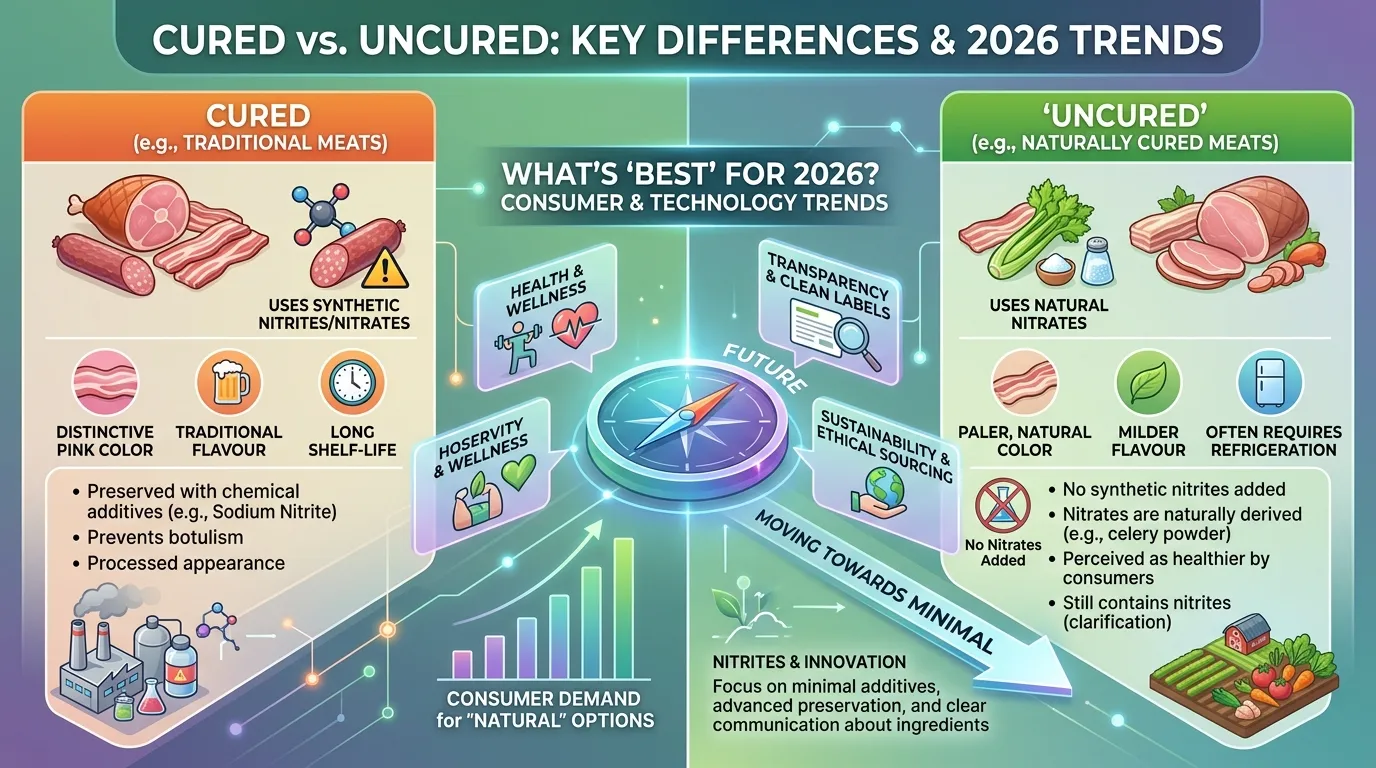
A man visits a grocery store to buy meat for sandwiches. He sees two labels on the packets: “cured” and “uncured.” He feels confused because both products look almost the same. Many shoppers ask about the difference between cured and uncured when buying bacon, ham, or sausages.
The difference between cured and uncured is mostly about the way food is preserved. Cured meat uses added chemicals like nitrates or salt to keep the food fresh longer. Uncured meat uses natural sources instead.
Learning the difference between cured and uncured helps people make better food choices for health, cooking, and daily life. It also helps English learners understand common food labels in stores and restaurants.
What is “Cured”?
Cured means food has been preserved with salt, nitrates, smoke, or other curing methods. This process helps food last longer.
History of Cured
People have cured meat for thousands of years. Before refrigerators existed, families needed ways to keep food fresh for a long time. They used salt, smoke, and drying methods to stop meat from spoiling. Ancient groups in Europe and Asia often cured fish and meat during winter or travel. Over time, curing became part of many food traditions. Farmers and cooks learned that curing also added flavor and color to meat. Today, cured foods are common around the world. Bacon, ham, and salami are popular examples of cured meats found in stores and restaurants.
What is “Uncured”?
Uncured means food is preserved without artificial nitrates or chemical curing agents. It often uses natural ingredients like celery powder.
History of Uncured
Uncured foods became more popular in modern times because many people wanted natural food choices. Food companies started using natural ingredients instead of synthetic chemicals for preserving meat. Although uncured meat still goes through preservation, the process uses natural nitrate sources like celery juice or sea salt. Health-conscious shoppers began choosing uncured products because they believed these foods were more natural. Today, many supermarkets sell uncured bacon, hot dogs, and deli meat. These products are often labeled as organic or natural foods for modern consumers.
Cured vs Uncured
Cured foods use traditional chemical or salt preservation, while uncured foods use natural preservation methods.
Now let us explore their differences in a simple and clear way.
How Cured Works
Cured food uses salt, smoke, or chemical preservatives to stop bacteria and improve shelf life.
Key Features
- Longer shelf life
- Strong flavor
- Often pink in color
- Uses nitrates or salt
- Common in processed meat
Example Sentences
🔵 The cured ham stayed fresh for weeks.
🔵 My father likes cured bacon for breakfast.
Uses
- Food storage
- Long travel meals
- Restaurant cooking
- Sandwich meat
- Processed food products
How Uncured Works
Uncured food uses natural ingredients to preserve freshness.
Key Features
- Uses natural preservatives
- Often less processed
- Mild flavor
- Shorter shelf life
- Popular in natural food markets
Example Sentences
🟢 She bought uncured turkey slices today.
🟢 The uncured bacon tasted fresh and light.
Uses
- Organic food diets
- Health-focused meals
- Natural cooking
- Fresh sandwiches
- Home kitchens
Which One Should You Use?
Choose cured food if you want longer storage and stronger flavor. Choose uncured food if you prefer natural ingredients and lighter processing.
10 Differences Between Cured and Uncured
1. Preservation Method
Cured: Cured foods use salt or chemical preservatives.
🔴 The cured meat stayed fresh longer.
🔴 Salt helped preserve the ham.
Uncured: Uncured foods use natural preservatives.
🔴 The uncured bacon used celery powder.
🔴 Natural ingredients preserved the meat.
2. Shelf Life
Cured: Cured food lasts longer.
🔴 The cured sausage stayed good for weeks.
🔴 Cured meat is easier to store.
Uncured: Uncured food spoils faster.
🔴 The uncured meat needed quick use.
🔴 Fresh uncured ham stayed in the fridge.
3. Flavor
Cured: Cured food has a stronger taste.
🔴 The cured bacon tasted smoky.
🔴 The ham had a rich flavor.
Uncured: Uncured food tastes lighter.
🔴 The uncured turkey tasted fresh.
🔴 Its flavor was more natural.
4. Color
Cured: Cured meat often looks pink.
🔴 The cured ham had bright color.
🔴 Bacon looked deep pink.
Uncured: Uncured meat may look pale.
🔴 The uncured meat looked softer in color.
🔴 The slices appeared more natural.
5. Chemicals
Cured: Cured food often uses artificial nitrates.
🔴 The package listed sodium nitrate.
🔴 Chemicals helped preserve the meat.
Uncured: Uncured food avoids artificial nitrates.
🔴 The label said “no added nitrates.”
🔴 Natural celery powder replaced chemicals.
6. Processing Style
Cured: Cured food is more processed.
🔴 The cured meat went through smoking.
🔴 Factories processed the bacon carefully.
Uncured: Uncured food is less processed.
🔴 The uncured meat stayed more natural.
🔴 The product used fewer additives.
7. Popularity
Cured: Cured foods are traditional and common.
🔴 Many families eat cured ham.
🔴 Restaurants often use cured bacon.
Uncured: Uncured foods are popular in health markets.
🔴 Organic stores sell uncured products.
🔴 Young shoppers often choose uncured meat.
8. Smell
Cured: Cured food may smell smoky or salty.
🔴 The bacon smelled smoky.
🔴 The cured sausage had a strong aroma.
Uncured: Uncured food smells fresher.
🔴 The uncured meat smelled mild.
🔴 Fresh turkey had a clean smell.
9. Storage
Cured: Cured products are easier to store longer.
🔴 The cured meat stayed safe during travel.
🔴 It lasted many days in storage.
Uncured: Uncured products need more care.
🔴 The uncured package stayed cold in the fridge.
🔴 It spoiled faster outside.
10. Health Choice
Cured: Some people avoid cured food because of chemicals.
🔴 He reduced cured meat in his diet.
🔴 The doctor suggested eating less processed food.
Uncured: Many people see uncured food as more natural.
🔴 She bought uncured meat for healthy meals.
🔴 Natural food lovers prefer uncured options.
Why People Get Confused About Their Use
People get confused because uncured meat is still preserved. The word “uncured” sounds like no preservation happened, but natural ingredients are still used. Also, cured and uncured meats can look and taste similar in stores.
Table: Difference and Similarity
| Feature | Cured | Uncured | Similarity |
| Preservation | Chemical or salt curing | Natural curing | Both preserve food |
| Shelf Life | Longer | Shorter | Both need storage |
| Flavor | Strong | Mild | Both are tasty |
| Color | Bright pink | Natural pale | Both are meat products |
| Processing | More processed | Less processed | Both sold in stores |
Which is Better in What Situation?
Cured food is better for long storage, travel, and strong flavor. It works well in restaurants and processed meals. Many people enjoy its smoky and rich taste.
Uncured food is better for people who want natural ingredients and lighter processing. It is popular in healthy diets and fresh home cooking. Many shoppers choose it for organic meals.
How Are “Cured” and “Uncured” Used in Metaphors and Similes?
🟣 “Time cured his sadness” means time helped healing.
🟣 “Her mind felt uncured” means she still had emotional pain.
🟣 “The problem was cured like old wood” means the problem became stable over time.
🟣 “His anger stayed uncured” means his anger never healed.
Connotative Meaning
Cured
🟣 Positive: “The cured meat tasted rich and smoky.”
🟣 Neutral: “The food was cured with salt.”
🟣 Negative: “Some people dislike chemical curing.”
Uncured
🟣 Positive: “Uncured meat feels more natural.”
🟣 Neutral: “The package said uncured bacon.”
🟣 Negative: “Uncured products spoil faster.”
Idioms or Proverbs
🟣 “Time heals all wounds.”
Meaning: Problems improve with time.
Example: After the loss, time healed all wounds.
🟣 “Better safe than sorry.”
Meaning: It is smarter to stay careful.
Example: She kept the uncured meat cold because better safe than sorry.
Works in Literature
🟣 The Jungle — Upton Sinclair, 1906
🟣 Fast Food Nation — Eric Schlosser, 2001
Movies Related to the Keywords
🟣 Food, Inc. — 2008, United States
🟣 Super Size Me — 2004, United States
Frequently Asked Questions
1. What is the main difference between cured and uncured?
Cured food uses traditional preservatives, while uncured food uses natural preservation methods.
2. Is uncured meat completely free from preservatives?
No. It still uses natural preservatives.
3. Which lasts longer?
Cured food usually lasts longer.
4. Is uncured meat healthier?
Some people believe uncured meat is more natural and healthier.
5. Does cured meat taste stronger?
Yes. Cured meat often has a richer and smokier flavor.
Final Words
Cured and uncured foods both help people enjoy preserved meat in different ways. One focuses on strong flavor and long storage, while the other focuses on natural ingredients and fresh taste.
Conclusion
The difference between cured and uncured is mainly about preservation methods, ingredients, and flavor. Cured foods use salt, smoke, or artificial preservatives, while uncured foods use natural methods instead. Both types are common in modern kitchens and grocery stores. Understanding the difference between cured and uncured helps beginners, students, and shoppers make smarter food choices with confidence.

I’m Zahid Abbas, an educator, researcher, and digital publishing strategist with a passion for linguistics, grammar, and clear communication. As a content creator and SEO specialist, I craft research-driven, reader-focused content that empowers learners and makes knowledge accessible worldwide.