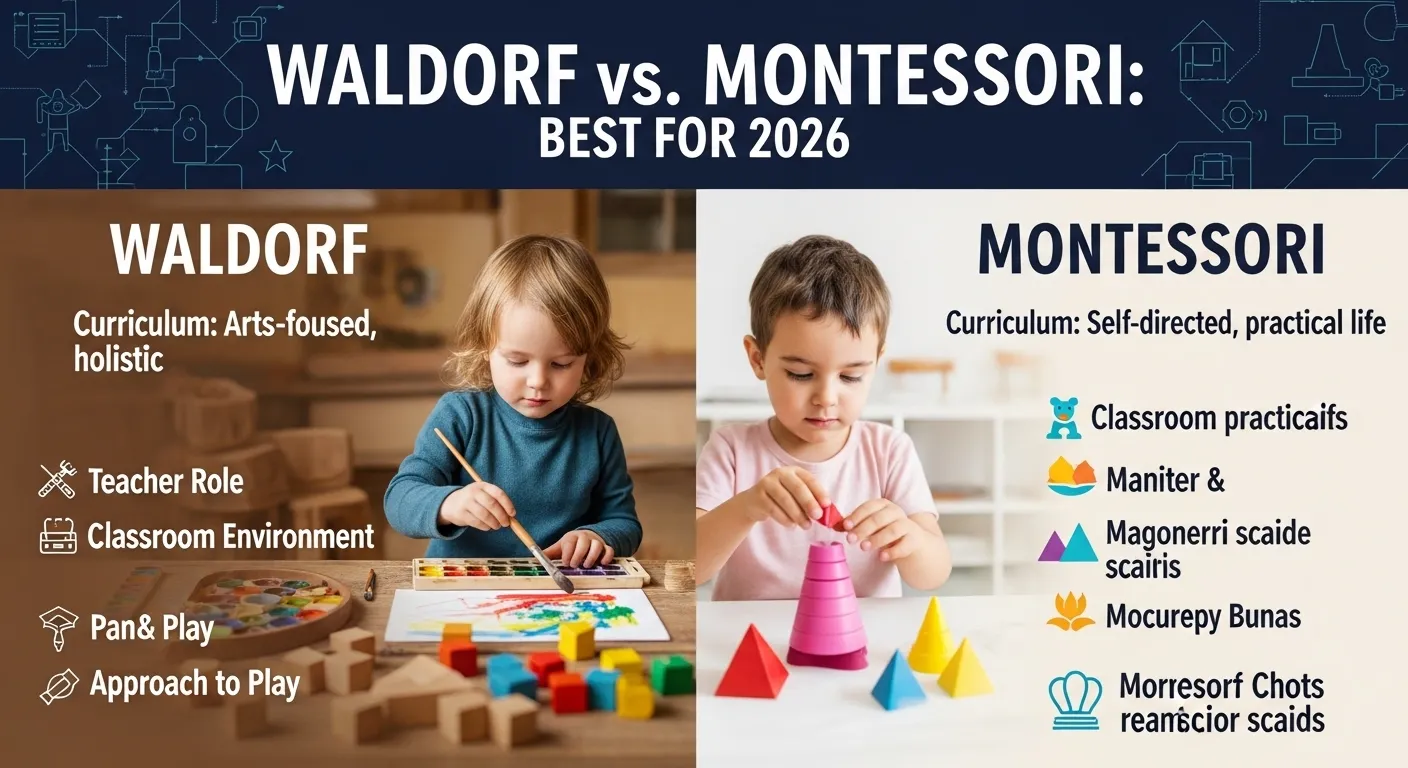
A mother in Berlin was choosing a school for her child. One school followed the Waldorf education method. Another followed the Montessori education system.
She wanted to know the difference between Waldorf and Montessori. Many parents ask about the difference between Waldorf and Montessori before school admission. The difference between Waldorf and Montessori is about teaching style, structure, and classroom tools.
Understanding the difference between Waldorf and Montessori helps families choose the right path for their child. Both are child-focused, but they are not the same.
Pronunciation
- Waldorf
- US: /ˈwɔːl.dɔːrf/
- UK: /ˈvɔːl.dɔːf/
- Montessori
- US: /ˌmɑːn.təˈsɔːr.i/
- UK: /ˌmɒn.təˈsɒr.i/
Now let us explore clearly.
Key Difference Between the Both
Waldorf focuses on imagination, art, and teacher guidance.
Montessori focuses on independence, practical skills, and self-learning.
The main difference is teaching style and classroom structure.
Why Is Their Difference Necessary to Know for Learners and Experts?
Parents need to match school style with child needs. Teachers must understand teaching philosophy. Education experts study both systems. In society, early learning shapes future skills. Clear knowledge supports better school choice and better child growth.
Difference Between Waldorf and Montessori
1. Founder
- Waldorf was started by Rudolf Steiner.
- Example 1: First school opened in 1919.
- Example 2: Focus on spiritual development.
- Montessori was started by Maria Montessori.
- Example 1: First school opened in 1907.
- Example 2: Focus on scientific observation.
2. Teaching Style
- Waldorf is teacher-led.
- Example 1: Storytelling lessons.
- Example 2: Group art activities.
- Montessori is child-led.
- Example 1: Child chooses task.
- Example 2: Independent work time.
3. Classroom Setup
- Waldorf uses natural toys and simple tools.
- Example 1: Wooden dolls.
- Example 2: Handcraft materials.
- Montessori uses special learning materials.
- Example 1: Counting beads.
- Example 2: Puzzle maps.
4. Imagination vs Practical Life
- Waldorf supports fantasy play.
- Example 1: Fairy tales.
- Example 2: Drama games.
- Montessori supports real-life tasks.
- Example 1: Cleaning table.
- Example 2: Pouring water practice.
5. Technology Use
- Waldorf limits technology early.
- Example 1: No screens in early grades.
- Example 2: Focus on books and art.
- Montessori may allow limited tools later.
- Example 1: Research project.
- Example 2: Controlled device use.
6. Structure
- Waldorf follows fixed daily rhythm.
- Example 1: Morning circle time.
- Example 2: Planned craft session.
- Montessori offers flexible schedule.
- Example 1: Work at own pace.
- Example 2: Mixed age classroom.
7. Academic Focus
- Waldorf delays formal academics.
- Example 1: Reading later age.
- Example 2: Learning through art.
- Montessori starts academics early.
- Example 1: Early math tools.
- Example 2: Early writing skills.
8. Role of Teacher
- Waldorf teacher guides whole class.
- Example 1: Same teacher for years.
- Example 2: Strong class bond.
- Montessori teacher observes and supports.
- Example 1: Silent guidance.
- Example 2: Individual attention.
9. Assessment
- Waldorf uses narrative reports.
- Example 1: Written feedback.
- Example 2: No early grades.
- Montessori uses observation records.
- Example 1: Skill checklist.
- Example 2: Progress tracking.
10. Learning Goal
- Waldorf develops creativity and emotion.
- Example 1: Music lessons.
- Example 2: Painting classes.
- Montessori develops independence and logic.
- Example 1: Problem solving tasks.
- Example 2: Self-directed projects.
Nature and Behaviour of Both
Waldorf education is creative and artistic.
Montessori education is practical and structured.
Both respect the child’s growth.
Why Are People Confused About Their Use?
Both are alternative schools. They avoid traditional strict systems. Both focus on child development. This makes people think they are the same.
Table Showing Difference and Similarity
| Feature | Waldorf | Montessori | Similarity |
| Founder | Rudolf Steiner | Maria Montessori | Early 1900s origin |
| Style | Teacher-led | Child-led | Child-focused |
| Tools | Natural toys | Special materials | Hands-on learning |
| Academics | Delayed start | Early start | Skill building |
| Goal | Creativity | Independence | Whole child growth |
Which Is Better in What Situation?
Waldorf is better for children who love stories, art, and imagination. It suits families who prefer slower academic start and less technology.
Montessori is better for children who enjoy independence and practical tasks. It suits families who want early academic skills and self-directed learning.
Both are strong systems when matched with child needs.
How Are the Keywords Used in Metaphors and Similes?
- “Her mind bloomed like a Waldorf classroom.”
- “He worked like a Montessori child, calm and focused.”
These phrases show creativity and independence.
Connotative Meaning
- Waldorf: Creative and warm.
- Example: “She had a Waldorf-style childhood.”
- Montessori: Independent and disciplined.
- Example: “He learned in a Montessori way.”
Both words carry positive meaning in education.
Works in Literature
- The Education of the Child – Philosophy, Rudolf Steiner, 1907
- The Montessori Method – Education, Maria Montessori, 1912
Movies Related to Montessori
- Maria Montessori: A Life for Children – 2007, Italy
- The Beginning of Life (features Montessori ideas) – 2016, Brazil
Five Frequently Asked Questions
1. Is Waldorf the same as Montessori?
No. Teaching style is different.
2. Which starts academics earlier?
Montessori usually starts earlier.
3. Do both use mixed ages?
Montessori commonly does. Waldorf less often.
4. Are both private schools?
Many are private, but some public options exist.
5. Which is more creative?
Waldorf focuses more on art and imagination.
How Are Both Useful for Surroundings?
Both systems create confident and skilled children. They promote respect, creativity, and independence. These values help society grow stronger.
Final Words for Both
Waldorf builds imagination.
Montessori builds independence.
Conclusion
The difference between Waldorf and Montessori lies in teaching style, classroom design, and learning goals. Waldorf focuses on creativity and teacher guidance. Montessori focuses on independence and self-learning. Both systems respect children and support growth. Parents should choose based on child personality and family values.

I’m Zahid Abbas, an educator, researcher, and digital publishing strategist with a passion for linguistics, grammar, and clear communication. As a content creator and SEO specialist, I craft research-driven, reader-focused content that empowers learners and makes knowledge accessible worldwide.