Sara had tooth pain while eating sweets. She went to a dentist. The dentist said she needed a filling. Her brother once had a broken tooth. His dentist gave him a crown. This shows the difference between filling and crown.
Many people feel confused about the difference between filling and crown. Both fix damaged teeth, but they are not the same. The difference between filling and crown depends on how serious the damage is.
When decay is small, a filling is used. When damage is large, a crown is better. Knowing the difference between filling and crown helps patients make wise dental choices.
Pronunciation
- Filling
- US: /ˈfɪl.ɪŋ/
- UK: /ˈfɪl.ɪŋ/
- Crown
- US: /kraʊn/
- UK: /kraʊn/
Now let us understand clearly.
Key Difference Between the Both
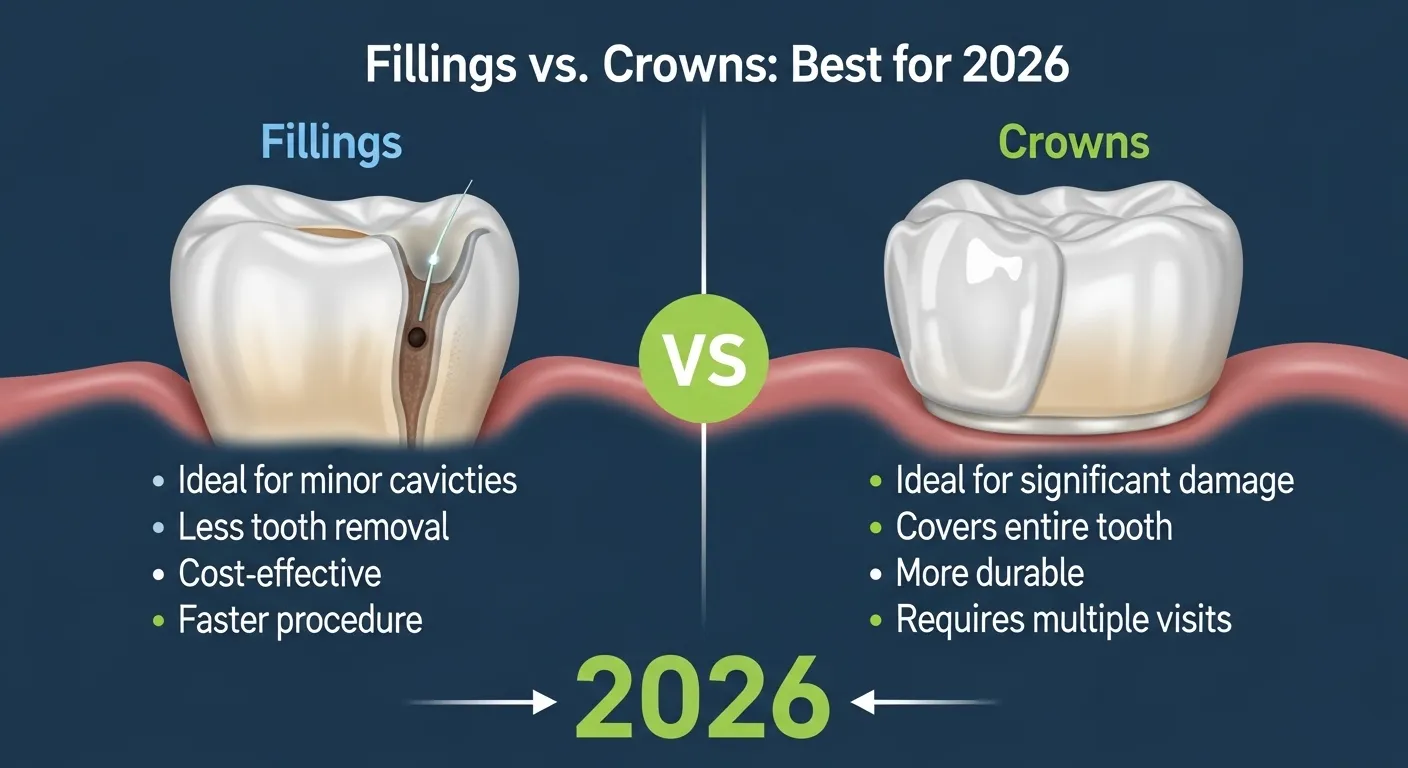
A filling repairs a small hole in a tooth.
A crown covers the whole tooth like a cap.
The main difference is the size of repair and coverage.
Why Is Their Difference Necessary to Know for Learners and Experts?
Patients need to understand treatment options. Students of dentistry must learn both methods. Dentists choose treatment based on tooth condition. In society, dental health affects speech, eating, and confidence. Clear knowledge prevents fear and wrong decisions.
Difference Between Filling and Crown
1. Amount of Damage
- Filling fixes small decay.
- Example 1: Small cavity from sugar.
- Example 2: Minor crack.
- Crown fixes large damage.
- Example 1: Broken tooth.
- Example 2: Large decay area.
2. Coverage
- Filling fills a part of tooth.
- Example 1: Hole on top surface.
- Example 2: Side cavity.
- Crown covers full tooth.
- Example 1: After root canal.
- Example 2: Weak tooth protection.
3. Material
- Filling uses composite or silver.
- Example 1: White resin filling.
- Example 2: Amalgam filling.
- Crown uses metal or porcelain.
- Example 1: Ceramic crown.
- Example 2: Gold crown.
4. Strength
- Filling is strong but smaller.
- Example 1: Normal chewing.
- Example 2: Light pressure.
- Crown is stronger overall.
- Example 1: Heavy chewing.
- Example 2: Back tooth support.
5. Procedure Time
- Filling often done in one visit.
- Example 1: 30-minute appointment.
- Example 2: Same-day treatment.
- Crown may need two visits.
- Example 1: Tooth shaping.
- Example 2: Lab-made crown fitting.
6. Cost
- Filling costs less.
- Example 1: Small cavity repair.
- Example 2: Basic treatment.
- Crown costs more.
- Example 1: Custom-made cap.
- Example 2: Long-term solution.
7. Appearance
- Filling blends with tooth color.
- Example 1: White composite.
- Example 2: Hidden repair.
- Crown looks like full new tooth.
- Example 1: Porcelain shine.
- Example 2: Cosmetic repair.
8. Tooth Removal
- Filling removes small part of tooth.
- Example 1: Cleaning cavity.
- Example 2: Minimal drilling.
- Crown removes more tooth structure.
- Example 1: Tooth shaping.
- Example 2: Outer layer trimming.
9. Durability
- Filling lasts several years.
- Example 1: 5–10 years use.
- Example 2: Normal care life.
- Crown lasts longer.
- Example 1: 10–15 years use.
- Example 2: Strong protection.
10. Purpose
- Filling restores small damage.
- Example 1: Early cavity.
- Example 2: Minor chip.
- Crown protects weak tooth.
- Example 1: After root canal.
- Example 2: Large fracture.
Nature and Behaviour of Both
A filling repairs a tooth quietly and simply.
A crown protects and strengthens the whole tooth.
Both aim to restore dental health.
Why Are People Confused About Their Use?
Both fix damaged teeth. Both are dental treatments. Many people think they are the same. The difference depends on how much damage exists.
Table Showing Difference and Similarity
| Feature | Filling | Crown | Similarity |
| Coverage | Part of tooth | Whole tooth | Repairs damage |
| Cost | Lower | Higher | Dental care |
| Strength | Moderate | High | Improve function |
| Time | One visit | Two visits | Done by dentist |
| Use | Small cavity | Large damage | Restore tooth |
Which Is Better in What Situation?
A filling is better for small cavities. It saves more natural tooth. Also it is quick and cheaper. It works well for early decay.
A crown is better for serious damage. It protects weak teeth. Also lasts longer. It is good after root canal or big fracture.
Both are useful in proper cases.
How Are the Keywords Used in Metaphors and Similes?
- “Her smile needed a filling of joy.”
- “He wore the crown of success.”
Filling can mean something that completes.
Crown can mean honor or top position.
Connotative Meaning
- Filling: Neutral.
- Example: “He got a dental filling.”
- Crown: Positive.
- Example: “She is the crown of the family.”
Idioms or Proverbs
- “Crown of glory.”
- Example: “His child is his crown of glory.”
- “Fit like a crown.”
- Example: “The new job fit him like a crown.”
Five Frequently Asked Questions
1. Is a crown better than a filling?
It depends on tooth damage.
2. Does a filling hurt?
Dentists use anesthesia to reduce pain.
3. How long does a crown last?
Often 10–15 years with care.
4. Can a filling turn into a crown later?
Yes, if damage grows.
5. Which is cheaper?
A filling usually costs less.
How Are Both Useful for Surroundings?
They help people eat, speak, and smile. Healthy teeth improve confidence and social life. Dental care supports public health.
Final Words for Both
A filling repairs small damage.
A crown protects full tooth.
Conclusion
The difference between filling and crown depends on damage size and protection needed. A filling repairs small cavities. A crown covers and protects the whole tooth. Both treatments restore dental health. Understanding this difference helps patients choose wisely and maintain strong, healthy smiles.

I’m Zahid Abbas, an educator, researcher, and digital publishing strategist with a passion for linguistics, grammar, and clear communication. As a content creator and SEO specialist, I craft research-driven, reader-focused content that empowers learners and makes knowledge accessible worldwide.