A student writing an essay at Harvard University paused at one sentence: “How will this change affect me?” or “How will this change effect me?” Many learners face this problem.
The difference between affect and effect is one of the most common English mistakes. The difference between affect and effect is about grammar and meaning. When you learn the difference between affect and effect, your writing becomes clearer.
The difference between affect and effect helps in school, work, and daily communication.
Key Difference Between the Both
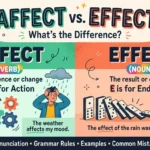
Affect is usually a verb meaning to influence or change something.
Effect is usually a noun meaning a result or outcome.
The main difference is action vs result.
Why Is Their Difference Necessary to Know for Learners and Experts?
Students need correct grammar for exams. Writers need clear language. Professionals need accurate reports and emails. In society, good language prevents confusion.
Pronunciation
Affect
- US: /əˈfekt/
- UK: /əˈfekt/
Effect
- US: /ɪˈfekt/
- UK: /ɪˈfekt/
Now let us explore more.
Difference Between Affect and Effect
1. Main Meaning
Affect means to influence.
- Example 1: Rain affects travel.
- Example 2: Stress affects sleep.
Effect means result.
- Example 1: Rain had an effect on travel.
- Example 2: Stress had an effect on sleep.
2. Part of Speech
Affect is usually a verb.
- Example 1: Prices affect buyers.
- Example 2: Noise affects focus.
Effect is usually a noun.
- Example 1: The effect was clear.
- Example 2: Side effects appeared.
3. Sentence Role
Affect shows action.
- Example 1: Heat affects metal.
- Example 2: News affects mood.
Effect names the outcome.
- Example 1: Heat had an effect on metal.
- Example 2: News had an effect on mood.
4. Common Use in School
Affect used in cause statements.
- Example 1: Pollution affects health.
- Example 2: Lack of sleep affects memory.
Effect used in result statements.
- Example 1: The effect of pollution is illness.
- Example 2: The effect of sleep loss is poor memory.
5. Medical Use
Affect may describe mood in psychology (special use).
- Example 1: Flat affect.
- Example 2: Emotional affect.
Effect used for treatment results.
- Example 1: Drug effect.
- Example 2: Side effect.
6. Business Use
Affect changes outcomes.
- Example 1: Costs affect profit.
- Example 2: Demand affects price.
Effect describes outcomes.
- Example 1: Profit effect.
- Example 2: Price effect.
7. Easy Memory Tip
Affect = Action.
- Example 1: A = Action.
- Example 2: Affect changes things.
Effect = End result.
- Example 1: E = End result.
- Example 2: Effect is outcome.
8. Less Common Verb Use
Affect is common verb.
- Example 1: Affect change.
- Example 2: Affect plans.
Effect can be a verb meaning bring about.
- Example 1: Effect change.
- Example 2: Effect reform.
9. Error Pattern
Affect wrongly used as noun by learners.
- Example 1: Wrong: bad affect.
- Example 2: Correct: bad effect.
Effect wrongly used as verb by learners.
- Example 1: Wrong: will effect me (usually).
- Example 2: Correct: will affect me.
10. Context Clue
Affect answers “What changes it?”
- Example 1: Weather affects crops.
- Example 2: Noise affects study.
Effect answers “What happened?”
- Example 1: The effect was damage.
- Example 2: The effect was delay.
Nature and Behaviour of Both
Affect is active and causes change.
Effect is passive and shows the result of change.
Why Are People Confused About Their Use?
They sound similar. Their spelling differs by one letter. They are linked in meaning, so many learners mix them up.
Table Showing Difference and Similarity
| Feature | Affect | Effect | Similarity |
| Main Use | Verb | Noun | Commonly confused |
| Meaning | Influence | Result | Related meanings |
| Memory Tip | Action | End result | English words |
| Sound | Similar | Similar | Same topic |
| Use in Writing | Cause | Outcome | Common in essays |
Which Is Better in What Situation?
Use affect when talking about change or influence. It is best when something acts on something else.
Use effect when talking about the result or outcome. It is best when describing what happened after change.
Use in Metaphors and Similes
These words are usually functional terms, not common metaphors.
- Example: “The news had a ripple effect.”
- Example: “Her words affected him deeply.”
Connotative Meaning
Affect – Neutral
- Example: “Weather affects crops.”
Effect – Neutral
- Example: “The effect was positive.”
Idioms and Proverbs
Effect
- “In effect”
- Example: “The rule is in effect today.”
- “Take effect”
- Example: “The medicine will take effect soon.”
Affect
- No common standalone idiom widely used.
Five Frequently Asked Questions
1. Is it affect me or effect me?
Usually affect me.
2. Is effect a noun?
Usually yes.
3. Is affect a verb?
Usually yes.
4. Can effect be a verb?
Yes, less commonly.
5. Why are they confusing?
They sound alike and have related meanings.
How Are Both Useful for Surroundings?
They help clear communication. Affect explains causes. Effect explains results. Both are useful in study, science, and business writing.
Final Words for Both
Affect means to influence.
Effect means the result.
Conclusion
The difference between affect and effect is simple once you know the rule. Affect is usually a verb meaning to influence. Effect is usually a noun meaning a result. Because they sound similar, many people confuse them. Understanding their difference improves grammar, writing, and confidence in English.

I’m Zahid Abbas, an educator, researcher, and digital publishing strategist with a passion for linguistics, grammar, and clear communication. As a content creator and SEO specialist, I craft research-driven, reader-focused content that empowers learners and makes knowledge accessible worldwide.