A teacher told her class, “This lesson was affective and also effective.” The students looked confused. The two words sounded almost the same. But they had different meanings. This is why many English learners want to know the difference between affective and effective.
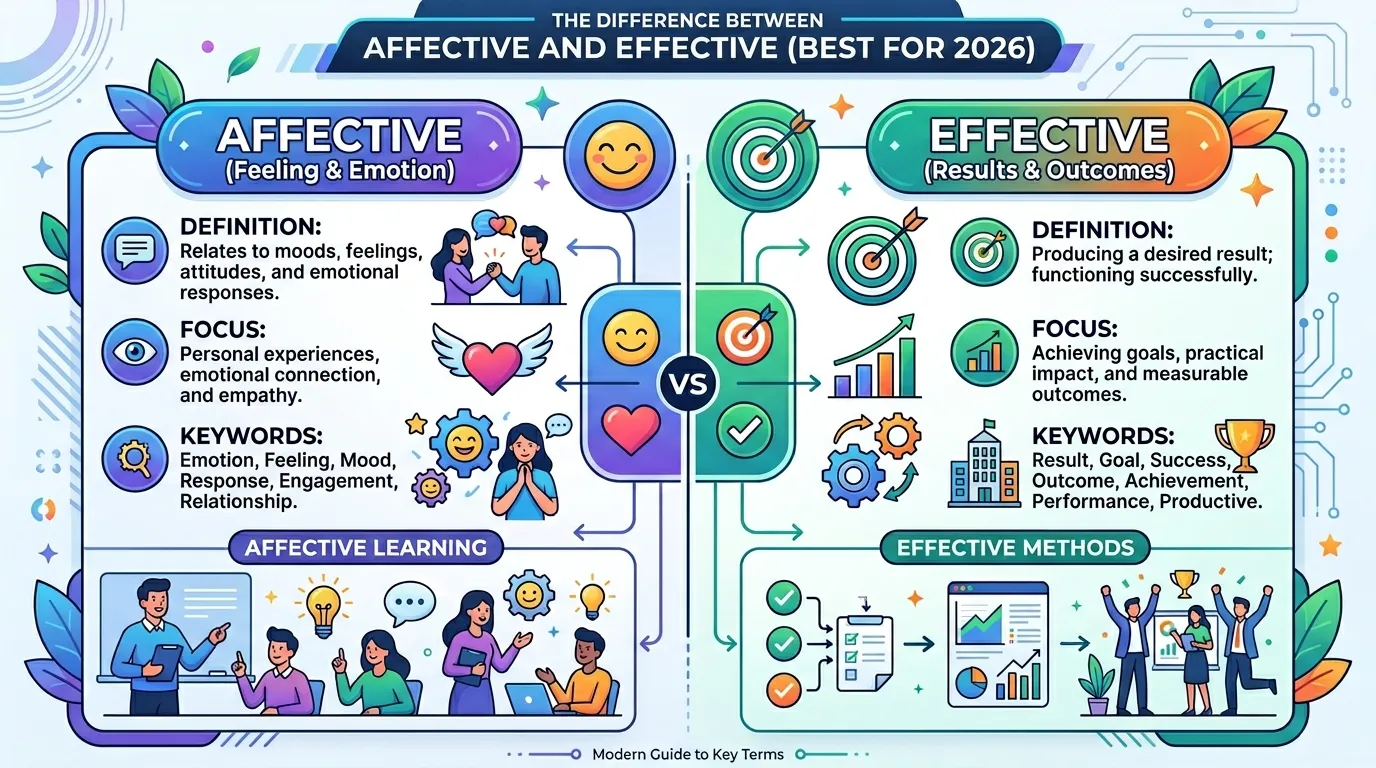
The difference between affective and effective is easy to learn. Affective is about feelings and emotions. Effective is about success and good results. The difference between affective and effective is useful in school, work, and daily English. These words are common in books, lessons, and conversations. When you understand them, your speaking and writing become clearer and stronger.
What is “Affective”?
Affective means connected to feelings or emotions.
History of Affective
The word “affective” comes from an old Latin word that means feeling or emotion. Teachers and psychologists started using this word many years ago. It became common in schools and mental health studies. People use it when they talk about emotions, moods, and human behavior. Today, affective is still important in education and psychology. It helps people explain emotional reactions and feelings.
What is “Effective”?
Effective means something works well and gives good results.
History of Effective
The word “effective” also comes from Latin. It became popular in English many years ago. People used it for actions, plans, and tools that worked well. Over time, the word became common in business, school, health care, and daily life. Today, people often use effective when talking about success, good performance, and useful ideas.
Affective vs Effective
Affective is about feelings. Effective is about results.
Now let us look at both words in a simple way.
How Affective Works
Affective language and actions connect with emotions.
Key Features
- Related to feelings
- Connected to emotions
- Common in psychology
- Used in education
- Talks about moods
Example Sentences
🔵 The movie had an affective impact on me.
🔵 Her music created an affective response.
Uses
- Psychology
- Emotional learning
- Counseling
- Human behavior
- School studies
How Effective Works
Effective actions help people reach goals.
Key Features
- Gives good results
- Works well
- Common in daily English
- Shows success
- Used in business and school
Example Sentences
🟢 This medicine is very effective.
🟢 Her study plan was effective.
Uses
- School
- Work
- Business
- Health care
- Daily communication
Which One Should You Use?
Use affective when talking about feelings. Use effective when talking about success or results.
10 Differences Between Affective and Effective
1. Meaning
Affective: Affective relates to emotions.
🔴 The song had an affective power.
🔴 Her words created strong feelings.
Effective: Effective means successful.
🔴 The new rule was effective.
🔴 His plan worked well.
2. Focus
Affective: Focuses on feelings.
🔴 The lesson touched students emotionally.
🔴 Her face showed sadness.
Effective: Focuses on results.
🔴 The tool solved the problem.
🔴 The teacher used an effective method.
3. Common Use
Affective: Used in psychology and education.
🔴 The class studied affective learning.
🔴 The doctor discussed emotions.
Effective: Used in daily life and business.
🔴 Effective teamwork improved sales.
🔴 The medicine worked fast.
4. Human Connection
Affective: Connected to emotions.
🔴 Children need affective care.
🔴 Music affects feelings deeply.
Effective: Connected to performance.
🔴 Effective workers finish tasks quickly.
🔴 The coach gave effective advice.
5. Tone
Affective: Sounds emotional.
🔴 Her speech was affective.
🔴 The story touched hearts.
Effective: Sounds practical.
🔴 The machine was effective.
🔴 His plan saved time.
6. Daily Speech
Affective: Less common in normal talk.
🔴 Teachers use affective studies.
🔴 Researchers study emotions.
Effective: Very common in speech.
🔴 This cream is effective.
🔴 Her teaching style is effective.
7. Related Idea
Affective: Related to emotion and care.
🔴 Her affective nature made her kind.
🔴 The child showed emotions openly.
Effective: Related to success and action.
🔴 Effective habits improve life.
🔴 The system worked perfectly.
8. Learning Style
Affective: Emotional learning.
🔴 Students shared feelings in class.
🔴 The lesson improved confidence.
Effective: Successful learning methods.
🔴 Good notes improved grades.
🔴 Practice made learning easier.
9. Field
Affective: Common in mental health.
🔴 Therapists study affective behavior.
🔴 Emotional support helps people.
Effective: Common in work and business.
🔴 Effective leaders guide teams.
🔴 Effective ads attract buyers.
10. Goal
Affective: Builds emotional connection.
🔴 Her speech touched the crowd.
🔴 The music changed moods.
Effective: Achieves results.
🔴 The plan reached its goal.
🔴 The lesson improved scores.
Why People Get Confused About Their Use
People confuse these words because they look and sound alike. Both also come from similar word roots. A simple trick can help:
- Affective = emotions
- Effective = results
Table: Difference and Similarity
| Feature | Affective | Effective | Similarity |
| Meaning | About feelings | About results | Both are adjectives |
| Focus | Emotions | Success | Both describe something |
| Common Use | Psychology | Daily life | Both used in education |
| Tone | Emotional | Practical | Both common in writing |
| Main Idea | Feelings | Performance | Both important in English |
Which is Better in What Situation?
Affective is better when talking about emotions, moods, and feelings. Teachers and counselors often use this word in emotional learning and mental health discussions.
Effective is better when talking about success and results. People use it in work, school, and daily life because it explains what works well.
How Are “Affective” and “Effective” Used in Metaphors and Similes?
🟣 “Her words were soft like affective music.”
🟣 “His plan worked like an effective machine.”
🟣 “The story hit me with affective force.”
🟣 “The medicine worked like magic because it was effective.”
Connotative Meaning
Affective
🟣 Positive: “Affective teaching helps students feel cared for.”
🟣 Neutral: “The class studied affective behavior.”
🟣 Negative: “Too much affective stress can hurt health.”
Effective
🟣 Positive: “Effective leadership improves teamwork.”
🟣 Neutral: “The system is effective.”
🟣 Negative: “The strict rule was effective but harsh.”
Idioms or Proverbs
🟣 “Actions speak louder than words.”
Meaning: Results matter more than talk.
Example: His effective work impressed everyone.
🟣 “Wear your heart on your sleeve.”
Meaning: Show emotions openly.
Example: Her affective nature made her caring.
Works in Literature
🟣 Emotional Intelligence — Daniel Goleman, 1995
🟣 How to Win Friends and Influence People — Dale Carnegie, 1936
Movies Related to the Keywords
🟣 Inside Out — 2015, United States
🟣 The Pursuit of Happyness — 2006, United States
Frequently Asked Questions
1. What is the main difference between affective and effective?
Affective is about feelings. Effective is about results.
2. Is affective related to emotions?
Yes. Affective means connected to feelings and moods.
3. Does effective mean useful?
Yes. Effective means something works well.
4. Which word is more common in daily English?
Effective is more common in normal speech.
5. Can both words be used in education?
Yes. Teachers use both words often.
Final Words
Affective and effective may sound alike, but they are different. One talks about emotions. The other talks about success. Learning both words can make your English better and clearer.
Conclusion
The difference between affective and effective is simple. Affective relates to feelings and emotions. Effective relates to success and good results. Both words are important in school, work, and daily English. Understanding the difference between affective and effective helps learners avoid mistakes and communicate with confidence.

I’m Zahid Abbas, an educator, researcher, and digital publishing strategist with a passion for linguistics, grammar, and clear communication. As a content creator and SEO specialist, I craft research-driven, reader-focused content that empowers learners and makes knowledge accessible worldwide.