A young doctor finished medical school and started working at a hospital. Patients often asked, “Are you the doctor?” Sometimes he answered, “I’m the resident.” Later in his career he proudly said, “Now I’m a fellow.” This situation shows the common question about the difference between resident and fellow.
In medical education, many people try to understand the difference between resident and fellow because both are doctors in training. However, their level of expertise and responsibilities are not the same.
Learning the difference between resident and fellow helps students, patients, and healthcare workers understand the medical career path.
Key Difference Between the Both
The main difference between resident and fellow is simple:
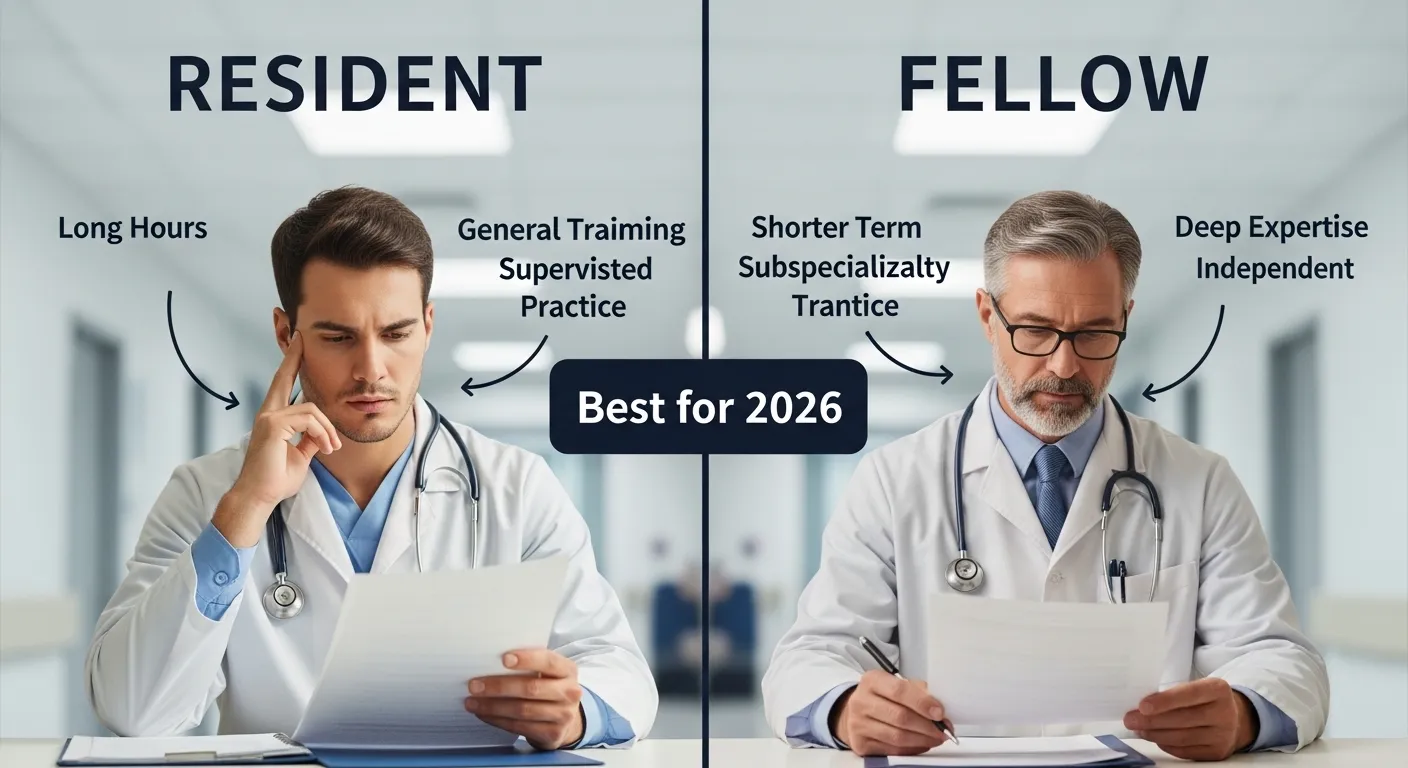
- A resident is a doctor receiving general specialty training after medical school.
- A fellow is a doctor receiving advanced subspecialty training after residency.
Why Is Their Difference Important for Learners and Experts?
Knowing the difference between resident and fellow helps medical students understand their future career path. Patients also feel more confident when they know the level of training of their doctors. In hospitals, this knowledge helps organize teaching, supervision, and patient care effectively.
Pronunciation
WordUS PronunciationUK PronunciationResident/ˈrezɪdənt//ˈrezɪdənt/Fellow/ˈfeloʊ//ˈfeləʊ/
Difference Between Resident and Fellow
1. Stage of Training
Resident: A resident is in the first stage of medical training after graduation.
Examples:
- A new doctor begins residency in internal medicine.
- Residents learn basic clinical skills.
Fellow: A fellow is in advanced training after completing residency.
Examples:
- A cardiology fellow studies heart diseases.
- Fellows focus on a narrow specialty.
2. Level of Experience
Resident: Residents have limited clinical experience.
Examples:
- A first-year resident learns hospital procedures.
- Residents often consult senior doctors.
Fellow: Fellows have more experience.
Examples:
- Fellows handle complex medical cases.
- They guide junior residents.
3. Training Focus
Resident: Residency focuses on broad specialty training.
Examples:
- Internal medicine residency covers many diseases.
- Surgical residency teaches different procedures.
Fellow: Fellowship focuses on a subspecialty.
Examples:
- A cardiology fellowship focuses only on heart diseases.
- Oncology fellowship focuses on cancer care.
4. Responsibility
Resident: Residents work under close supervision.
Examples:
- Attending physicians review their decisions.
- Residents consult senior doctors often.
Fellow: Fellows have greater responsibility.
Examples:
- Fellows supervise residents.
- Fellows assist in complex procedures.
5. Training Duration
Resident: Residency usually lasts 3–7 years depending on the specialty.
Examples:
- Internal medicine residency lasts about 3 years.
- Neurosurgery residency may last 7 years.
Fellow: Fellowship usually lasts 1–3 years.
Examples:
- Cardiology fellowship may last 3 years.
- Gastroenterology fellowship lasts about 2–3 years.
6. Learning Objective
Resident: The goal is to become a specialist.
Examples:
- A resident trains to become a pediatrician.
- Another trains to become a surgeon.
Fellow: The goal is to become a subspecialist.
Examples:
- A cardiology fellow becomes a heart specialist.
- A neurology fellow focuses on brain disorders.
7. Supervision
Resident: Residents are supervised by attending physicians and fellows.
Examples:
- Senior doctors review their diagnoses.
- Residents discuss treatment plans.
Fellow: Fellows work closely with attending physicians.
Examples:
- Fellows lead research or procedures.
- They supervise residents during rounds.
8. Research Role
Resident: Research is often limited.
Examples:
- Residents complete small research projects.
- They present case reports.
Fellow: Fellows often conduct deeper research.
Examples:
- Fellows publish medical studies.
- They participate in advanced clinical trials.
9. Salary
Resident: Residents receive a modest training salary.
Examples:
- Hospitals pay residents a stipend.
- Salary increases with each training year.
Fellow: Fellows usually earn slightly higher pay.
Examples:
- Fellowship salaries are higher than residency pay.
- Specialized training may increase future income.
10. Career Position
Resident: Residents are still general trainees.
Examples:
- A resident works under supervision.
- They are still learning their specialty.
Fellow: Fellows are near the end of training.
Examples:
- A fellow is close to becoming a specialist expert.
- They may soon become attending physicians.
Nature and Behaviour of Resident and Fellow
A resident focuses on learning the fundamentals of a medical specialty. Their work includes patient care, medical rounds, and supervised procedures.
A fellow focuses on mastering a subspecialty. Their work includes complex procedures, research, and mentoring younger doctors.
Why People Confuse Resident and Fellow
People often confuse these roles because both residents and fellows are doctors working in hospitals. They both wear white coats and treat patients. However, their training levels and responsibilities differ.
Table Showing Difference and Similarity
FeatureResidentFellowTraining StageAfter medical schoolAfter residencyExperienceLess experiencedMore experiencedFocusGeneral specialtySubspecialtySupervisionClosely supervisedMore independentDuration3–7 years1–3 yearsSimilarityBoth are doctors in trainingBoth work in hospitals
Which Is Better in What Situation?
A resident is important when hospitals need doctors to learn and support general patient care. Residents handle routine medical tasks and help manage hospital wards.
A fellow is better when specialized knowledge is required. Fellows assist with complex cases and advanced procedures. Their expertise helps hospitals treat difficult medical conditions.
Resident and Fellow in Metaphors and Similes
Examples:
- “A resident is like a student learning the craft of medicine.”
- “A fellow is like an apprentice becoming a master specialist.”
These comparisons help explain the training stages in simple terms.
Connotative Meaning
Resident
Positive:
- “The resident is hardworking.”
Neutral:
- “The resident examined the patient.”
Negative:
- “The resident lacks experience.”
Fellow
Positive:
- “The fellow is highly skilled.”
Neutral:
- “The fellow presented research.”
Negative:
- Rarely negative in medical context.
Idioms Related to the Words
“Fellow traveler” – someone who shares beliefs or goals Example: He became a fellow traveler in the research project.
“Resident expert” – the person known for expertise Example: She is the resident expert in data analysis.
Works in Literature
- The House of God – medical novel by Samuel Shem (1978)
- When Breath Becomes Air – memoir by Paul Kalanithi (2016)
Movies Related to Medical Training
- Patch Adams – 1998, USA
- Doctor Strange – 2016, USA (medical training background)
Frequently Asked Questions
1. What comes first, resident or fellow? Residency comes first, followed by fellowship.
2. Is a fellow a doctor? Yes, a fellow is a licensed doctor with advanced training.
3. Can a doctor work without fellowship? Yes, many doctors practice after residency.
4. Do fellows supervise residents? Yes, fellows often guide and supervise residents.
5. How long does fellowship last? Usually one to three years.
How Resident and Fellow Help Our Surroundings
Residents and fellows support healthcare systems. They treat patients, assist senior doctors, and improve medical research. Their training ensures hospitals always have skilled doctors ready to serve society.
Final Words for Both
Residents build the foundation of medical expertise. Fellows refine that expertise into specialized knowledge.
Conclusion
Understanding the difference between resident and fellow helps clarify the stages of medical training. Residents are doctors learning their main specialty after medical school, while fellows pursue advanced subspecialty training after residency. Although both roles involve patient care and hospital work, fellows usually have more experience and responsibility. Recognizing the difference between resident and fellow helps patients, students, and healthcare professionals.

I’m Zahid Abbas, an educator, researcher, and digital publishing strategist with a passion for linguistics, grammar, and clear communication. As a content creator and SEO specialist, I craft research-driven, reader-focused content that empowers learners and makes knowledge accessible worldwide.