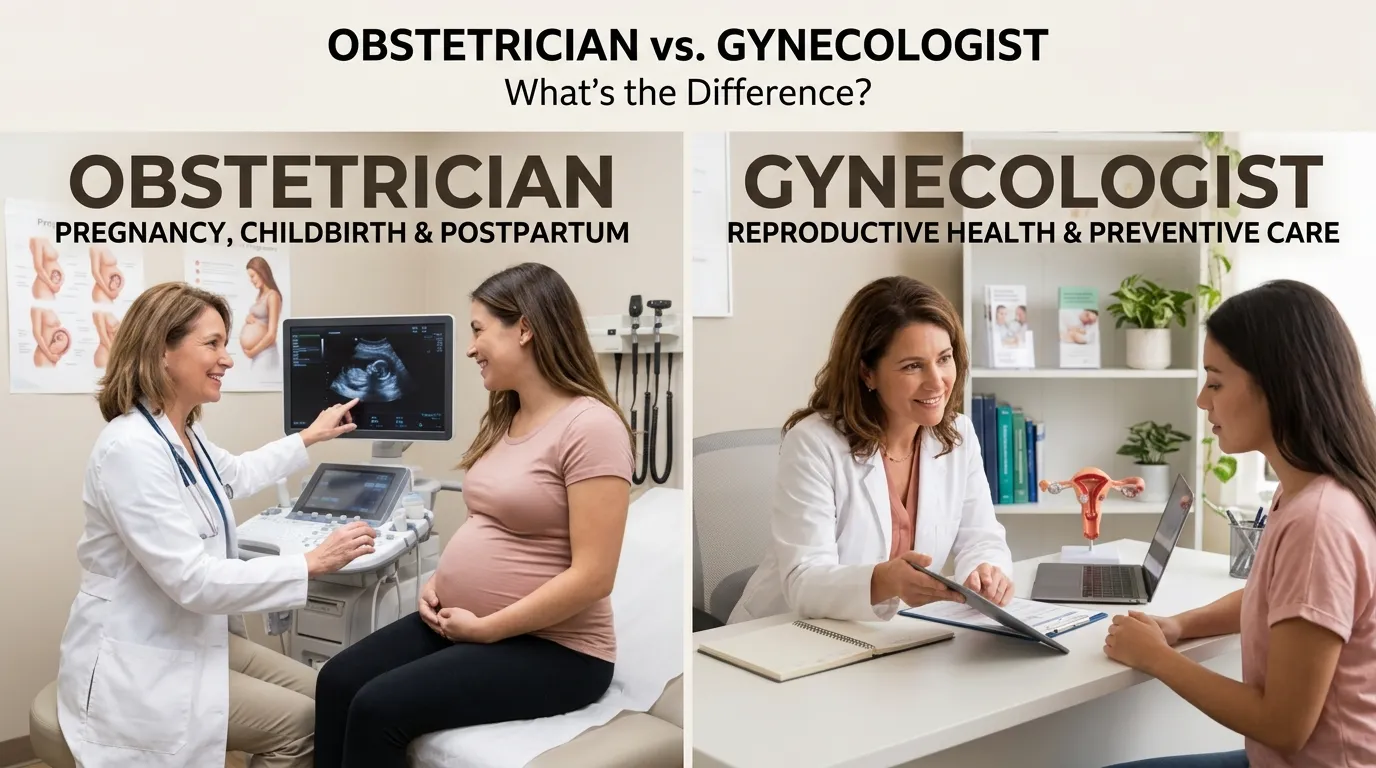
Sara is going to have a baby. She visits a doctor to learn how to care for herself and her baby. Her friend Ayesha also visits a doctor for a health check. Both women may see an obstetrician or a gynecologist. An obstetrician is a doctor who cares for women during pregnancy, childbirth, and soon after birth. A gynecologist is a doctor who cares for the health of the female reproductive system. The difference between obstetrician and gynecologist is important because each doctor has a main area of care. Some doctors train in both fields. The difference between obstetrician and gynecologist helps women choose the right doctor for their needs. Knowing the difference between obstetrician and gynecologist can also make health visits less confusing.
Key Difference Between the Two
- Obstetrician: Focuses on pregnancy, labor, birth, and care after birth.
- Gynecologist: Focuses on the health of the uterus, ovaries, vagina, and other parts of the female reproductive system.
Many doctors are trained in both fields. They are called OB-GYNs.
Why Is It Important to Know Their Difference?
Learners need to know these terms to understand health care. Parents can use this knowledge to help their daughters and family members. Health workers can guide patients to the right doctor. Women can also make better choices about their care. Knowing which doctor to see may help a patient get the right support at the right time.
Pronunciation of Obstetrician and Gynecologist
| Word | US pronunciation | UK pronunciation |
| Obstetrician | /ˌɑːb.stəˈtrɪʃ.ən/ | /ˌɒb.stəˈtrɪʃ.ən/ |
| Gynecologist | /ˌɡaɪ.nəˈkɑː.lə.dʒɪst/ | /ˌɡaɪ.nɪˈkɒl.ə.dʒɪst/ |
A Simple Link to the Main Topic
Both doctors help protect women’s health. Yet their main duties are not the same. Let us look at ten key differences with simple examples.
Difference Between Obstetrician and Gynecologist
1. Main Area of Care
An obstetrician mainly cares for women during pregnancy and birth. A gynecologist mainly cares for the female reproductive system.
Examples of an obstetrician:
- Dr. Khan checks Sara’s pregnancy.
- Dr. Ali helps a woman prepare for childbirth.
Examples of a gynecologist:
- Dr. Noor checks a woman with painful periods.
- Dr. Sana helps a patient who has a vaginal infection.
2. Pregnancy Care
An obstetrician gives care during pregnancy. A gynecologist may give routine reproductive health care, but pregnancy care is a key part of an obstetrician’s work.
Examples of an obstetrician:
- The doctor checks the baby’s growth.
- The doctor helps manage high blood pressure during pregnancy.
Examples of a gynecologist:
- The doctor gives advice about periods before pregnancy.
- The doctor checks a patient who has trouble with her reproductive health.
3. Childbirth
An obstetrician is trained to manage labor and birth. A gynecologist does not always provide childbirth care unless also trained in obstetrics.
Examples of an obstetrician:
- The doctor helps a woman during a normal birth.
- The doctor may perform a cesarean birth when needed.
Examples of a gynecologist:
- The doctor checks a woman’s reproductive health before she plans a baby.
- The doctor treats a condition that may affect her health before pregnancy.
4. Care After Birth
An obstetrician checks the mother’s health after childbirth. A gynecologist may help with longer-term reproductive health needs after this period.
Examples of an obstetrician:
- The doctor checks whether the mother is healing well.
- The doctor helps manage health problems soon after birth.
Examples of a gynecologist:
- The doctor helps a woman with ongoing period changes after pregnancy.
- The doctor checks a woman who has pelvic pain months after birth.
5. Menstrual Problems
A gynecologist often treats problems linked to periods. An obstetrician may also help when a period problem affects pregnancy or care around birth.
Examples of a gynecologist:
- The doctor helps a patient with very heavy periods.
- The doctor checks why a woman has severe period pain.
Examples of an obstetrician:
- The doctor reviews bleeding in a pregnant patient.
- The doctor checks a pregnant woman who has pain or bleeding.
Bleeding during pregnancy needs prompt medical advice.
6. Tests and Health Checks
Both doctors may order tests, but the tests depend on the patient’s needs.
Examples of an obstetrician:
- The doctor orders an ultrasound to check the baby’s growth.
- The doctor requests blood tests during pregnancy.
Examples of a gynecologist:
- The doctor may arrange a Pap test to check for changes in cervical cells.
- The doctor may order an ultrasound to check the uterus or ovaries.
7. Health Problems They Treat
An obstetrician treats health problems linked to pregnancy and birth. A gynecologist treats many problems of the reproductive system.
Examples of an obstetrician:
- The doctor manages diabetes during pregnancy.
- The doctor helps treat high blood pressure during pregnancy.
Examples of a gynecologist:
- The doctor treats endometriosis.
- The doctor checks ovarian cysts.
8. Fertility and Family Planning
A gynecologist can help with birth control and may check some causes of trouble getting pregnant. An obstetrician cares for women once they are pregnant. Some doctors in either field have extra training in fertility care.
Examples of a gynecologist:
- The doctor explains birth control choices.
- The doctor checks possible causes of trouble getting pregnant.
Examples of an obstetrician:
- The doctor checks a woman’s health after she becomes pregnant.
- The doctor helps plan safe care for a pregnancy with health risks.
9. Care During Emergencies
An obstetrician handles many emergencies linked to pregnancy and birth. A gynecologist treats urgent problems of the reproductive system.
Examples of an obstetrician:
- The doctor gives urgent care for heavy bleeding during birth.
- The doctor manages a serious problem during pregnancy.
Examples of a gynecologist:
- The doctor checks sudden pelvic pain.
- The doctor treats some cases of severe vaginal bleeding.
Sudden severe pain or heavy bleeding needs urgent medical care.
10. Training and Work Settings
Both doctors attend medical school and complete specialist training. Their training then focuses on women’s reproductive health, pregnancy, or both.
Examples of an obstetrician:
- The doctor works in a maternity unit.
- The doctor cares for patients in a labor ward.
Examples of a gynecologist:
- The doctor works in a women’s health clinic.
- The doctor treats patients in a hospital or private office.
Many specialists train in both areas and work in more than one setting.
The Nature and Work of an Obstetrician
An obstetrician focuses on pregnancy, labor, childbirth, and care soon after birth. The doctor checks the mother’s health and the baby’s growth. The doctor may help manage health risks during pregnancy.And the doctor also plans care for birth and responds to problems when they arise.
The main goal is to support a safe pregnancy and birth. The care plan may change based on the mother’s health and the baby’s needs.
The Nature and Work of a Gynecologist
A gynecologist focuses on the female reproductive system. This includes the uterus, ovaries, cervix, vagina, and related health needs. The doctor can help with period problems, infections, pelvic pain, birth control, and other conditions.
A gynecologist may also give routine health checks and help find signs of disease. Some gynecologists have extra training in areas such as fertility, cancer care, or surgery.
Why Do People Often Confuse an Obstetrician and a Gynecologist?
also read more abouthttps://comparificationn.com/difference-between-plum-and-prune-2/
People often confuse these doctors because both care for women’s health. Their work also overlaps. For example, a gynecologist may help a woman plan a pregnancy, while an obstetrician cares for her once she is pregnant.
Many doctors train in both fields. These doctors are called OB-GYNs. This shared training can make the terms seem the same. However, obstetrics focuses on pregnancy and birth, while gynecology focuses on the wider health of the female reproductive system.
Difference and Similarity Between Obstetrician and Gynecologist
| Point | Obstetrician | Gynecologist |
| Main focus | Pregnancy and childbirth | Female reproductive health |
| Pregnancy checks | Main part of the role | May provide care if trained and working in this area |
| Labor and birth | Trained to manage labor and birth | Only if also trained in obstetrics |
| Period problems | May help when linked to pregnancy | Common part of care |
| Birth control | May discuss options | Common part of care |
| Reproductive health | Focuses on pregnancy-related needs | Covers a wide range of reproductive health needs |
| Training | Specialist training in obstetrics | Specialist training in gynecology |
| Similarity | Both support women’s health | Both support women’s health |
Which Is Better in What Situation?
Neither doctor is better in every situation. The right choice depends on the patient’s needs. An obstetrician is the right choice for pregnancy checks, labor, birth, and health problems linked to pregnancy. A gynecologist is a good choice for painful periods, birth control, pelvic pain, and other reproductive health concerns. If a woman needs care in both areas, she may see an OB-GYN. If you are unsure, a family doctor or local clinic can help you find the right specialist. Seek urgent care for severe pain or heavy bleeding.
How Are Obstetrician and Gynecologist Used in Metaphors and Similes?
These are medical terms, so they are not often used in common metaphors or similes. Writers may use them in stories to show care, skill, or hope.
Examples with obstetrician:
- “The obstetrician was a guide through a storm.” This means the doctor helped the mother through a hard time.
- “She was as calm as a lighthouse.” This simile shows how the doctor gave comfort during labor.
Examples with gynecologist:
- “The gynecologist was a guardian of women’s health.” This means the doctor worked to protect patients.
- “The doctor explained the test like a clear map.” This simile means the doctor made a hard topic easy to understand.
These are creative examples, not fixed medical phrases.
Connotative Meaning of Obstetrician and Gynecologist
Connotation means the feeling or idea linked to a word. Both terms are mostly neutral and describe medical roles. They may also bring positive or negative feelings based on the situation.
Obstetrician
- Positive: “The obstetrician gave the mother hope.” This links the word with care and safety.
- Negative: “The family felt worried when they had to see an obstetrician in an emergency.” The worry comes from the situation, not the word.
- Neutral: “The obstetrician checked the baby’s heartbeat.” This states a medical task.
Gynecologist
- Positive: “The gynecologist helped her feel safe and heard.” This links the word with trust and support.
- Negative: “She felt nervous before her gynecologist visit.” The feeling comes from her fear, not the word itself.
- Neutral: “The gynecologist reviewed her test results.” This states a medical task.
Idioms and Common Phrases Related to These Doctors
There are few idioms that name obstetricians or gynecologists directly. However, common phrases about health and care can be used when we talk about their work.
- In good hands: To be cared for by someone skilled.
The mother felt she was in good hands with her obstetrician. - A clean bill of health: A sign that a health check found no major problem.
After her visit, the patient was glad to get a clean bill of health. - An ounce of prevention is worth a pound of cure: It is better to prevent a problem than to treat it later.
Routine visits to a gynecologist can help find some health problems early. - Better safe than sorry: It is wise to act with care when there may be a risk.
She called her obstetrician about unusual bleeding because better safe than sorry.
These phrases are general English expressions. They are not special medical terms.
Works in Literature Related to Obstetricians and Gynecologists
These books explore pregnancy, birth, motherhood, or women’s health. They are related to the topic, but they are not all stories about these two types of doctors.
- “Impatient Women” — Nonfiction, Immy Humes, 2023. Explores the history of women’s health and medical care.
- “The Birth Partner” — Birth guide, Penny Simkin, first published in 1989. Explains how to support a person during labor and birth.
- “Our Bodies, Ourselves” — Women’s health book, Boston Women’s Health Book Collective, first published in 1970. Covers many parts of women’s health.
- “The Mother of All Pregnancy Books” — Pregnancy guide, Ann Douglas, 2002. Offers information about pregnancy and birth.
Movies Related to Obstetricians and Gynecologists
These films and documentaries relate to pregnancy, childbirth, or women’s health. Not all of them focus on obstetricians or gynecologists as the main characters.
- “The Business of Being Born” — 2008, United States. A documentary about childbirth and maternity care.
- “Call the Midwife: The Movie” — No widely recognized feature film by this exact title. The TV series Call the Midwife began in 2012 in the United Kingdom and explores birth and community health care.
- “Pieces of a Woman” — 2020, Canada and Hungary. A drama about a couple facing grief after a home birth.
- “What to Expect When You’re Expecting” — 2012, United States. A comedy about several couples and the changes that come with pregnancy.
These titles explore related topics rather than serving as guides to choosing a specialist.
Five Possible Asked Questions About Obstetrician and Gynecologist
1. Is an obstetrician the same as a gynecologist?
No. An obstetrician focuses on pregnancy and birth. A gynecologist focuses on the female reproductive system. Many doctors train in both areas.
2. Can a gynecologist care for a pregnant woman?
Some gynecologists are also trained in obstetrics and can care for pregnant women. If a doctor is not trained in obstetrics, the patient may need an obstetrician.
3. When should I see a gynecologist?
You may see a gynecologist for period problems, pelvic pain, birth control advice, unusual discharge, or other reproductive health concerns. The right time for a visit depends on your needs.
4. When should I see an obstetrician?
You should arrange pregnancy care when you know or think you may be pregnant. An obstetrician can check your health, monitor the pregnancy, and help plan for birth.
5. What does OB-GYN mean?
OB-GYN stands for obstetrician-gynecologist. It means a doctor trained in both obstetrics and gynecology.
How Are Obstetricians and Gynecologists Useful to Society?
Obstetricians and gynecologists play an important role in public health. Obstetricians help care for mothers and babies during pregnancy and birth. Gynecologists help women manage reproductive health problems and find some diseases early. Both can offer advice, tests, and treatment. Their work can help people understand their health and make informed choices. Good care can also help patients feel safe when talking about private health concerns. By supporting women at different stages of life, these doctors help families and communities stay healthier.
Final Words on Obstetrician and Gynecologist
An obstetrician and a gynecologist both support women’s health, but their main duties differ. An obstetrician focuses on pregnancy, childbirth, and care soon after birth. A gynecologist focuses on the female reproductive system and related health concerns. Some doctors train in both fields and are known as OB-GYNs. Knowing these roles can help women choose the right care and ask better questions during visits. If you are unsure which doctor you need, ask a health worker or family doctor for guidance.
Conclusion
The difference between an obstetrician and a gynecologist is easy to understand when we look at their main roles. An obstetrician cares for women during pregnancy, labor, birth, and soon after birth. A gynecologist cares for the female reproductive system and treats problems such as painful periods, pelvic pain, and some infections. Many doctors train in both areas, so one doctor may offer both types of care. Knowing the difference can help patients find the right support and feel more confident about their health. Both specialists play an important role in women’s health and well-being. When in doubt, ask a health worker which type of doctor is best for your needs.

I’m Zahid Abbas, an educator, researcher, and digital publishing strategist with a passion for linguistics, grammar, and clear communication. As a content creator and SEO specialist, I craft research-driven, reader-focused content that empowers learners and makes knowledge accessible worldwide.