Imagine a patient who has a high fever after a bacterial infection. The doctor wants to know what is making the patient sick. Some bacteria harm the body through substances called endotoxins. Other bacteria make harmful proteins called exotoxins. Both can cause serious illness, but they work in different ways.
The difference between endotoxin and exotoxin is important in biology and medicine. An endotoxin is part of the outer membrane of certain bacteria. An exotoxin is a harmful substance made and released by bacteria. These toxins can affect the human body in different ways. The difference between endotoxin and exotoxin helps doctors, nurses, and students understand how some infections cause harm. Learning the difference between endotoxin and exotoxin also helps us understand why the body may develop fever, swelling, or damage to certain cells.
Key Difference Between the Two
The main difference is their structure and source.
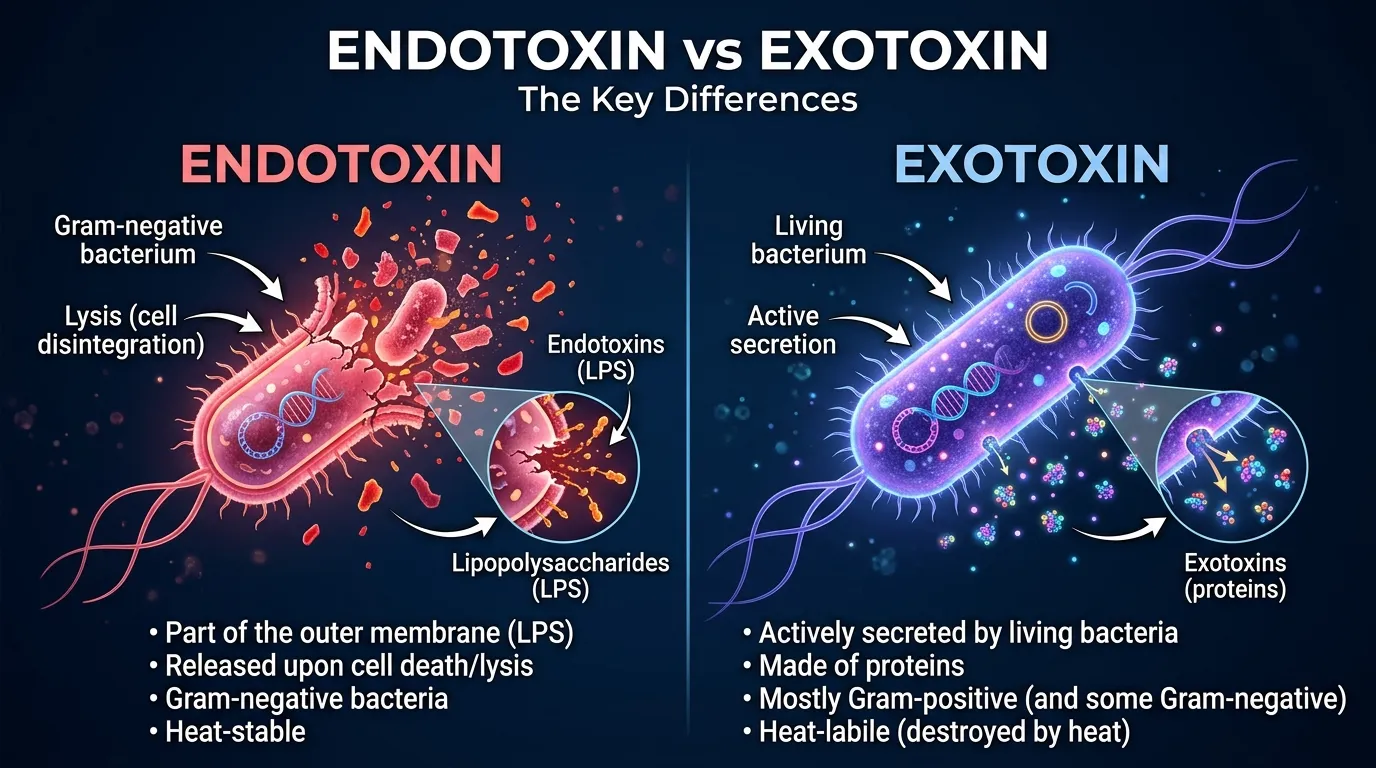
- Endotoxin: A toxic part of the outer membrane of Gram-negative bacteria.
- Exotoxin: A harmful protein made by certain bacteria and released by them.
Endotoxins often cause a strong body-wide immune response. Exotoxins often attack certain cells or parts of the body. However, the effects of each toxin depend on its type and amount.
Why Is It Important for Learners and Experts to Know the Difference?
This difference matters in schools, hospitals, and research labs. Students need it to understand how bacteria cause disease. Doctors and nurses need to understand how toxins can affect patients. Lab workers must also know how to test for bacterial toxins.
This knowledge can help experts study serious conditions such as sepsis, tetanus, and botulism. It also helps people understand why safe medical products and clean medical tools matter. Learning about these toxins can support better care, safer products, and stronger public health.
Pronunciation of Endotoxin and Exotoxin
| Word | US pronunciation | UK pronunciation |
| Endotoxin | en-doh-TOK-sin | en-doh-TOK-sin |
| Exotoxin | ek-soh-TOK-sin | ek-soh-TOK-sin |
A Linking Hook
Now that we know the basic meanings, let us look at how these toxins differ. Their source, structure, action, and effects help us tell them apart.
Difference Between Endotoxin and Exotoxin
1. Source
Endotoxin: Endotoxin is part of the outer membrane of Gram-negative bacteria. It is part of the bacterial cell. It is released when the bacteria break apart, but it can also be released while they are still alive.
Examples:
- Escherichia coli can release endotoxin.
- Salmonella bacteria contain endotoxin in their outer membrane.
Exotoxin: Exotoxins are proteins made by bacteria. They can be released by Gram-positive or Gram-negative bacteria.
Examples:
- Clostridium tetani makes the toxin that causes tetanus.
- Vibrio cholerae makes the toxin that causes cholera.
2. Chemical Structure
Endotoxin: Endotoxin is part of a substance called lipopolysaccharide, or LPS. Its toxic action mainly comes from a part called lipid A.
Examples:
- The outer membrane of E. coli contains LPS.
- The outer membrane of Neisseria meningitidis contains a related substance called lipooligosaccharide, or LOS.
Exotoxin: An exotoxin is a protein. Its shape and chemical parts help it act on the body.
Examples:
- Cholera toxin is a protein toxin.
- Tetanus toxin is a protein toxin.
3. How They Are Released
Endotoxin: Endotoxin is part of the bacterial outer membrane. It may enter the body when bacteria break apart. Some can also be shed as bacteria grow.
Examples:
- E. coli may release endotoxin as cells break apart.
- Salmonella may release parts of its outer membrane during growth.
Exotoxin: Bacteria often release exotoxins into the area around them. These toxins can then reach body cells.
Examples:
- Cholera bacteria release cholera toxin in the gut.
- Tetanus bacteria can make a toxin in damaged tissue.
4. Main Action in the Body
Endotoxin: Endotoxin can trigger a strong immune response. This may cause fever, swelling, low blood pressure, and, in severe cases, shock.
Examples:
- Endotoxin in the blood can help trigger a dangerous response during some infections.
- Endotoxin from Gram-negative bacteria can play a role in sepsis.
Exotoxin: Exotoxins often act on certain cells or body systems. Some damage cells, while others change how cells work.
Examples:
- Cholera toxin makes the gut release too much water and salt, causing severe diarrhea.
- Tetanus toxin affects nerve signals and can cause painful muscle spasms.
5. Heat Stability
Endotoxin: Endotoxin is often more heat-stable than many exotoxins. Ordinary boiling may not remove all endotoxin from a material.
Examples:
- Endotoxin may remain in water used to prepare some medical products unless it is removed or inactivated by a suitable process.
- Special lab tests can detect endotoxin in some medicines and medical devices.
Exotoxin: Many exotoxins are damaged by heat because they are proteins. However, heat stability differs from one toxin to another.
Examples:
- Heat can destroy many protein toxins under the right conditions.
- Staphylococcal enterotoxins can be heat-stable, so it is not safe to assume that all exotoxins are destroyed by cooking.
Important: Heat treatment must follow validated safety rules. A person should not use this general difference as a way to make contaminated food or medical products safe.
6. Specificity of Action
Endotoxin: Endotoxin often triggers a broad immune response. Its effects can spread through the body.
Examples:
- Endotoxin can help trigger fever.
- A strong response to endotoxin can contribute to low blood pressure and organ damage.
Exotoxin: Many exotoxins act on specific cells or body functions. Their effects depend on the toxin.
Examples:
- Botulinum toxin blocks signals between nerves and muscles.
- Cholera toxin changes the way cells in the gut control water and salt.
7. Toxic Strength
Endotoxin: Endotoxin can be very harmful, especially when it triggers a strong immune response. The danger depends on the amount, route of exposure, and the person’s health.
Examples:
- A large endotoxin exposure can cause a serious fever response.
- Endotoxin in the bloodstream can contribute to severe illness.
Exotoxin: Some exotoxins can cause severe harm in very small amounts. This is true of certain nerve toxins.
Examples:
- Botulinum toxin can cause dangerous muscle weakness and paralysis.
- Tetanus toxin can cause severe muscle spasms.
This does not mean every exotoxin is more dangerous than every endotoxin. The type and amount matter.
8. Immune Response
Endotoxin: The body can recognize endotoxin and react to it. However, endotoxin usually produces a less specific protective antibody response than many exotoxins.
Examples:
- The immune system may respond to endotoxin by releasing inflammatory signals.
- Endotoxin exposure can cause fever and other signs of inflammation.
Exotoxin: Many exotoxins cause the body to make antibodies that can bind to the toxin. These antibodies may help block its harmful action.
Examples:
- The body can make antibodies against tetanus toxin.
- The body can make antibodies against diphtheria toxin.
The immune response varies with the toxin and the person.
9. Use in Vaccine Design
Endotoxin: Endotoxin is not normally turned into a toxoid vaccine. A toxoid is a toxin that has been made harmless while keeping enough of its shape for the immune system to learn from it.
Examples:
- Tetanus vaccines use a toxoid made from tetanus toxin.
- Diphtheria vaccines use a toxoid made from diphtheria toxin.
These are examples of exotoxins, not endotoxins.
Exotoxin: Some exotoxins can be changed into toxoids. These toxoids are used in vaccines to help the body build protection.
Examples:
- The tetanus vaccine contains tetanus toxoid.
- The diphtheria vaccine contains diphtheria toxoid.
10. Diseases Linked to Them
Endotoxin: Endotoxin can contribute to inflammation and serious illness during infections caused by Gram-negative bacteria. It is one factor among many that can affect the course of disease.
Examples:
- Endotoxin can play a role in sepsis caused by Gram-negative bacteria.
- Endotoxin from Neisseria meningitidis can contribute to severe inflammation in meningococcal disease.
Exotoxin: Exotoxins can cause diseases by damaging cells or changing how they work.
Examples:
- Tetanus is caused by a toxin made by Clostridium tetani.
- Cholera is caused by a toxin made by Vibrio cholerae.
These examples show that the two toxin types can cause different kinds of harm. Their effects also depend on the bacteria, the toxin dose, and the body’s response.
Scientific basis for the comparison: OpenStax-based microbiology texts and a review of bacterial toxins in intensive care medicine. (Sources: https://bio.libretexts.org/Bookshelves/Microbiology/Microbiology_%28OpenStax%29/15%3A_Microbial_Mechanisms_of_Pathogenicity/15.03%3A_Virulence_Factors and https://pmc.ncbi.nlm.nih.gov/articles/PMC9125418/)
Nature and Behaviour of Endotoxin
Endotoxin is part of the outer membrane of Gram-negative bacteria. It is not a protein. Its toxic part is linked to lipid A in LPS or related structures.
When endotoxin enters the body, the immune system may react strongly. The body can release chemicals that cause fever and inflammation. In severe cases, the response may lead to low blood pressure, shock, or organ damage.
Endotoxin is often heat-stable, but its behaviour depends on the material and the method used to treat it. It can be hard to remove from water, equipment, or medical products. For this reason, some medical products must be tested for endotoxin.
also read more abouthttps://comparificationn.com/difference-between-cayenne-and-macan-2/
Nature and Behaviour of Exotoxin
Exotoxins are proteins made by certain bacteria. Many are released by the bacteria and then act on body cells.
Each exotoxin has its own way of working. Some harm the gut. Others attack nerves or damage cell membranes. Some cause the immune system to react too strongly.
Many exotoxins lose their harmful shape when exposed to enough heat. Yet some can resist heat, so this rule has limits. Some exotoxins can also be changed into toxoids for use in vaccines. Tetanus and diphtheria vaccines are well-known examples.
Why Are Endotoxin and Exotoxin Often Confused?
People often confuse these words because both describe harmful substances linked to bacteria.
There are also a few key points to remember:
- Both can harm the human body.
- Both can cause serious illness.
- Both are studied in microbiology and medicine.
- Endotoxin is part of the outer membrane of Gram-negative bacteria.
- Endotoxin often triggers broad inflammation.
- Exotoxins often act on specific cells or body functions.
The word “endo” can help you remember that endotoxin is tied to the inside structure of a bacterial cell’s outer membrane. The word “exo” can help you remember that exotoxins are often released from bacteria. This memory trick is useful, but the full scientific meaning is more exact.
Table Showing the Differences and Similarities
| Feature | Endotoxin | Exotoxin |
| Meaning | Toxic part of the outer membrane of certain bacteria | Harmful protein made by bacteria |
| Main source | Gram-negative bacteria | Gram-positive and Gram-negative bacteria |
| Structure | Lipopolysaccharide or a related structure | Protein |
| Release | May be shed during growth or released when cells break apart | Often released by living bacteria |
| Main effect | Often triggers a broad inflammatory response | Often targets certain cells or functions |
| Heat response | Often heat-stable | Many are heat-sensitive, but some are heat-stable |
| Immune response | Usually a less specific antibody response | Many cause a strong, specific antibody response |
| Toxoid vaccines | Not normally used as toxoids | Some can be changed into toxoids |
| Examples | LPS from E. coli | Tetanus toxin, cholera toxin |
| Similarity | Both can harm the body | Both can harm the body |
Which Is Better in What Situation?
Neither endotoxin nor exotoxin is “better.” Both can be harmful. The right term depends on what a person is studying or trying to explain.
Endotoxin is the right term when talking about LPS in the outer membrane of Gram-negative bacteria, or about its role in inflammation and sepsis. It is also important when testing some medicines and medical products for bacterial contamination.
Exotoxin is the right term when talking about a harmful protein made by bacteria, such as tetanus toxin or cholera toxin. It is useful when studying how a toxin affects a certain part of the body. Some exotoxins also help scientists design toxoid vaccines.
How Are Endotoxin and Exotoxin Used in Metaphors and Similes?
These words are scientific terms. They do not have common, fixed meanings in everyday metaphors or similes. Still, writers can use them as comparisons when the meaning is clear.
Endotoxin in a Metaphor
Example: “The hidden anger was an endotoxin in the team.”
This means the anger was inside the group and slowly harmed its health. It is a creative metaphor, not a medical fact.
Endotoxin in a Simile
Example: “The rumor spread through the group like endotoxin through the body.”
This compares the spread of a rumor with the harmful effects of endotoxin. It is a figure of speech.
Exotoxin in a Metaphor
Example: “His cruel words were an exotoxin that hurt every listener.”
This means his words caused harm to others, much like a toxin that affects body cells.
Exotoxin in a Simile
Example: “The false news hit the town like an exotoxin.”
This compares the harm caused by false news with the harm caused by a bacterial toxin.
Connotative Meaning of Endotoxin and Exotoxin
Connotation is the feeling or idea that a word brings to mind.
Endotoxin
Connotation: Negative
The word “endotoxin” often brings to mind infection, fever, inflammation, and serious illness. It is mainly used in science and medicine.
Examples:
- “The lab checked the sample for endotoxin.”
- “Endotoxin can contribute to a dangerous inflammatory response.”
The word is not a moral judgment. It is a scientific term for a harmful bacterial component.
Exotoxin
Connotation: Negative
The word “exotoxin” often brings to mind poison, cell damage, and disease. It is also a scientific term.
Examples:
- “The bacteria produced an exotoxin.”
- “The exotoxin damaged certain cells in the body.”
Both words have a negative meaning in most medical contexts because they describe substances that can cause harm.
Idioms or Proverbs Related to Endotoxin and Exotoxin
There are no common English idioms or proverbs that use the exact words “endotoxin” and “exotoxin.” However, a few common sayings can help explain the ideas behind them.
1. “A Little Goes a Long Way”
This saying means that a small amount can have a large effect.
Example: A tiny amount of some powerful exotoxins can cause severe harm, so a little can go a long way.
2. “The Tip of the Iceberg”
This saying means that the part we can see is only a small part of a bigger problem.
Example: A fever may be the tip of the iceberg when a serious infection and a strong response to endotoxin are present.
3. “Prevention Is Better Than Cure”
This saying means that it is better to stop a problem before it starts.
Example: Safe medical practices and suitable product testing help prevent harmful exposure to bacterial toxins. Prevention is better than cure.
These sayings are related to the ideas of harm, hidden problems, and safety. They are not scientific definitions of the toxins.
Books and Literature Related to Endotoxin and Exotoxin
The following books discuss bacterial toxins, microbes, or the science of infection. They are nonfiction works, not novels built around the exact words “endotoxin” and “exotoxin.”
- Microbial Toxins: A Comprehensive Treatise — Scientific reference book, edited by Thomas C. Montie and other contributors; published in multiple volumes beginning in the 1970s. It covers bacterial toxins and their actions. Check the publication details of the specific volume you use.
- Toxin: The Cunning of Bacterial Poisons — Popular science, by Alistair J. Lax, 2005. It explains how bacterial toxins affect people and how scientists study them.
- The Coming Plague: Newly Emerging Diseases in a World Out of Balance — Science and public health, by Laurie Garrett, 1994. It discusses infectious disease and the challenges faced by public health experts.
These books can help readers learn about microbes, toxins, and the effects of infectious disease.
Movies Related to Endotoxin and Exotoxin
There are few well-known films focused only on endotoxin and exotoxin. The films below deal with infectious disease, outbreaks, or biological threats more broadly. They are not direct films about these two toxin types.
- Outbreak — Thriller, 1995, United States. The story follows a dangerous disease outbreak and the efforts to contain it.
- Contagion — Medical thriller, 2011, United States. The film shows how a new infectious disease spreads and how public health teams respond.
- The Andromeda Strain — Science-fiction thriller, 1971, United States. Scientists investigate a dangerous organism from space. It is a fictional story, not a film about bacterial endotoxins or exotoxins.
Five Possible Asked Questions About Endotoxin and Exotoxin
1. What is the main difference between endotoxin and exotoxin?
Endotoxin is a toxic part of the outer membrane of Gram-negative bacteria. Exotoxin is a harmful protein made by certain bacteria. They differ in structure, release, and effects on the body.
2. Which is more dangerous, endotoxin or exotoxin?
Neither is always more dangerous. Some exotoxins can cause severe harm in tiny amounts. Endotoxin can also cause life-threatening inflammation and shock. The danger depends on the toxin, the amount, and the person exposed.
3. Can heat destroy endotoxin and exotoxin?
Many exotoxins can be damaged by heat, but some are heat-stable. Endotoxin is often more heat-stable. Ordinary boiling may not remove all endotoxin. Safe treatment depends on the material and the toxin.
4. Are endotoxins and exotoxins made by all bacteria?
No. Endotoxin is linked mainly to the outer membrane of Gram-negative bacteria. Exotoxins are made by certain Gram-positive and Gram-negative bacteria. Not every bacterium makes a toxin.
5. Can vaccines protect people from these toxins?
Yes, some vaccines protect against specific exotoxins.
Tetanus and diphtheria vaccines use toxoids.
These are toxins that have been made harmless but can still teach the immune system how to fight real toxins. There is no standard toxoid vaccine for endotoxin.
How Are Endotoxin and Exotoxin Important for Our Surroundings?
Endotoxin and exotoxin matter because bacteria live in many places, including soil, water, food, and the human body. Some bacteria can cause disease, while many others do not harm us.
Knowing about toxins helps people understand why clean water, safe food handling, proper hygiene, and good medical care matter. Hospitals and manufacturers also need safe ways to control and test for bacterial contamination. This is especially important for products that enter the body, such as certain medicines and medical devices.
Scientists study these toxins to learn how disease works and how to prevent harm. This knowledge can improve public health and help people make safer choices. It does not mean that every bacterium or every bacterial product is dangerous.
Final Words on Endotoxin and Exotoxin
Endotoxin and exotoxin are two different types of harmful substances linked to bacteria. Endotoxin is part of the outer membrane of Gram-negative bacteria. Exotoxin is a protein made by certain bacteria. Both can cause illness, but they do not act in the same way.
Endotoxin often triggers a broad response in the body. Exotoxins often target certain cells or body functions. By learning these basic facts, students and readers can better understand bacterial disease, medical testing, and infection control.
Conclusion
The difference between endotoxin and exotoxin is important in microbiology, medicine, and public health. Endotoxin is part of the outer membrane of Gram-negative bacteria. Exotoxin is a harmful protein made by certain bacteria. Both can affect human health, but their structure and actions are different. Endotoxin often causes a broad inflammatory response, while exotoxins often act on specific cells or body systems. Some exotoxins can be used to make toxoid vaccines, such as those for tetanus and diphtheria. Neither toxin is always more dangerous than the other. Their effects depend on the type, amount, and situation. A clear understanding of both terms helps learners, health workers, and the public understand how bacteria can cause harm and why safe health practices matter.

I’m Zahid Abbas, an educator, researcher, and digital publishing strategist with a passion for linguistics, grammar, and clear communication. As a content creator and SEO specialist, I craft research-driven, reader-focused content that empowers learners and makes knowledge accessible worldwide.