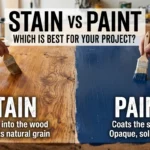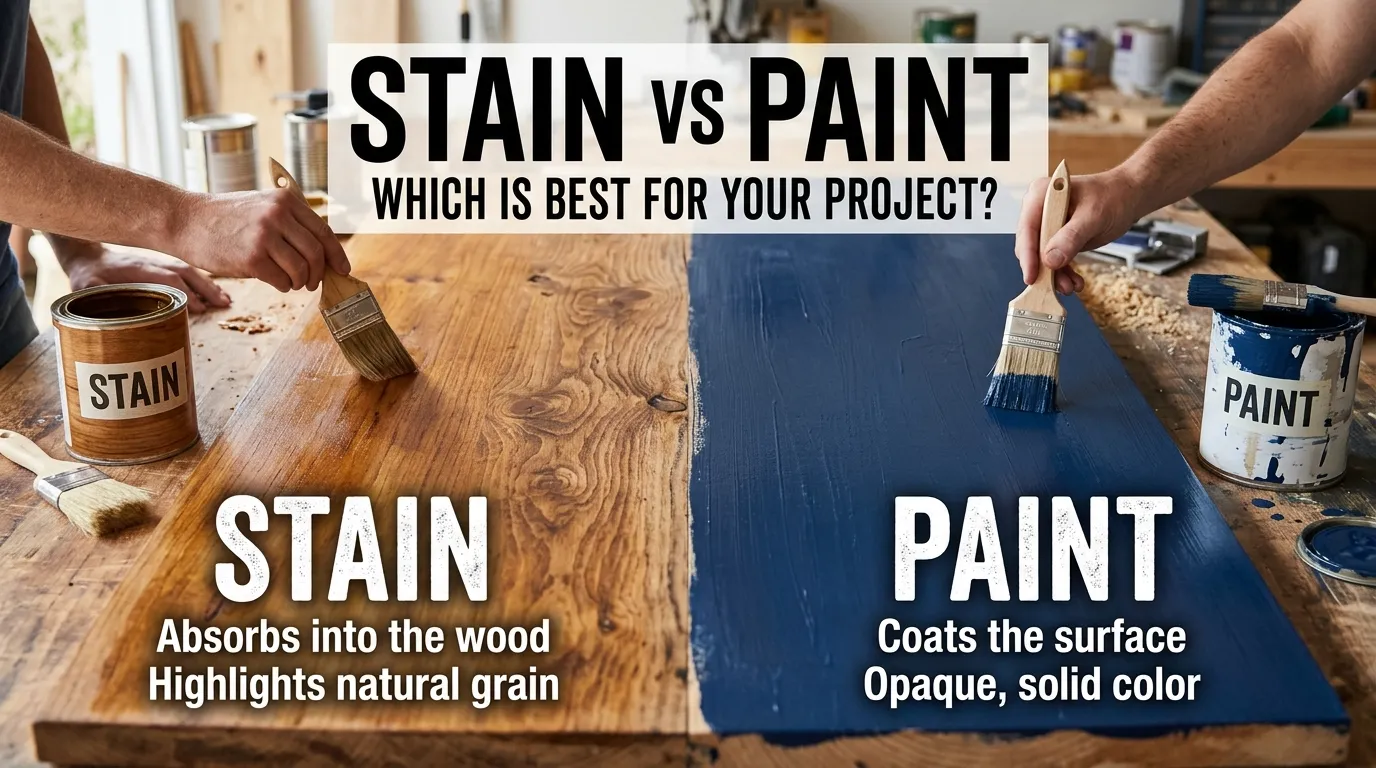
Imagine a person who wants to improve an old wooden table. One choice is to use paint. Paint can cover the wood with a new color. Another choice is to use stain. Stain can add color while letting the wood grain show. Both products can make the table look better, but they give different results.
The difference between stain and paint matters when you fix a home, build furniture, or work on a craft. Paint often forms a layer on top of a surface. Stain often soaks into a surface, especially wood. The difference between stain and paint can affect the look, care, and life of a project. If you know the difference between stain and paint, you can choose the right product for your walls, doors, decks, and furniture.
Key Difference Between the Two
The main difference is how each product colors and covers a surface.
- Stain: Adds color to a surface and often lets its natural texture show. Many wood stains soak into the wood.
- Paint: Usually forms a colored layer over a surface. It can hide the old color and texture.
Stains and paints come in many types. Some stains form a film, while some paints let the surface texture show. Always check the product label before use.
Why Is It Important to Know the Difference?
Knowing the difference helps homeowners, builders, painters, and students make better choices. The right product can save time and money. It can also help protect a surface from sun, water, and daily wear.
For example, a person may choose stain for a wooden deck to show its grain. Another person may choose paint for a bedroom wall to get a smooth, solid color. Using the wrong product may lead to poor results or extra work. This knowledge is useful in homes, schools, workshops, and building projects.
Pronunciation of Stain and Paint
| Word | US pronunciation | UK pronunciation |
| Stain | /steɪn/ — “stayn” | /steɪn/ — “stayn” |
| Paint | /peɪnt/ — “paynt” | /peɪnt/ — “paynt” |
A Linking Hook
Now we know that stain and paint can both change the look of a surface. But they work in different ways. Let us look at ten key differences to help you choose the right one.
Difference Between Stain and Paint
1. How They Work
Stain: Many stains soak into wood or another porous surface. They add color while letting some of the natural texture show.
Examples:
- A wood stain adds a warm brown tone to an oak table.
- A deck stain adds color to wooden boards while showing their grain.
Paint: Paint usually forms a layer over the surface. This layer adds color and can hide the old look.
Examples:
- White paint covers an old blue wall.
- Black paint gives a metal gate a new look.
2. Appearance
Stain: Stain often gives wood a natural look. It can make the grain stand out.
Examples:
- A light stain makes the grain of a pine shelf easier to see.
- A dark stain gives a wooden chair a rich brown color.
Paint: Paint often gives a solid and even color. It can hide marks and old colors.
Examples:
- White paint makes a room look clean and bright.
- Green paint gives a garden bench a bold new color.
3. Surface Coverage
Stain: Many stains let the surface pattern show. They may not hide deep marks, old colors, or flaws.
Examples:
- A clear or light wood stain keeps the grain visible.
- A thin stain may not hide dark marks on old wood.
Paint: Paint can cover many small marks and changes in color. The result depends on the paint, surface, and number of coats.
Examples:
- Two coats of wall paint can cover an old color.
- Paint can hide small marks on a wooden cabinet after the surface is prepared.
4. Best Surfaces to Use
Stain: Stain is often used on wood and other surfaces that can absorb it. Some stains are made for concrete or other materials.
Examples:
- A wood stain colors a pine door.
- A concrete stain changes the look of a concrete floor.
Paint: Paint is made for many surfaces, such as walls, wood, metal, and some plastics. The right type must match the surface.
Examples:
- Wall paint gives a living room a fresh look.
- Metal paint helps cover and protect a steel fence.
5. Protection
Stain: Some stains help protect wood from sun and moisture. The level of protection depends on the product. A stain may need a separate clear finish.
Examples:
- An outdoor deck stain made for sun exposure helps protect deck boards.
- A wood stain with a suitable topcoat can help protect a table from daily wear.
Paint: Paint can form a layer that helps shield a surface from wear and moisture. Some paints also help protect metal from rust.
Examples:
- Exterior paint helps protect a wooden door from weather.
- A suitable metal paint helps protect a garden gate from rust.
Note: Neither stain nor paint makes every surface fully waterproof. Check the product label for the protection it offers.
6. Number of Coats
Stain: Many stains need fewer coats than paint, but this depends on the product and the look you want. Too much stain may leave a sticky or uneven surface.
Examples:
- One coat of a certain wood stain may give a light color.
- Two thin coats of a deck stain may be needed to get the desired look if the label allows it.
Paint: Paint often needs a primer and one or more coats for an even finish. Some paints cover well in fewer coats.
Examples:
- A wall may need primer and two coats of paint.
- A painted chair may need more than one coat to get an even color.
Always follow the directions for the product you use.
7. Preparation
Stain: Wood often needs to be clean, dry, and free of old coatings before stain is applied. Some stains will not soak into wood that has a sealed finish.
Examples:
- Sanding a wooden table can help stain spread more evenly.
- Cleaning a deck helps remove dirt before staining.
Paint: Paint also needs a clean and sound surface. Some surfaces need sanding, primer, or the removal of loose paint.
Examples:
- A wall may need small holes filled before painting.
- A metal gate may need rust removed and a suitable primer applied.
Good preparation helps both products last longer.
8. Drying and Care
Stain: Some stains dry quickly, while others need more time. The drying time depends on the formula, weather, and surface.
Examples:
- A water-based wood stain may dry sooner than some oil-based stains.
- A thick layer of deck stain may take longer to dry than a thin layer.
Paint: Paint drying time also varies. Some paints feel dry to the touch quickly but need more time to cure fully.
Examples:
- Wall paint may feel dry after a few hours but need longer before cleaning.
- A painted door may need extra time before it can be closed without sticking.
Read the label before touching, cleaning, or using the surface.
9. Maintenance and Repair
Stain: Stained wood may need fresh stain or a protective coat from time to time. How often it needs care depends on the product and the weather.
Examples:
- A deck may need new stain after sun and rain wear down the finish.
- A stained fence may need care when its color fades.
Paint: Painted surfaces may need cleaning, touch-ups, or a new coat when paint chips or peels.
Examples:
- A painted wall may need a small touch-up after a scratch.
- A garden bench may need sanding and new paint after the old layer begins to peel.
10. Cost and Final Look
Stain: The cost depends on the type, brand, and amount needed. Stain can be a good choice when you want the natural grain to show.
Examples:
- A small can of wood stain may be enough for a small shelf.
- A deck may need several cans of stain, depending on its size and the number of coats.
Paint: Paint costs also depend on the surface, brand, primer, and number of coats. It can be a good choice when you want a bold or solid color.
Examples:
- A gallon of wall paint may cover a small room, based on the product’s coverage.
- A large fence may need several cans of paint and a suitable primer.
Do not choose by price alone. Consider the work needed, the finish you want, and how much care the surface will need later.
Nature and Behaviour of Stain
Stain is made to change the color of a surface. Many wood stains soak into the wood instead of forming a thick layer over it. This lets the natural grain show.
Stains come in many colors, from light oak to deep brown. Some are clear or nearly clear. Others give a strong color. Some stains also contain ingredients that help protect wood from the sun or moisture.
Stain is not always easy to remove. It can soak into wood and leave color below the surface. The final result depends on the wood, how it was prepared, and the type of stain used.
Nature and Behaviour of Paint
Paint usually forms a layer over a surface. It can change the color and cover the old finish. It comes in many shades and finishes, such as flat, satin, and gloss.
Paint can be made for indoor or outdoor use. Some types are made for wood, metal, walls, or floors. Each type has its own uses and limits.
Paint often needs a clean surface and may need primer. Over time, paint can chip, crack, or peel if the surface is not prepared well or if the product is not suited to the job. Proper care can help it last longer.
Why Are Stain and Paint Often Confused?
People often confuse stain and paint because both can change the color of a surface. Both come in many shades, and both can be used in home projects.
Here are some common reasons for the mix-up:
- Both add color: A stained table and a painted table may look very different, but both have a new color.
- Both can protect: Some stains and paints help protect surfaces from weather and wear.
- Both come in many types: Some stains form a surface film, and some paints show more texture than others.
- Labels can be unclear: Products may use words such as “finish,” “coating,” or “color.”
- The surface matters: A product made for wood may not work well on a wall or metal gate.
The best way to avoid confusion is to read the label and check that the product suits your surface.
Table Showing the Differences and Similarities
| Feature | Stain | Paint |
| Main purpose | Adds color, often while showing texture | Adds color and often covers the surface |
| How it works | Many types soak into porous surfaces | Usually forms a layer on top |
| Natural grain | Often visible | Often hidden, but may show through some finishes |
| Common use | Wood, decks, fences, some concrete | Walls, wood, metal, and other suitable surfaces |
| Protection | Depends on the stain and any topcoat | Depends on the paint type and surface |
| Preparation | Clean, dry surface; sanding may help | Clean surface; primer or sanding may be needed |
| Repair | May need cleaning and re-staining | May need touch-ups or repainting |
| Color range | Many natural and bold shades | Very wide range of colors |
| Finish | Can look natural or form a film | Can be flat, satin, gloss, and more |
| Similarity | Both can change color and help improve a surface | Both can change color and help improve a surface |
Which Is Better in What Situation?
Stain is often better when you want to show the natural grain of wood. It is a common choice for decks, fences, wooden tables, and some cabinets. The right stain may also help protect the wood from sun and moisture. You must still choose a product made for the place where it will be used.
Paint is often better when you want a solid color or need to cover an old color. It works well on many walls, doors, metal gates, and pieces of furniture. Some paints can also help protect the surface. The best choice depends on the material, the weather, the look you want, and the product label.
also read more about https://comparificationn.com/difference-between-cayenne-and-macan-2/
How Are Stain and Paint Used in Metaphors and Similes?
The words “stain” and “paint” can be used in everyday speech as figures of speech. In these cases, they do not always mean the products used on wood or walls.
Stain in a Metaphor
Example: “The lie was a stain on his good name.”
This means the lie harmed his reputation. The word “stain” compares a bad act to a mark that is hard to remove.
Stain in a Simile
Example: “The rumor spread like a stain across the town.”
This means the rumor spread and harmed people’s views of someone.
Paint in a Metaphor
Example: “Her words painted a picture of a happy future.”
This means her words helped people imagine a happy future.
Paint in a Simile
Example: “The sky glowed like a painting at sunset.”
This compares the colorful sky to a work of art.
These uses show how the words can describe color, damage, and the way people see the world.
Connotative Meaning of Stain and Paint
Connotation means the feeling or idea a word brings to mind. The same word can have a positive, negative, or neutral meaning based on how it is used.
Stain
Connotation: Neutral or negative
As a product, stain is a neutral word. It can suggest beauty and care when it is used on wood. In other uses, it can suggest a mark or damage.
Examples:
- Positive: “The stain brought out the beauty of the oak grain.”
- Negative: “The false claim left a stain on her name.”
- Neutral: “He bought a can of brown stain for the table.”
Paint
Connotation: Neutral or positive
Paint often brings to mind color, art, and fresh spaces. But it can also mean making a false or unfair picture of someone.
Examples:
- Positive: “The fresh paint made the room feel bright.”
- Negative: “The report painted him as a careless worker.”
- Neutral: “They chose white paint for the door.”
Both words can be used in a good or bad way. The full sentence tells us the meaning.
Idioms and Proverbs Related to Stain and Paint
Several common English sayings use these words or ideas linked to them.
1. “Paint the Town Red”
This means to go out and enjoy a lively time.
Example: “After finishing their exams, the friends went out to paint the town red.”
2. “Paint a Picture”
This means to describe something in a way that helps people imagine it.
Example: “The teacher used a simple story to paint a picture of life in the past.”
3. “A Stain on One’s Reputation”
This phrase means an act or event that harms a person’s good name.
Example: “The false report became a stain on the company’s reputation.”
4. “A Fresh Coat of Paint”
This phrase can mean a new layer of paint. It can also mean a simple change that makes something look new.
Example: “The old shop looked much better after a fresh coat of paint.”
5. “You Can’t Make a Silk Purse Out of a Sow’s Ear”
This saying means that you cannot always turn something poor into something fine just by changing its look.
Example: “The builder said that a quick coat of paint would not fix the weak walls. You can’t make a silk purse out of a sow’s ear.”
These sayings show that stain and paint can have meanings beyond home repair.
Works in Literature Related to Stain and Paint
The following works relate to painting, color, or the idea of a stain on a person’s life or name. They are not all about the actual products used on wood or walls.
- The Picture of Dorian Gray — Gothic novel, by Oscar Wilde, 1890. A painted portrait plays a key role in this story about beauty, choices, and hidden harm.
- The Yellow Wallpaper — Short story, by Charlotte Perkins Gilman, 1892. The narrator describes the wallpaper in the room where she stays. The story explores mental health and control.
- The Scarlet Letter — Historical novel, by Nathaniel Hawthorne, 1850. The story explores shame, public judgment, and the mark of a person’s past actions.
- The Painted Veil — Novel, by W. Somerset Maugham, 1925. Its title uses “painted” in a symbolic way. The story explores marriage, change, and self-knowledge.
These works show how writers use color, marks, and images to explore human life.
Movies Related to Stain and Paint
These films relate to painting, art, color, or the idea of a mark on a person’s life. They are not all about house paint or wood stain.
- The Picture of Dorian Gray — Fantasy horror film, 1945, United States. A portrait plays a key role in the story.
- The Girl with a Pearl Earring — Historical drama, 2003, United Kingdom and Luxembourg. The film imagines the story behind a famous painting by Johannes Vermeer.
- The Painting (Le Tableau) — Animated fantasy film, 2011, France. The story takes place in a world of painted figures and explores art and social divisions.
- Paint — Comedy film, 2023, United States. The story follows a TV painter and the challenges he faces in his work.
- The Painted Veil — Romantic drama, 2006, United States, China, and Canada. The film explores marriage, change, and personal growth.
These films connect to painting as art or to the idea of a painted image. They are included as related works, not as guides to choosing stain or paint.
Five Possible Asked Questions About the Difference Between Stain and Paint
1. What is the main difference between stain and paint?
Stain often soaks into a surface and lets its texture show. Paint usually forms a layer on top and can cover the old color. The exact result depends on the product.
2. Is stain better than paint for wood?
Stain is often a good choice when you want the wood grain to show. Paint is often better when you want a solid color or need to hide the old look. Both can work well if you choose the right product.
3. Does stain protect wood from water?
Some stains help protect wood from moisture, but not all stains give the same level of protection. Some need a separate topcoat. Read the label to learn what the product can do.
4. Can I paint over a stained surface?
Often, yes. The surface may need cleaning, sanding, and a suitable primer first. The right steps depend on the stain, the surface, and the paint you plan to use.
5. Which lasts longer, stain or paint?
There is no single answer. The life of each finish depends on the product, the surface, the weather, and how well the surface was prepared. Outdoor surfaces may need more care than indoor ones.
How Are Stain and Paint Useful for Our Surroundings?
Stain and paint help people care for homes, schools, parks, shops, and other shared places. They can improve the look of wood, walls, fences, doors, and furniture. Some products also help protect these surfaces from wear and weather.
Stain can help keep the natural look of wooden decks and benches. Paint can add bright colors to walls, playground equipment, and public buildings. A well-kept surface can make a place feel clean and welcoming.
It is also important to use these products safely. Follow the label, use the right tools, and allow enough time for drying. Use good airflow when needed, and keep products away from children and pets. Safe use helps protect both people and the environment.
Final Words on Stain and Paint
Stain and paint can both improve a surface, but they give different results. Stain often shows the natural grain of wood, while paint often covers the surface with a solid color. Some stains form a film, and some paints show texture, so the product type matters.
Before you start a project, think about the surface, the look you want, and the protection you need. Check the label and prepare the surface well. The right choice can save time and help your work last longer.
Conclusion
The difference between stain and paint is useful to know before starting a home or craft project. Stain often adds color while keeping the natural look of wood. Paint usually forms a layer that can cover the old color and give a smooth, solid finish. Both products come in many types, and both can help protect a surface when used in the right way. The best choice depends on the material, the place, and the look you want. Stain is often used when wood grain should show, while paint is often used when full color or coverage is needed. Read the label, prepare the surface, and follow safe use steps. This will help you get a neat result that lasts.

I’m Zahid Abbas, an educator, researcher, and digital publishing strategist with a passion for linguistics, grammar, and clear communication. As a content creator and SEO specialist, I craft research-driven, reader-focused content that empowers learners and makes knowledge accessible worldwide.