Imagine you get a small cut while cooking dinner. You wash it and look for an ointment in your first-aid box. You see two names: bacitracin and Neosporin. Which one should you choose? Bacitracin is an antibiotic that helps stop certain bacteria from growing. Neosporin is a brand name for a range of products. The classic Neosporin Original ointment contains three antibiotics: bacitracin, neomycin, and polymyxin B. The difference between bacitracin and Neosporin matters because their ingredients are not the same. The difference between bacitracin and Neosporin can also affect the risk of a skin rash. Both may help protect some small wounds from infection. Yet, neither is right for every person or every wound. Knowing the facts can help you make a safer choice.
Key Difference Between the Two
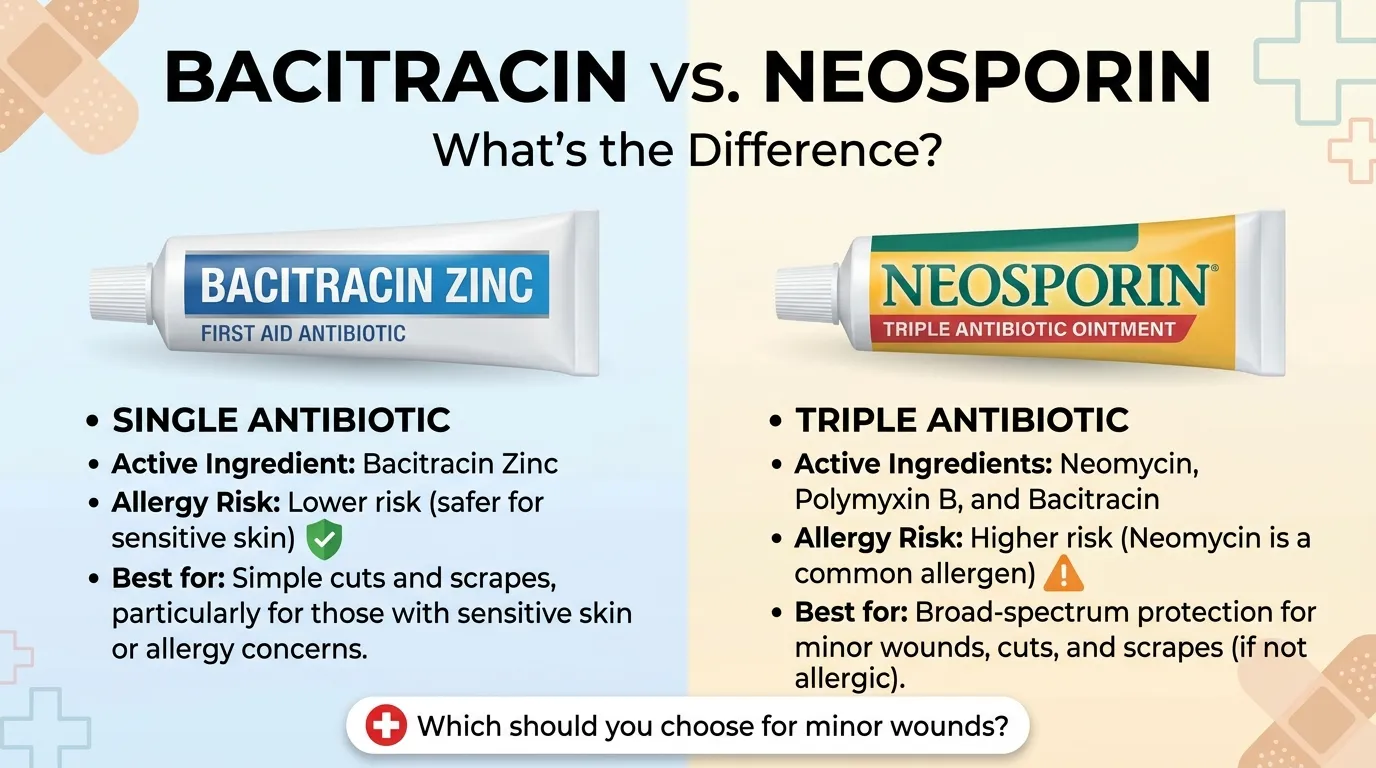
Bacitracin is one antibiotic. Classic Neosporin Original contains three antibiotics. Both are used to help prevent infection in some minor cuts and scrapes. However, both can cause skin reactions.
Why Is Their Difference Important for Learners and Experts?
Learning about these products helps people make safer choices. Students can learn how antibiotics work. Parents can learn how to care for small cuts. Health workers can explain the risks to patients.
Knowing the difference can also help people avoid ingredients that cause allergies. It can stop people from using an ointment when a wound needs medical care. This knowledge is useful at home, in schools, and at work.
Pronunciation of Bacitracin and Neosporin
- Bacitracin
- US: bass-ih-TRAY-sin
- UK: bass-ih-TRAY-sin
- Neosporin
- US: nee-oh-SPOR-in
- UK: nee-oh-SPOR-in
Difference Between Bacitracin and Neosporin
1. Main Ingredients
Bacitracin: It contains bacitracin as its active antibiotic.
Neosporin: The classic Original ointment contains bacitracin, neomycin, and polymyxin B.
Examples:
- Example 1: A bacitracin ointment may list bacitracin as its active ingredient.
- Example 2: Neosporin Original may list three antibiotics on its label.
2. How They Work
Bacitracin: It stops certain bacteria from building their cell walls. This can stop them from growing.
Neosporin: Its three antibiotics work in different ways against some bacteria.
Examples:
- Example 1: Bacitracin may help stop certain bacteria from growing in a small scrape.
- Example 2: Neosporin Original may act against some bacteria that bacitracin alone does not cover.
3. Common Uses
Bacitracin: It may help prevent infection in some minor cuts, scrapes, and burns.
Neosporin: It may also help prevent infection in some minor skin wounds.
Examples:
- Example 1: A person may use bacitracin on a small scrape if the label allows it.
- Example 2: A person may use Neosporin Original on a small cut after cleaning it, if the label allows it.
4. Number of Antibiotics
Bacitracin: It usually provides one antibiotic.
Neosporin: The classic Original formula has three antibiotics.
Examples:
- Example 1: A bacitracin product may list only bacitracin as its antibiotic.
- Example 2: Neosporin Original may list bacitracin, neomycin, and polymyxin B.
5. Risk of Skin Allergy
Bacitracin: It can cause a rash or skin irritation in some people.
Neosporin: It can also cause a rash. Neomycin and bacitracin are known causes of allergic skin reactions.
Examples:
- Example 1: A person who gets an itchy rash after using bacitracin should stop using it and seek advice.
- Example 2: A person with a neomycin allergy should avoid Neosporin Original unless a health professional advises otherwise.
6. Product Types
Bacitracin: Many products contain bacitracin alone, but labels may differ.
Neosporin: The brand sells different products. Not all have the same ingredients.
Examples:
- Example 1: A shopper checks the label to see if an ointment contains only bacitracin.
- Example 2: A shopper checks whether a Neosporin product is Original or another formula.
7. Amount to Use
Bacitracin: Use only the amount stated on the label. More will not make a wound heal faster.
Neosporin: Follow its label too. Too much may raise the risk of irritation.
Examples:
- Example 1: A person applies a thin layer of bacitracin as directed.
- Example 2: A person does not use a thick layer of Neosporin unless the label or a health professional says to do so.
8. Deep or Serious Wounds
Bacitracin: It is not a substitute for medical care for deep or serious wounds.
Neosporin: It also cannot replace care for deep cuts, serious burns, or badly infected wounds.
Examples:
- Example 1: A deep cut may need a health professional, not bacitracin alone.
- Example 2: A wound with spreading redness or pus needs medical advice, not just more Neosporin.
9. Safe Use
Bacitracin: Clean the wound first and follow the label. Keep it away from the eyes and mouth.
Neosporin: Clean the wound and follow the product label. Stop using it if a new rash appears.
Examples:
- Example 1: A person washes a small scrape with clean running water before using bacitracin.
- Example 2: A person stops using Neosporin if the skin becomes very itchy or swollen.
10. When to Ask for Help
Bacitracin: Ask a health professional if you have an allergy or the wound gets worse.
Neosporin: Ask for advice if you have reacted to its ingredients or the wound does not improve.
Examples:
- Example 1: A person with a past bacitracin allergy asks a pharmacist about other options.
- Example 2: A person with a painful, hot, swollen wound seeks medical care instead of relying on Neosporin.
Nature and Behaviour of Bacitracin
Bacitracin is an antibiotic. It works against certain bacteria. It does not treat viruses or fungi. And it is made for specific uses on the skin.
Some people may get an itchy rash or skin irritation from it. Use it only as directed on the label. Stop using it and seek advice if your skin gets worse.
Nature and Behaviour of Neosporin
Neosporin is a brand name. Its classic Original ointment has three antibiotics. These work in different ways against some bacteria.
The three ingredients may cover more types of bacteria than bacitracin alone. But more ingredients do not always mean better care. Neomycin and bacitracin can both cause allergic skin reactions. Neosporin is not right for every wound or every person.
Why Are People Confused About Their Use?
People may be confused because both products are sold for minor cuts and scrapes. They may also see both names in the same first-aid aisle.
Bacitracin is one ingredient in classic Neosporin Original. This makes the two products seem alike. But bacitracin alone has one antibiotic, while classic Neosporin Original has three. Some products under the Neosporin name use different formulas, so it is important to read the label.
Table of Differences and Similarities
| Feature | Bacitracin | Neosporin Original |
| Type | Antibiotic medicine | Brand-name ointment |
| Main ingredients | Bacitracin | Bacitracin, neomycin, polymyxin B |
| Number of antibiotics | One | Three |
| Common use | Some minor skin wounds | Some minor skin wounds |
| Allergy risk | Can cause a rash | Can cause a rash |
| Treats viruses? | No | No |
| Treats fungi? | No | No |
| Use on serious wounds | Needs medical care | Needs medical care |
| Label check needed? | Yes | Yes |
| Same goal? | Help prevent some bacterial infections | Help prevent some bacterial infections |
Which Is Better in What Situation?
Bacitracin may suit some minor wounds when a health professional recommends a single antibiotic. It has fewer antibiotic ingredients than classic Neosporin Original. But it can still cause a rash, so it is not right for everyone.
Neosporin Original may suit some minor wounds when its ingredients are safe for the person. It has three antibiotics, but more ingredients do not always mean better results. For many small cuts, clean water and a clean dressing may be enough. Read the label and ask a pharmacist if you are unsure which product to use.
also read more abouthttps://comparificationn.com/difference-between-uber-and-uberx-3/
How Are Bacitracin and Neosporin Used in Metaphors and Similes?
These are medicine names, so they are not common in everyday metaphors or similes. But writers can use them in creative ways.
- Metaphor: “Bacitracin was a guard at the gate.” This means it helped protect the wound from some bacteria.
- Simile: “Neosporin was like a team of helpers.” This points to the three antibiotics in its classic Original formula.
- Metaphor: “The first-aid kit was a safety net.” This means it held items that could help with small injuries.
These are figures of speech, not medical facts. Neither product can stop every infection.
Connotative Meaning of Bacitracin and Neosporin
Bacitracin
The word bacitracin has a neutral meaning. It is the name of a medicine.
- Positive: “Bacitracin helped protect the small scrape.” This suggests care.
- Negative: “The person got a rash after using bacitracin.” This suggests a bad reaction.
- Neutral: “The label lists bacitracin as an active ingredient.” This gives a fact.
Neosporin
The word Neosporin also has a neutral meaning. It is a brand name linked to first aid.
- Positive: “Neosporin was in the family’s first-aid kit.” This suggests being ready for small injuries.
- Negative: “Neosporin caused an itchy rash.” This shows a possible bad reaction.
- Neutral: “The shopper read the Neosporin label.” This gives a simple fact.
The words themselves are not good or bad. Their meaning depends on how people use them.
Idioms and Proverbs Related to Bacitracin and Neosporin
There are no common idioms or proverbs that use the exact words bacitracin or Neosporin. However, some sayings fit the topic of first aid.
- “Better safe than sorry.” Example: It is better to check the bacitracin label before use than to risk a reaction.
- “Prevention is better than cure.” Example: Cleaning a small cut and covering it can help lower the risk of infection.
- “An ounce of prevention is worth a pound of cure.” Example: Reading the Neosporin label may help a person avoid an ingredient that causes a rash.
These sayings support safe care. They do not mean that antibiotic ointments are always needed.
Works in Literature Related to Bacitracin and Neosporin
There are no widely known classic books built around bacitracin or Neosporin as their main subject. These names are more likely to appear in health guides or medical texts.
Here are two books about medicine and health in a wider sense:
- The Emperor of All Maladies: A Biography of Cancer — medical history and science writing by Siddhartha Mukherjee, published in 2010. It is about cancer, not these ointments.
- Being Mortal: Medicine and What Matters in the End — nonfiction by Atul Gawande, published in 2014. It explores health care and medical choices, not these products in particular.
Movies Related to Bacitracin and Neosporin
There are no widely known films made specifically about bacitracin or Neosporin. However, some films explore medicine and health care.
- Patch Adams (1998, United States) — a comedy-drama about a doctor who uses humor to care for patients.
- The Doctor (1991, United States) — a drama about a doctor who learns what it is like to be a patient.
- Contagion (2011, United States) — a thriller about the spread of a serious disease.
These films do not focus on bacitracin or Neosporin. They relate to health and medicine in general.
Five Possible Asked Questions About Bacitracin and Neosporin
1. Is bacitracin the same as Neosporin?
No. Bacitracin is one antibiotic. Classic Neosporin Original contains bacitracin, neomycin, and polymyxin B. Other Neosporin products may have different ingredients.
2. Can I use bacitracin and Neosporin together?
Do not use both together unless a health professional tells you to. They may share an ingredient, and using both may raise the risk of a skin reaction.
3. Which one is safer for sensitive skin?
Neither is always safer. Both can cause skin reactions. Neomycin in classic Neosporin Original is a known cause of allergic skin reactions. Ask a pharmacist or doctor if you have sensitive skin or past allergies.
4. Can I use these products on every cut?
No. They are for certain minor wounds. Deep cuts, animal bites, serious burns, or wounds with signs of infection may need medical care.
5. Can these products treat fungal or viral infections?
No. These antibiotics target certain bacteria. They do not treat viruses or fungi. Ask a health professional if you are unsure what is causing a skin problem.
How Are Bacitracin and Neosporin Useful for Our Surroundings?
Bacitracin and Neosporin may help people care for some minor cuts and scrapes at home, at school, or at work. When used as directed, they may help prevent some bacterial infections in minor wounds.
Still, good first aid starts with clean hands, clean water, and proper wound care. Keep medicines away from children and read the label before use. Do not use these products on pets unless a vet advises it. Safe use helps people care for small injuries and know when to seek expert help.
Final Words on Bacitracin and Neosporin
Bacitracin and Neosporin can both help prevent some bacterial infections in minor wounds. But they are not the same. Bacitracin is one antibiotic, while classic Neosporin Original combines three.
Neither product is right for everyone. Both can cause skin irritation or an allergic rash. Read the label and stop use if a new rash appears. If a wound is deep, gets worse, or shows signs of infection, seek medical care. A pharmacist or doctor can help you choose the right option.
Conclusion
The main difference between bacitracin and Neosporin is their ingredients. Bacitracin contains one antibiotic, while classic Neosporin Original contains three: bacitracin, neomycin, and polymyxin B. Both may help prevent infection in some minor cuts and scrapes, but both can cause skin reactions. More ingredients do not always mean better care. For small wounds, clean water and a clean dressing are key first steps. Read the label before using either product, and ask a health professional if you are unsure. Do not rely on an ointment for a deep wound or one that looks infected. Knowing these facts can help you make safer first-aid choices.

I’m Zahid Abbas, an educator, researcher, and digital publishing strategist with a passion for linguistics, grammar, and clear communication. As a content creator and SEO specialist, I craft research-driven, reader-focused content that empowers learners and makes knowledge accessible worldwide.