A medical student at Harvard Medical School studied bacteria and learned about toxins. The teacher explained the difference between endotoxin and exotoxin. Both can cause disease, but they act in different ways.
Many learners feel confused. The difference between endotoxin and exotoxin is about structure, release, and effect. When you understand the difference between endotoxin and exotoxin, you can better understand infections.
The difference between endotoxin and exotoxin is very important in medicine and microbiology.
Key Difference Between the Both
Endotoxin is part of the bacterial cell wall and is released when the cell breaks.
Exotoxin is produced and secreted by bacteria into the surroundings.
The main difference is cell-bound vs secreted toxin.
Why Is Their Difference Necessary to Know for Learners and Experts?
Doctors need to treat infections correctly. Students must understand disease mechanisms. In society, this knowledge helps in vaccine development and public health safety.
Pronunciation
Endotoxin
- US: /ˌɛn.doʊˈtɑːk.sɪn/
- UK: /ˌɛn.dəʊˈtɒk.sɪn/
Exotoxin
- US: /ˌɛk.soʊˈtɑːk.sɪn/
- UK: /ˌɛk.səʊˈtɒk.sɪn/
Now let us explore more.
Difference Between Endotoxin and Exotoxin
1. Location
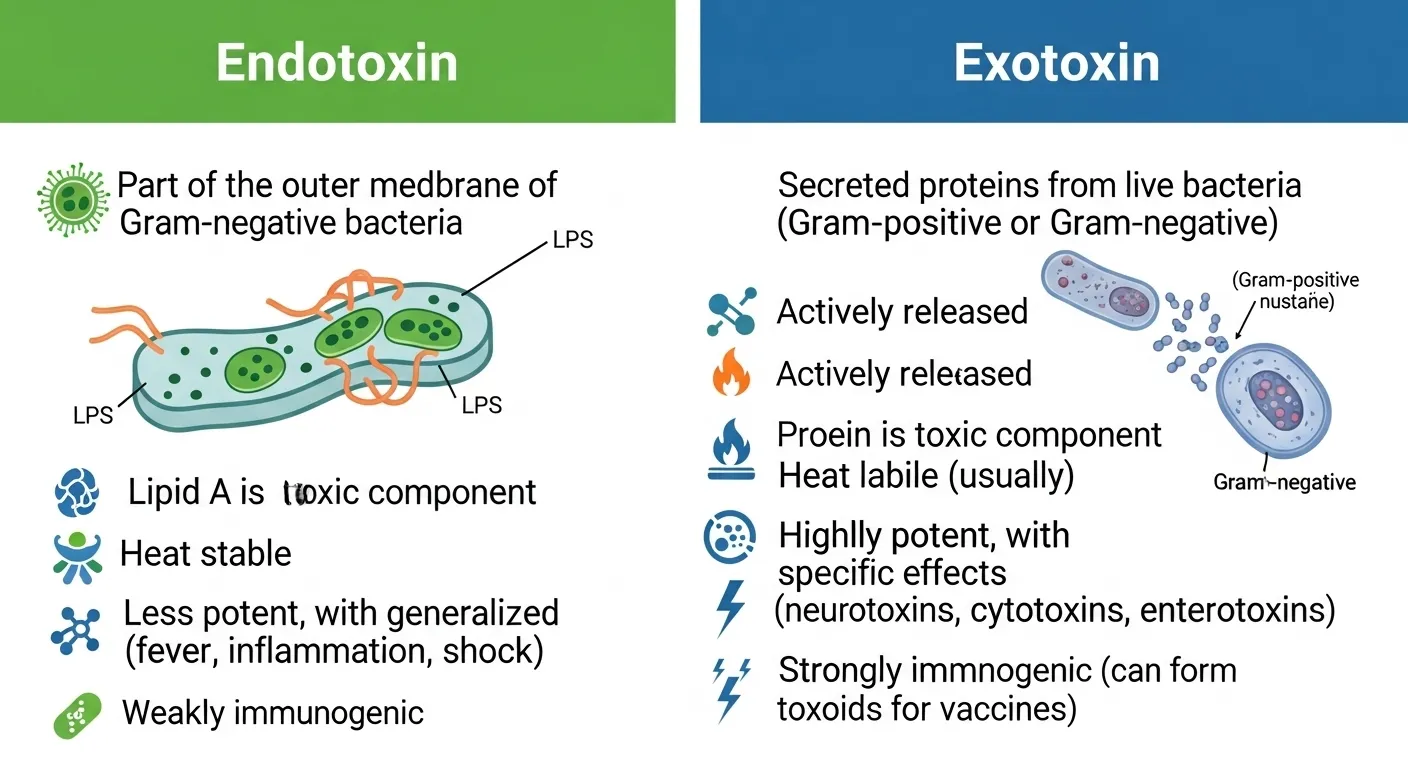
Endotoxin is part of bacterial cell wall.
- Example 1: Found in Gram-negative bacteria.
- Example 2: Inside outer membrane.
Exotoxin is released outside cell.
- Example 1: Secreted into environment.
- Example 2: Travels in body fluids.
2. Release
Endotoxin released when bacteria die.
- Example 1: Cell breaks.
- Example 2: Toxin leaks out.
Exotoxin actively secreted.
- Example 1: Produced by living bacteria.
- Example 2: Released continuously.
3. Chemical Nature
Endotoxin is lipid-based (LPS).
- Example 1: Lipopolysaccharide.
- Example 2: Stable structure.
Exotoxin is protein-based.
- Example 1: Enzyme-like proteins.
- Example 2: Complex molecules.
4. Toxicity
Endotoxin is less toxic but harmful in large amounts.
- Example 1: Fever.
- Example 2: Shock.
Exotoxin is highly toxic.
- Example 1: Small dose causes damage.
- Example 2: Strong effect.
5. Specificity
Endotoxin has general effects.
- Example 1: Fever response.
- Example 2: Inflammation.
Exotoxin has specific targets.
- Example 1: Nerve cells.
- Example 2: Muscle cells.
6. Heat Stability
Endotoxin is heat stable.
- Example 1: Resists high temperature.
- Example 2: Hard to destroy.
Exotoxin is heat sensitive.
- Example 1: Destroyed by heat.
- Example 2: Denatured easily.
7. Immune Response
Endotoxin triggers weak immune response.
- Example 1: Low antibody production.
- Example 2: Hard to neutralize.
Exotoxin triggers strong immune response.
- Example 1: Antibody formation.
- Example 2: Easier to target.
8. Vaccines
Endotoxin not used in vaccines.
- Example 1: Hard to modify.
- Example 2: Unsafe form.
Exotoxin can be made into toxoids.
- Example 1: Used in vaccines.
- Example 2: Safe form created.
9. Examples
Endotoxin seen in Gram-negative bacteria.
- Example 1: E. coli.
- Example 2: Salmonella.
Exotoxin seen in many bacteria.
- Example 1: Clostridium.
- Example 2: Staphylococcus.
10. Effect on Body
Endotoxin causes general symptoms.
- Example 1: Fever.
- Example 2: Low blood pressure.
Exotoxin causes specific diseases.
- Example 1: Paralysis.
- Example 2: Tissue damage.
Nature and Behaviour of Both
Endotoxin is part of bacteria and released on death. It causes general effects.
Exotoxin is actively secreted and highly targeted. It causes strong specific effects.
Why Are People Confused About Their Use?
Both are toxins from bacteria. Both cause disease. Their names sound similar. This creates confusion.
Table Showing Difference and Similarity
| Feature | Endotoxin | Exotoxin | Similarity |
| Location | Cell wall | Secreted | Bacterial toxins |
| Nature | Lipid | Protein | Cause disease |
| Toxicity | Moderate | High | Harmful |
| Heat | Stable | Sensitive | Biological |
| Effect | General | Specific | Affect body |
Which Is Better in What Situation?
Neither is “better.” Both are harmful. However, exotoxins are useful in vaccine development because they can be converted into safe toxoids. Endotoxins are harder to use due to their stability and weaker immune response.
Use in Metaphors and Similes
These terms are not used in metaphors. They are scientific terms.
Connotative Meaning
Endotoxin – Negative
- Example: “Endotoxin reaction.”
Exotoxin – Negative
- Example: “Exotoxin damage.”
Five Frequently Asked Questions
1. What is endotoxin?
A toxin from bacterial cell wall.
2. What is exotoxin?
A toxin secreted by bacteria.
3. Which is more toxic?
Exotoxin.
4. Which is heat stable?
Endotoxin.
5. Are both harmful?
Yes.
How Are Both Useful for Surroundings?
They help scientists study diseases. Both support vaccine research and medical progress. They improve understanding of infections.
Final Words for Both
Endotoxin is cell-bound.
Exotoxin is secreted and powerful.
Conclusion
The difference between endotoxin and exotoxin is clear. Endotoxins are part of bacterial cells and released when they die. Exotoxins are secreted by living bacteria and are more toxic. Both play key roles in disease. Understanding their difference helps in medicine and research.

I’m Zahid Abbas, an educator, researcher, and digital publishing strategist with a passion for linguistics, grammar, and clear communication. As a content creator and SEO specialist, I craft research-driven, reader-focused content that empowers learners and makes knowledge accessible worldwide.