Imagine two people visiting a doctor. One has a lump in the leg, while the other has a growth in the lung. The doctor checks both patients because cancer can start in different parts of the body. This helps us understand the difference between sarcoma and carcinoma. A sarcoma is a type of cancer that starts in bone or soft tissue, such as muscle and fat. A carcinoma is a type of cancer that starts in cells that cover the skin or line body organs. Both can grow and spread, but they start in different kinds of cells. The difference between sarcoma and carcinoma helps people understand cancer, its tests, and its care. It also helps students and health workers explain these terms in simple words.
Key Difference Between Sarcoma and Carcinoma
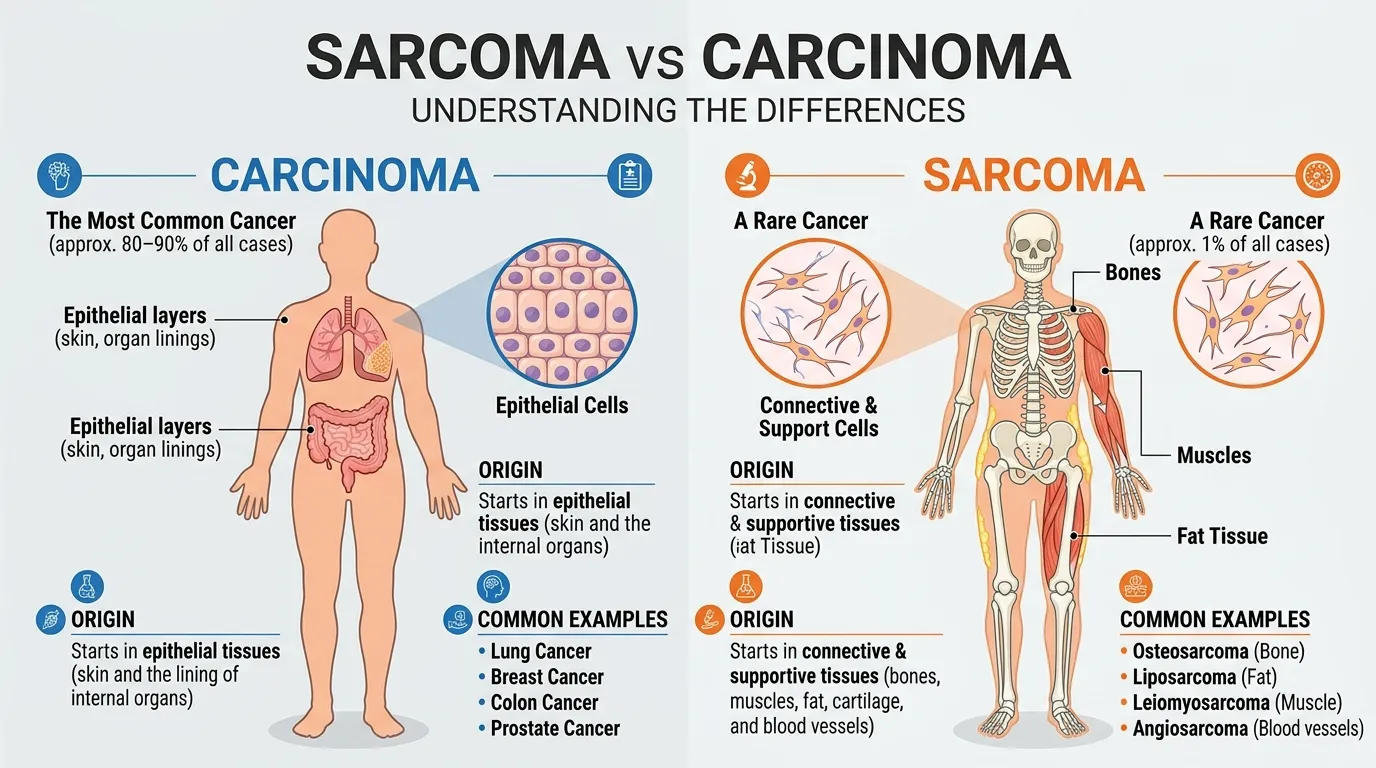
The main difference is where the cancer starts. Sarcoma starts in bone or soft tissue. Carcinoma starts in cells that cover the body or line organs.
Why Is It Important to Know the Difference?
Knowing the difference between sarcoma and carcinoma helps patients understand their diagnosis. It also helps doctors choose the right tests and care. Students can learn how cancer types differ. Health workers can explain these terms to patients and families. This knowledge helps people ask clear questions and make better choices about their health.
Pronunciation of Sarcoma and Carcinoma
- Sarcoma
- US English: sar-KOH-muh
- UK English: sar-KOH-muh
- Carcinoma
- US English: kar-sih-NOH-muh
- UK English: kar-sih-NOH-muh
Difference Between Sarcoma and Carcinoma
1. Place Where the Cancer Starts
Sarcoma: Sarcoma starts in bone or soft tissue.
- Example 1: A cancer that starts in the thigh muscle may be a sarcoma.
- Example 2: A cancer that starts in a bone may be an osteosarcoma.
Carcinoma: Carcinoma starts in cells that cover the body or line organs.
- Example 1: A cancer that starts in the lining of the lung may be a carcinoma.
- Example 2: A cancer that starts in the lining of the bowel may be a carcinoma.
2. Type of Cells
Sarcoma: Sarcoma starts in cells linked to bone or supporting tissues.
- Example 1: Liposarcoma starts in fat tissue.
- Example 2: Osteosarcoma starts in cells that form bone.
Carcinoma: Carcinoma starts in epithelial cells. These cells cover surfaces and line many organs.
- Example 1: Squamous cell carcinoma starts in flat cells found in the skin and other body linings.
- Example 2: Adenocarcinoma starts in gland cells.
3. How Common They Are
Sarcoma: Sarcoma is rare compared with most other cancers.
- Example 1: A hospital may see many patients with breast cancer but few with bone sarcoma.
- Example 2: A doctor may send a patient with a rare soft tissue tumor to a specialist.
Carcinoma: Carcinoma is the most common main type of cancer.
- Example 1: Many lung cancers are carcinomas.
- Example 2: Many breast cancers are carcinomas.
4. Common Places in the Body
Sarcoma: Sarcoma often starts in the arms, legs, bones, or other soft tissues. It can also start in the abdomen.
- Example 1: A sarcoma may form in the soft tissue of the upper arm.
- Example 2: A sarcoma may start in a bone near the knee.
Carcinoma: Carcinoma can start in the skin or in many organs.
- Example 1: A carcinoma may start in the cells of the stomach lining.
- Example 2: A carcinoma may start in the breast ducts.
5. Main Types
Sarcoma: There are many types of sarcoma. Their names often tell us which tissue is affected.
- Example 1: Osteosarcoma is a type of bone cancer.
- Example 2: Liposarcoma is a type of cancer that starts in fat tissue.
Carcinoma: There are many types of carcinoma. Their names often tell us which cells are involved.
- Example 1: Adenocarcinoma starts in gland cells.
- Example 2: Basal cell carcinoma starts in cells in the lower part of the outer skin.
6. Signs and Symptoms
Sarcoma: Signs depend on where the tumor starts and how it grows.
- Example 1: A growing lump in the leg may need a medical check.
- Example 2: A tumor in the abdomen may cause pain or pressure.
Carcinoma: Signs depend on the body part affected.
- Example 1: A lung carcinoma may cause a lasting cough.
- Example 2: A skin carcinoma may cause a sore or skin change that does not heal.
These signs can also come from other health problems. They do not prove that a person has cancer.
7. Growth and Spread
Sarcoma: Some sarcomas grow slowly, while others grow and spread fast.
- Example 1: A low-grade sarcoma may grow more slowly.
- Example 2: A high-grade sarcoma may grow and spread more quickly.
Carcinoma: Carcinomas also differ in how fast they grow and spread.
- Example 1: Some skin carcinomas grow slowly.
- Example 2: Some lung carcinomas can spread to other organs.
Neither type is always more aggressive than the other.
8. How Doctors Find Them
Sarcoma: Doctors may use scans and a biopsy to find and study a sarcoma.
- Example 1: An MRI may help show a lump in the leg.
- Example 2: A biopsy may help show that a tumor is a sarcoma.
Carcinoma: Doctors may also use scans, a biopsy, and other tests to find carcinoma.
- Example 1: A skin sample may help identify a skin carcinoma.
- Example 2: A sample from the lung may help identify a lung carcinoma.
A biopsy means taking a small piece of tissue for testing.
9. Treatment
Sarcoma: Treatment may include surgery, radiation, or cancer drugs. The plan depends on the type and stage.
- Example 1: A patient with a small sarcoma may have surgery.
- Example 2: A patient with a high-grade sarcoma may need surgery and other treatment.
Carcinoma: Treatment may include surgery, radiation, chemotherapy, or other drugs.
- Example 1: A patient with a small skin carcinoma may have surgery.
- Example 2: A patient with advanced lung carcinoma may need drug treatment.
Not every patient needs the same care.
10. Outlook and Recovery
Sarcoma: The outlook depends on the type, size, grade, stage, and site of the cancer.
- Example 1: A small, low-grade sarcoma that can be removed may have a better outlook.
- Example 2: A sarcoma that has spread may need more complex care.
Carcinoma: The outlook also depends on the type, stage, and response to treatment.
- Example 1: A carcinoma found early may be easier to treat.
- Example 2: A carcinoma that has spread may be harder to treat.
Every patient is different. A doctor can explain what the diagnosis means for each person.
Nature and Behaviour of Sarcoma and Carcinoma
Nature of Sarcoma
Sarcoma is a cancer of bone or soft tissue. It may form a lump deep under the skin or inside the body. It can affect the arms, legs, bones, or other areas.
Some sarcomas grow slowly. Others grow fast and may spread to other parts of the body. The exact type helps doctors learn how the cancer may act. Tests help them plan the right care.
Nature of Carcinoma
Carcinoma is a cancer of epithelial cells. These cells cover the skin and line many organs. This is why carcinoma can start in places such as the skin, lungs, stomach, breast, or bowel.
Some carcinomas grow slowly, while others grow and spread fast. Their behavior depends on the type and stage. Doctors use test results to plan care.
Why People Confuse Sarcoma and Carcinoma
People may confuse these terms for several reasons:
- Both are cancers. People may think all cancers start in the same cells.
- Both can form tumors. A lump may look much like another lump.
- Both can spread. Each type can move to other parts of the body.
- Both may need similar care. Surgery, radiation, or drugs may be used for both.
- Their names sound alike. These medical words may be hard for new learners.
- Both can affect nearby body parts. A sarcoma may grow near an organ, while a carcinoma may start in its lining.
The main clue is the type of cell where the cancer began. A biopsy and expert review help doctors tell them apart.
Table Showing the Differences and Similarities
| Feature | Sarcoma | Carcinoma |
| Starting cells | Bone or soft tissue cells | Epithelial cells |
| Common sites | Bone, muscle, fat, and other soft tissues | Skin and organ linings |
| How common | Rare | Very common |
| Examples | Osteosarcoma, liposarcoma | Adenocarcinoma, squamous cell carcinoma |
| Signs | May cause a lump, swelling, or pain | Signs depend on the body part |
| Diagnosis | Scans and biopsy may be used | Scans and biopsy may be used |
| Treatment | May include surgery, radiation, or drugs | May include surgery, radiation, or drugs |
| Growth | May be slow or fast | May be slow or fast |
| Can spread? | Yes | Yes |
| Outlook | Depends on the cancer and its stage | Depends on the cancer and its stage |
Similarities Between Sarcoma and Carcinoma
Both are types of cancer. Both can harm nearby tissues and spread to other parts of the body. Also both may need tests, treatment, and follow-up visits. The right care depends on the type and stage of the cancer.
also read more abouthttps://comparificationn.com/difference-between-thinkpad-and-ideapad-3/
Which Is Better in Different Situations?
Neither sarcoma nor carcinoma is better. They are types of cancer, not two choices a person can make. If a person has a lump in a muscle or bone, a doctor may check for sarcoma. If a person has a change in the skin or the lining of an organ, a doctor may check for carcinoma. The right care depends on the test results, the cancer’s location, and how far it has spread. A specialist can explain the best care for each case. Early medical advice is important when a lump grows or a symptom does not go away.
How Sarcoma and Carcinoma Are Used in Metaphors and Similes
A metaphor compares one thing to another without using “like” or “as.” A simile uses words such as “like” or “as” to make a comparison.
These cancer terms are mainly used in medical writing. However, writers may use them in stories about fear, hope, and illness.
Sarcoma in Metaphors and Similes
- Metaphor: “The sarcoma was a silent enemy inside his body.” This shows the fear of cancer.
- Simile: “The fear spread like a shadow across her life.” This shows how illness may affect daily life.
Carcinoma in Metaphors and Similes
- Metaphor: “The carcinoma became a hard battle in her life.” This shows the struggle of facing cancer.
- Simile: “The news felt like a storm on a calm day.” This shows the shock of a cancer diagnosis.
These are creative examples. They do not explain how cancer works in the body.
Connotative Meaning of Sarcoma and Carcinoma
A connotative meaning is the feeling or idea linked to a word. Both terms are neutral medical words, but they may bring fear or worry in daily life.
Connotative Meaning of Sarcoma
Main tone: Neutral in medicine, but often negative in daily life.
- Neutral example: “The doctor explained the type of sarcoma.”
- Negative example: “The word sarcoma filled the family with fear.”
- Hopeful example: “The patient faced sarcoma with courage and support.”
The word itself is not good or bad. The feelings come from the situation.
Connotative Meaning of Carcinoma
Main tone: Neutral in medicine, but often negative in daily life.
- Neutral example: “The report named the cancer as carcinoma.”
- Negative example: “The word carcinoma brought worry to the family.”
- Hopeful example: “She faced carcinoma with hope and help from her care team.”
Both words should be used with care and respect. A cancer diagnosis does not tell us everything about a person’s future.
Idioms and Proverbs Related to Sarcoma and Carcinoma
There are no common English idioms or proverbs made just for sarcoma or carcinoma. Still, some common phrases can help writers talk about illness and hope.
1. Fight a Battle
Meaning: To face a hard problem.
- Example: “He faced a long battle with sarcoma.”
- Example: “She faced her carcinoma treatment with support from her family.”
2. A Ray of Hope
Meaning: A sign that things may get better.
- Example: “The new treatment gave the patient with sarcoma a ray of hope.”
- Example: “Her progress after carcinoma treatment brought a ray of hope.”
3. Take It One Day at a Time
Meaning: To deal with each day as it comes.
- Example: “While receiving care for sarcoma, he learned to take it one day at a time.”
- Example: “She took her carcinoma treatment one day at a time.”
4. Where There Is Life, There Is Hope
Meaning: There may still be hope in a hard time.
- Example: “The family stayed hopeful after the sarcoma diagnosis.”
- Example: “After the carcinoma diagnosis, the family held on to hope.”
These phrases can offer comfort. They do not promise recovery or replace medical advice.
Works in Literature Related to Sarcoma and Carcinoma
Many books explore cancer, illness, family, and hope. The works below discuss cancer or serious illness, but they are not all about sarcoma or carcinoma alone.
- The Emperor of All Maladies: A Biography of Cancer — Genre: Medical history and nonfiction; Writer: Siddhartha Mukherjee; Year: 2010. This book tells the story of cancer and the search for better care.
- The Fault in Our Stars — Genre: Young adult fiction and romance; Writer: John Green; Year: 2012. This novel explores love and life while facing cancer.
- The Cancer Journals — Genre: Memoir and essays; Writer: Audre Lorde; Year: 1980. This book discusses breast cancer and personal life.
These works help readers learn about the human side of cancer. They are not medical guides.
Movies Related to Sarcoma and Carcinoma
Many films show how cancer affects patients and their families. These films are about cancer or serious illness, but they are not all about sarcoma or carcinoma alone.
- The Fault in Our Stars — Release year: 2014; Country: United States. This film follows two young people who live with cancer.
- 50/50 — Release year: 2011; Country: United States. This comedy-drama follows a young man who faces cancer and treatment.
- Wit — Release year: 2001; Country: United States. This drama follows a professor who has advanced ovarian cancer.
- Terms of Endearment — Release year: 1983; Country: United States. This drama explores family life and a woman’s struggle with cancer.
These films show how cancer can affect feelings, family ties, and daily life. They do not replace facts from health experts.
Five Possible Asked Questions About Sarcoma and Carcinoma
1. What is the main difference between sarcoma and carcinoma?
Sarcoma starts in bone or soft tissue. Carcinoma starts in cells that cover the body or line organs.
2. Is sarcoma more dangerous than carcinoma?
Not always. Both can be serious. The risk depends on the type, grade, stage, and response to treatment.
3. Can sarcoma and carcinoma spread to other organs?
Yes. Both can spread to other parts of the body. Doctors use tests to find out if the cancer has spread.
4. Can a person recover from sarcoma or carcinoma?
Some people recover, while others need long-term care. The outlook depends on the cancer type, stage, and treatment.
5. How do doctors tell sarcoma and carcinoma apart?
Doctors study a tissue sample, often taken during a biopsy. They may also use scans and lab tests to find the cancer type.
How Sarcoma and Carcinoma Affect People and Their Surroundings
Sarcoma and carcinoma can affect more than the person who has cancer. They may also affect family members, friends, and the wider community.
- Patients: Clear facts can help them understand their care.
- Families: Good information can help family members give support.
- Doctors and nurses: Knowing the cancer type helps them plan tests and treatment.
- Students: Learning the terms builds basic knowledge of the body.
- Communities: Cancer facts can reduce fear and help stop false claims.
Cancer awareness also helps people know when to seek medical advice. A growing lump or a lasting change in the body should be checked by a health professional. No single sign can confirm either cancer type.
Final Words on Sarcoma and Carcinoma
Sarcoma and carcinoma are both types of cancer, but they start in different cells.
Sarcoma starts in bone or soft tissue, such as muscle and fat. Carcinoma starts in cells that cover the body or line organs. Both may grow, harm nearby tissue, or spread to other parts of the body.
The names alone do not tell us how serious a person’s cancer is. Doctors must study the type, grade, stage, and test results. Knowing the difference can help patients and families understand a diagnosis and ask clear questions. Good information can help people make informed choices about care.
Conclusion
The difference between sarcoma and carhttps://oncolifehospitals.com/blog/carcinoma-vs-sarcoma/cinoma is mainly where the cancer begins. Sarcoma starts in bone or soft tissue, while carcinoma starts in cells that cover the body or line organs. Both can affect health in serious ways, but their signs, growth, and care may differ.
Learning the difference between sarcoma and carcinoma helps students, patients, and health workers understand cancer. It also helps people ask useful questions and learn why the right diagnosis matters. Neither type is always more dangerous than the other. The outlook depends on the exact cancer and the care a person receives. If you notice a growing lump or a change that does not go away, seek medical advice. Clear facts and timely care can make a real difference.

I’m Zahid Abbas, an educator, researcher, and digital publishing strategist with a passion for linguistics, grammar, and clear communication. As a content creator and SEO specialist, I craft research-driven, reader-focused content that empowers learners and makes knowledge accessible worldwide.