Last week, my niece baked her first birthday cake. She looked at two recipes online. One said “frosting.” The other said “icing.” She asked me, “Aren’t these the same thing?” I told her no. Frosting and icing are cousins, not twins. Frosting is thick and fluffy. You spread it with a knife. Icing is thin and glossy. You pour it or drizzle it. My niece picked frosting for her cake and icing for her cookies. That one small choice changed how both treats looked and tasted. The frosting vs icing mix-up trips up many home bakers. They use the words like they mean the same thing. But once you know the frosting vs icing difference, your baking gets better fast. This guide breaks down frosting vs icing in plain, simple words.
Key Difference Between Frosting and Icing
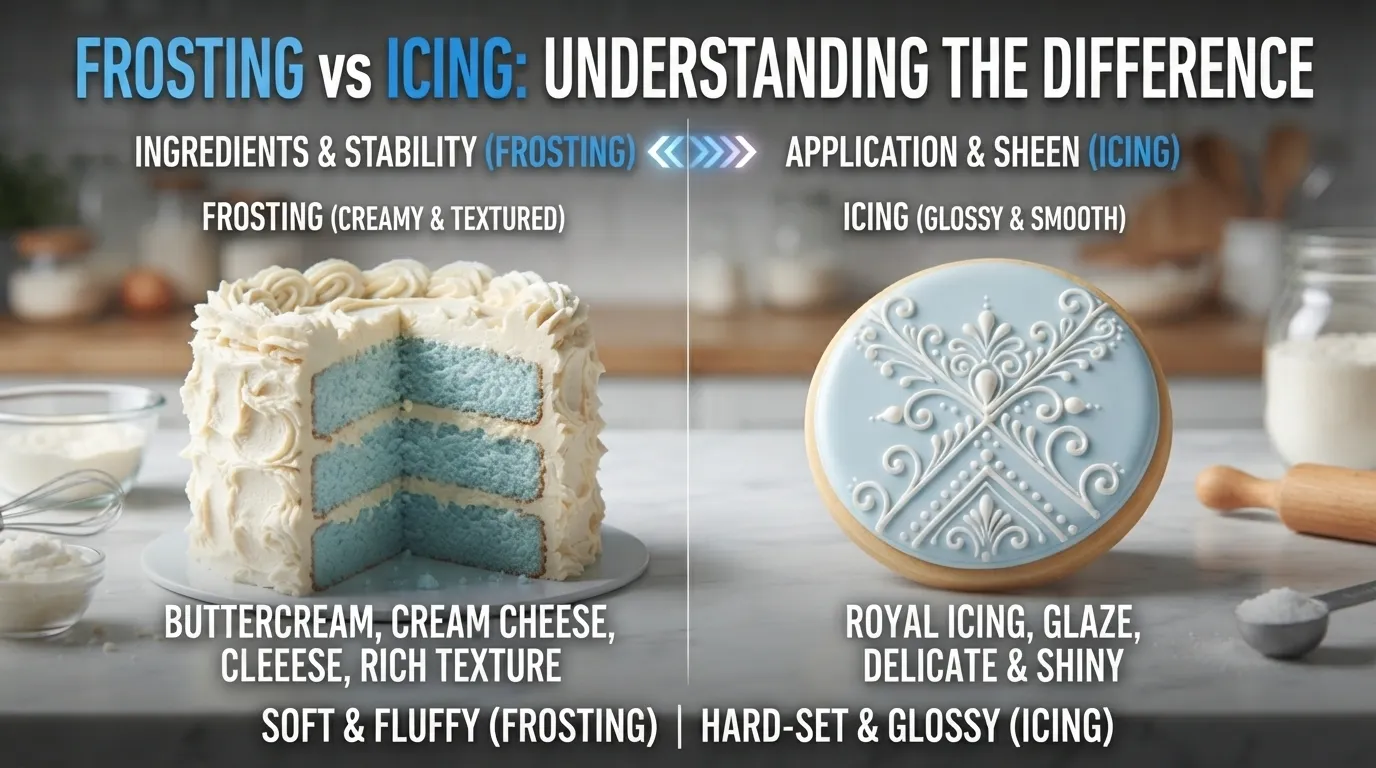
Frosting is thick and creamy. It is made with butter, sugar, and sometimes cream cheese. Icing is thin and smooth. It is made mostly with sugar and a little liquid. Frosting sits and holds its shape. Icing spreads flat and dries hard.
Why This Difference Matters for Learners and Experts
For home bakers, this difference decides how a cake looks and tastes. Pick the wrong one, and a cake may look messy or taste too sweet. For bakery workers and pastry students, this knowledge is basic training. It shapes how they follow recipes and talk to customers. Baking is a big part of daily life. People bake for birthdays, holidays, and small daily joys. Knowing frosting vs icing helps bakers of all skill levels create treats that look and taste right, every time.
Pronunciation
Frosting
- US English: /ˈfrɔːstɪŋ/ — said as “FRAWS-ting.”
- UK English: /ˈfrɒstɪŋ/ — said as “FROS-ting,” with a shorter “o” sound.
Icing
- US English: /ˈaɪsɪŋ/ — said as “EYE-sing.”
- UK English: /ˈaɪsɪŋ/ — said the same way, “EYE-sing.” Both countries say this word almost the same.
Difference Between Frosting and Icing
1. Main ingredients Frosting uses butter, sugar, and sometimes cream cheese or shortening. Icing uses powdered sugar mixed with a small amount of liquid, like water or milk. Example 1: Buttercream frosting is made with butter, sugar, and vanilla. Example 2: A simple icing is made from powdered sugar and a few drops of lemon juice.
2. Texture Frosting is thick and fluffy. Icing is thin and smooth. Example 1: Frosting can hold peaks, like whipped cream, when piped onto a cake. Example 2: Icing flows and settles flat, like a thin glaze on a donut.
3. How it is applied Frosting is spread with a knife or piped with a bag. Icing is poured, drizzled, or brushed on. Example 1: A baker spreads chocolate frosting over a layer cake with a spatula. Example 2: A baker drizzles white icing over warm cinnamon rolls.
4. How it dries Frosting stays soft and creamy after it sets. Icing hardens and turns glossy or matte. Example 1: Frosted cupcakes stay soft to the touch, even a day later. Example 2: Iced sugar cookies form a hard, shiny shell you can stack without smudging.
5. Sweetness level Frosting can be rich but balanced, since butter cuts some of the sugar’s sharpness. Icing tends to taste sweeter, since it is mostly sugar. Example 1: Cream cheese frosting has a slight tang that balances its sweetness. Example 2: A basic sugar icing tastes purely sweet, with little else to balance it.
6. Common uses Frosting is common on cakes and cupcakes. Icing is common on cookies, donuts, and pastries. Example 1: A birthday cake is almost always covered in frosting. Example 2: Sugar cookies at Christmas are often decorated with colorful icing.
7. Shelf behavior Frosted items often need refrigeration, especially with dairy-based frosting. Iced items can often sit at room temperature longer. Example 1: A cream cheese frosted cake should go in the fridge to stay fresh. Example 2: Iced sugar cookies can sit on a counter for days without spoiling.
8. Skill level to make Frosting often needs beating or whipping to get the right fluffy texture. Icing is usually quicker, just mixing sugar and liquid until smooth. Example 1: Making buttercream frosting takes several minutes of mixing to get it light and airy. Example 2: Making a basic icing can take less than five minutes, just stir and pour.
9. Visual style Frosting gives a soft, textured, and layered look. Icing gives a smooth, shiny, or glass-like look. Example 1: A frosted cake often shows swirls and peaks from the piping bag. Example 2: An iced cookie often looks flat, smooth, and shiny like glass.
10. Regional word habits In the US, “frosting” is common for cakes, and “icing” is common for cookies and donuts. In the UK, “icing” is often used for both, including cake coverings. Example 1: An American baker says, “I frosted the cake with buttercream.” Example 2: A British baker might say, “I iced the cake with buttercream,” meaning the same thing.
The Nature and Behavior of Frosting
Frosting behaves like a soft, spreadable coat. Its nature comes from fat, usually butter or shortening, mixed with sugar. This fat traps air during mixing, so frosting becomes light and fluffy. It holds its shape well, which is why bakers use it to pipe flowers, swirls, and borders on cakes.
The Nature and Behavior of Icing
Icing behaves like a thin, flowing liquid that sets hard. Its nature comes mostly from sugar, with very little fat. Because it has less fat and more liquid, it spreads out flat and dries into a smooth, often shiny layer. This makes icing better for clean, glass-like finishes rather than tall, decorative shapes.
Why Do People Get Confused Between Frosting and Icing?
Three reasons cause this mix-up. First, both words describe sweet toppings for baked goods, so they feel like the same thing. Second, regional habits differ. British bakers often say “icing” for what Americans call “frosting.” Third, some recipes use the words loosely, without explaining texture or ingredients. This makes home bakers think frosting and icing are just two names for one item, when they are really two different textures with different jobs.
Frosting vs Icing: Comparison Table
| Aspect | Frosting | Icing |
| Main ingredient | Butter, sugar, sometimes cream cheese | Powdered sugar, small amount of liquid |
| Texture | Thick, fluffy | Thin, smooth |
| How it sets | Stays soft | Hardens, turns glossy |
| Applied with | Knife, piping bag | Pouring, drizzling, brushing |
| Common use | Cakes, cupcakes | Cookies, donuts, pastries |
| Storage | Often needs the fridge | Can often sit at room temperature |
| Similarity | Both are sweet toppings made mostly from sugar | |
| Similarity | Both are used to decorate and finish baked treats |
Which Is Better in What Situation?
If you are making a layered cake or cupcakes that need height and texture, frosting is the better choice. It holds its shape, pipes into pretty swirls, and gives cakes that classic bakery look and feel.
If you are decorating cookies or want a smooth, shiny finish on pastries, icing is the better choice. It dries hard, stacks well, and gives a clean, glass-like coat that frosting cannot match.
For most home bakers, the best answer depends on the treat, not personal taste alone. Match frosting to soft, tall bakes like cakes, and match icing to flat, crisp bakes like cookies and donuts.
How Are Frosting and Icing Used in Metaphors and Similes?
Both words show up often in figures of speech, since they describe something sweet added on top:
- “The icing on the cake” — means an extra good thing added to something already good.
- “Frosted over” — means something turned cold or distant, like a frosted friendship.
- “Smooth as icing” — means something is very smooth, calm, or polished.
Connotative Meaning
Frosting
- Positive: Means something rich, festive, and special. Example: “Her cake had thick, beautiful frosting.”
- Negative: Rarely negative, though it can suggest something is too rich or heavy. Example: “The frosting was so sweet it hurt my teeth.”
- Neutral: Used plainly in baking talk. Example: “Spread the frosting evenly over the cake.”
Icing
- Positive: Often used to mean a nice bonus. Example: “Getting the job was great, and the salary raise was just icing.”
- Negative: Can imply something is only surface-level or fake. Example: “His apology felt like icing over a real problem.”
- Neutral: Used plainly in baking talk. Example: “Drizzle the icing over the warm rolls.”
Idioms or Proverbs
- “The icing on the cake” — means a wonderful extra added to something already good. Example: “Winning the game felt great, and the trophy was just the icing on the cake.”
- “Frosted over” — means someone became cold, distant, or unfriendly. Example: “Their friendship frosted over after the argument.”
Works of Literature Featuring the Terms
None found. No well-known novels, poems, or plays use “frosting” or “icing” in their titles or main themes. These words mostly appear inside cookbooks and casual writing about baking, not in major literary works.
Movies Made on These Terms
None found. There are no widely known films titled or built around “frosting” or “icing.” Baking-themed movies and shows often feature both, but no major film centers on either word as its title or main subject.
Five Frequently Asked Questions
1. Can I use frosting and icing on the same cake? Yes. Some bakers frost the cake with buttercream and then drizzle a thin icing on top for extra shine.
2. Which one is sweeter, frosting or icing? Icing usually tastes sweeter, since it is mostly sugar. Frosting has fat like butter, which balances the sweetness a bit.
3. Why does icing harden but frosting stays soft? Icing has more sugar and less fat, so it dries into a hard shell. Frosting has more fat, so it stays soft.
4. Is fondant the same as frosting or icing? No. Fondant is a separate, dough-like sugar paste. It is different from both frosting and icing.
5. Do British and American bakers use these words differently? Yes. Americans often say “frosting” for cakes and “icing” for cookies. British bakers often say “icing” for both.
How Are Frosting and Icing Useful for Our Surroundings?
Both frosting and icing play a small but real role in daily life and culture. They turn plain cakes and cookies into treats for birthdays, weddings, and holidays. Bakeries and home kitchens use them to bring joy to small, everyday moments. Learning to make frosting and icing also builds a useful skill, one that people can use to earn money, share with family, or bond with friends. In many communities, a well-frosted cake or a nicely iced cookie is more than food. It is a small way people show care for one another.
Final Words
Frosting and icing are not the same, even though they often sit close together in recipes. One is thick and soft. The other is thin and hard. Knowing the difference helps you pick the right topping for the right treat, every single time.
Conclusion
Frosting vs icing question has a clear answer once you know the basics. Frosting is thick, buttery, and soft, made for cakes and cupcakes that need height and texture. Icing is thin, sugary, and hard, made for cookies, donuts, and pastries that need a smooth, shiny finish. Knowing frosting vs icing helps home bakers choose the right topping, helps students learn proper baking terms, and helps professionals explain recipes clearly. Whether you want soft swirls or a glossy shine, understanding frosting vs icing lets you bake treats that look and taste exactly the way you planned.

I’m Zahid Abbas, an educator, researcher, and digital publishing strategist with a passion for linguistics, grammar, and clear communication. As a content creator and SEO specialist, I craft research-driven, reader-focused content that empowers learners and makes knowledge accessible worldwide.