A tourist once sat down at a small diner in Boston and asked for “a bowl of soup.” The waiter smiled and asked, “You mean a chowder, right?” The tourist paused. “Isn’t that the same thing?” Many people ask this same question each day. Soup and chowder both warm us up on a cold day, and both come in a bowl with a spoon. But the difference between soup and chowder is bigger than most folks think. Knowing soup vs chowder helps home cooks, chefs, and food lovers order and cook the right dish for the right mood.
Key Difference Between Soup and Chowder
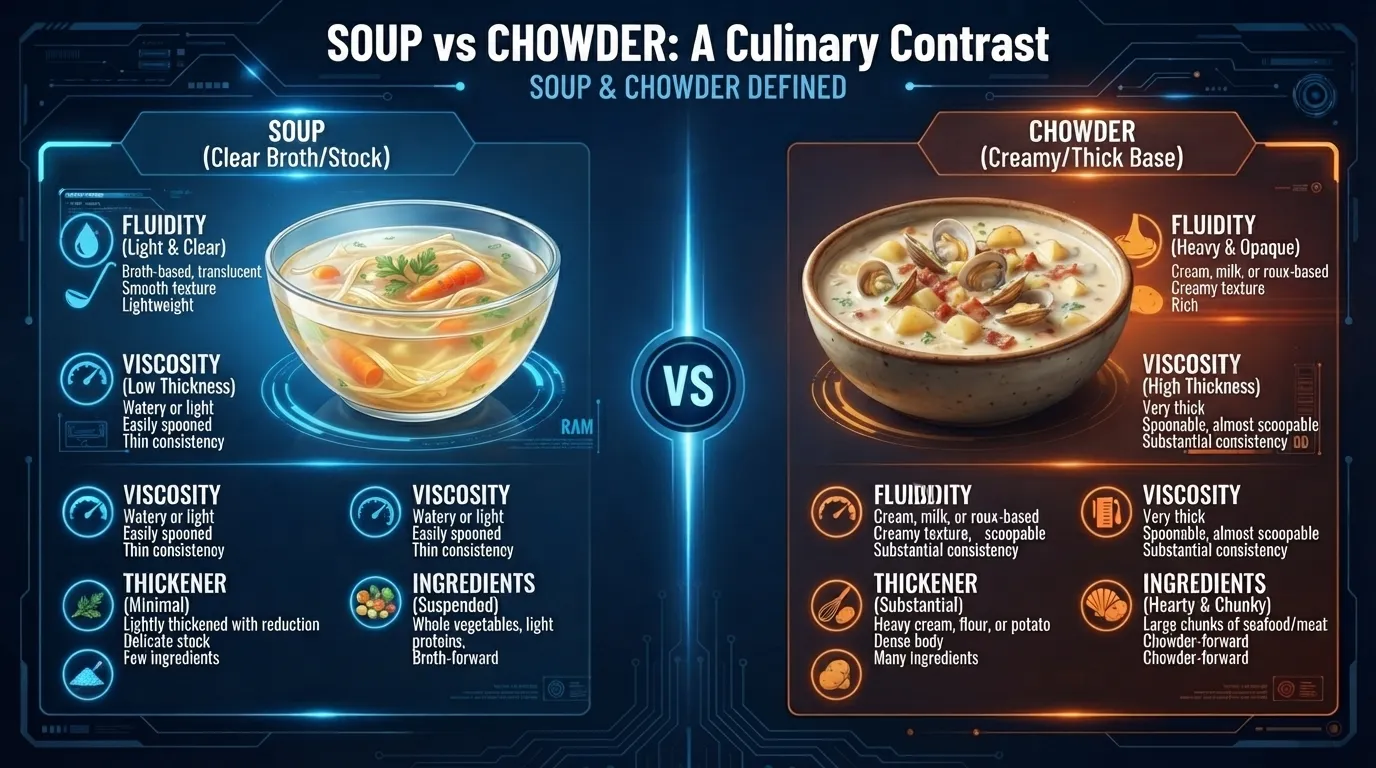
The main difference between soup and chowder comes down to thickness and style. Soup is a broad word for almost any dish made with liquid, veggies, meat, or fish, cooked together in a pot. Chowder is a thick, hearty type of soup, most often made with milk or cream, chunks of fish or veggies, and often some type of starch, like potato. In short, all chowder is soup, but not all soup is chowder.
Why This Difference Matters
Knowing soup vs chowder matters for cooks, chefs, and food lovers alike. If a recipe calls for chowder but a cook makes a thin soup instead, the whole dish can taste and feel wrong. For chefs and food writers, using the right word helps set the right taste and texture in a guest’s mind before the first bite. For daily life, this small bit of food knowledge helps us order the right dish at a diner, cook the right meal at home, and enjoy food with more care and joy.
Read more about https://comparificationn.com/difference-between-arc-and-earc/
Pronunciation
| Word | US | UK |
| Soup | “soop” | “soop” |
| Chowder | “CHOW-der” | “CHOW-duh” |
Difference Between Soup and Chowder
- Thickness Soup can be thin or thick, and this varies a lot. Chowder is almost always thick and creamy. Example 1: A clear chicken broth soup stays thin and light. Example 2: A clam chowder stays thick, almost like a stew.
- Base Liquid Soup can use water, broth, or cream as its base. Chowder often uses milk or cream as its main base. Example 1: A veggie soup may use a light water or broth base. Example 2: A corn chowder often uses milk or cream to build its base.
- Main Ingredients Soup can hold almost any mix of veggies, meat, or grains. Chowder often centers on fish, shellfish, or veggies like corn and potato. Example 1: A soup may mix beans, carrots, and rice in a light broth. Example 2: A chowder often mixes clams, potato chunks, and cream.
- Chunk Size Soup often has small, fine pieces of food. Chowder often has big, hearty chunks of food. Example 1: A soup may have thin slices of carrot and celery. Example 2: A chowder may have big chunks of potato and fish.
- Origin Soup has roots across many cultures around the world. Chowder has strong roots tied to coastal towns, mostly in New England. Example 1: Soup shows up in dishes from France, Japan, India, and beyond. Example 2: Chowder is tied closely to towns like Boston, known for its clam chowder.
- Use of Starch Soup may or may not use a starch, like rice or noodles. Chowder often uses potato as its main starch. Example 1: A noodle soup uses noodles as its main starch. Example 2: A fish chowder often uses chunks of potato to add heft.
- Serving Style Soup often gets served as a starter or light meal. Chowder often gets served as a hearty main dish. Example 1: A light tomato soup may open a formal dinner. Example 2: A bread bowl of clam chowder often serves as the full meal.
- Common Add-Ins Soup often gets topped with herbs or a light garnish. Chowder often gets topped with bacon bits or crackers. Example 1: A soup may get a sprinkle of parsley on top. Example 2: A chowder may get topped with crumbled bacon and crackers.
- Cooking Method Soup often cooks fast, with a simple simmer. Chowder often takes longer, since cream and starch need time to blend well. Example 1: A quick veggie soup can be ready in twenty minutes. Example 2: A rich chowder may need to simmer slowly for the cream to thicken right.
- Regional Ties Soup is found in almost every culture’s food list. Chowder is tied most closely to coastal US and Canadian food. Example 1: Miso soup is a well-known dish from Japan. Example 2: New England clam chowder is a well-known dish from the US coast.
How They Act
Soup: Soup acts like a flexible base for endless dishes. It can be thin and light, or rich and hearty, shifting its role from a small starter to a full meal, based on what’s added.
Chowder: Chowder acts like a steady, hearty comfort dish. It leans thick and creamy nearly every time, built to fill you up and warm you through on a cold day.
Why People Mix Them Up
People mix up soup and chowder because chowder is, in truth, one type of soup. Since chowder falls under the wider soup family, it’s easy to use the words loosely, calling any thick dish “soup” without naming its exact type. Menus don’t always help either, since some list “clam chowder” under a “soups” section, blending the line even more.
Comparison Table
| Feature | Soup | Chowder |
| Thickness | Thin to thick | Almost always thick |
| Base | Water, broth, or cream | Milk or cream |
| Chunk size | Small to fine | Big, hearty |
| Common star item | Varies widely | Fish, shellfish, corn, potato |
| Starch use | Sometimes | Often, like potato |
| Origin | Global | Mostly coastal US/Canada |
| Serving role | Starter or main | Mostly a main dish |
| Cook time | Often quick | Often longer |
| Topping | Herbs, light garnish | Bacon, crackers |
| Family type | Wide, broad group | One type within soup |
Which Fits Which Case?
When soup fits: If you want a light starter, a fast meal, or a dish that fits many cultures and styles, soup is the better pick. It works well before a big meal, or as a light lunch on a warm day, since it can be as thin or as full as you like.
When chowder fits: If you want a hearty, filling meal that warms you up on a cold day, chowder is the stronger choice. It works best as a main dish, especially when made with fresh fish or shellfish and a rich, creamy base.
Metaphors and Similes
- “Their plan was as thin as soup” — means the plan lacked real depth or strength.
- “Life gets thick like a chowder sometimes” — means life can feel full and heavy at once.
- “The city fog rolled in thick as chowder” — means the fog was heavy and hard to see through.
- These food terms show up often in daily talk, since food-based sayings feel familiar and easy to picture.
Connotative Meanings
Soup:
- Positive: “This soup warms my soul” — means it brings comfort and joy.
- Neutral: “We had soup for lunch” — just states a fact.
- Negative (rare): “The plan was thin as soup” — means it lacked real strength or plan.
Chowder:
- Positive: “This chowder is pure comfort in a bowl” — means it feels rich and satisfying.
- Neutral: “The diner serves chowder every Friday” — just states a fact.
- Chowder rarely carries a negative tone, since it’s tied closely to comfort and warmth.
Idioms and Proverbs
Soup connects to a well-known idiom, while chowder stays mostly food-based with fewer sayings:
- “In the soup” — “He landed in the soup after missing the deadline,” meaning he was in trouble.
- “Soup to nuts” — “The chef planned the whole meal, soup to nuts,” meaning from start to finish.
- Chowder does not carry a widely known idiom of its own, since it stays more tied to its role as a dish.
Books and Movies
Soup and chowder are food terms, so they show up mostly in food writing rather than major fiction or film titles:
- Chicken Soup for the Soul — self-help book series, Jack Canfield and Mark Victor Hansen, 1993 (uses “soup” in its title as a comfort symbol)
- Clam Chowder: A Boston Tradition — a food history text found in various regional cookbooks, though no single, famous, widely credited author or year stands out clearly.
No major films are built directly around soup or chowder as their main topic, since these are food dishes, not common story themes. Food-based films, like Ratatouille (2007, USA/France), touch on cooking and comfort food in a wider way.
Five Common Questions
1. Is chowder always made with seafood? No. While clam and fish chowders are the most famous, some chowders use corn or veggies instead of seafood.
2. Can soup be as thick as chowder? Yes, some soups, like a bisque or a puree soup, can turn out thick. But chowder still tends to stand out with its cream base and big chunks.
3. Why is chowder tied to New England? Coastal towns in New England had easy access to fresh clams and fish, so chowder grew as a local, hearty dish over time.
4. Is chowder a type of stew? Chowder sits close to stew in thickness, but it’s still classed as a soup, since it holds more liquid than a true stew.
5. Can I turn a thin soup into a chowder? Yes. Adding cream, potato, and thicker chunks of fish or veggies can turn a light soup into a heartier, chowder-style dish.
How Both Are Useful
Soup and chowder both help us stay warm, fed, and comforted, especially in cold weather. Soup offers an easy way to use up veggies, meat, and leftovers in a healthy, low-cost meal. Chowder offers a filling, hearty option that can serve as a full meal on its own. Together, they help home cooks and chefs alike create dishes that fit almost any mood, season, or budget.
Final Words
Soup stands for range and freedom, shifting from light and thin to rich and full. Chowder stands for comfort and heft, built to fill you up with cream, chunks, and warmth. Both dishes bring joy to the table in their own way, and knowing their true difference can help you cook and order with more care.
Conclusion
Difference between soup and chowder comes down to thickness, base, and style. Soup is the wide, flexible term that covers dishes from light broths to thick purees. Chowder is the thick, creamy dish that sits within the soup family, tied closely to fish, potato, and cream. Knowing soup vs chowder helps you pick the right dish for the right mood, whether you want a light starter or a full, hearty meal. Whether you’re cooking at home, reading a menu, or just curious about food words, understanding soup and chowder gives you a clearer, tastier view of what lands in your bowl.

I’m Zahid Abbas, an educator, researcher, and digital publishing strategist with a passion for linguistics, grammar, and clear communication. As a content creator and SEO specialist, I craft research-driven, reader-focused content that empowers learners and makes knowledge accessible worldwide.










