Picture a young boy reading a picture book about angels before bed. He sees a small, gentle angel on one page. On the next page, he sees a tall, strong figure with a sword. The book calls him Michael. The boy asks his grandmother, “Aren’t they both just angels?” His grandmother smiles. She says Michael is an archangel, a special and higher kind of angel. The boy is surprised. He always thought angel and archangel meant the same thing.
Many people use angel and archangel like they’re the same word. But angel and archangel actually mean two different levels of heavenly beings in many religions. Learning the difference between angel and archangel helps readers understand old stories, art, and books better. Once you know how angel and archangel differ, old paintings and tales start to make a lot more sense.
Key Difference Between the Two
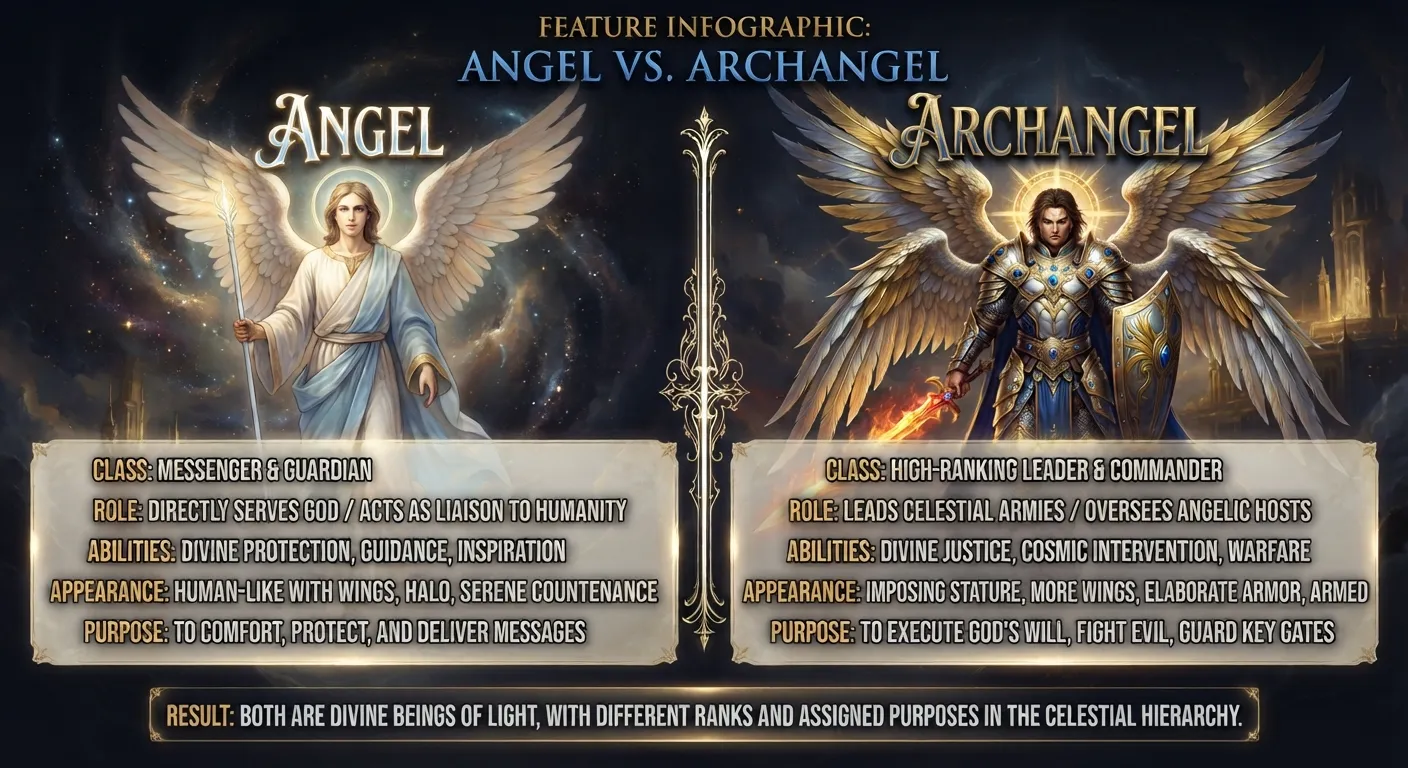
The biggest difference between angel and archangel comes down to rank and job. In many religions, angel is a general word for a heavenly messenger or spirit. Archangel means a higher-ranking angel, often given bigger, more important jobs. Every archangel is a type of angel. But not every angel is an archangel.
Why This Difference Matters for Learners and Experts
For everyday readers, knowing the difference between angel and archangel helps make sense of old stories, art, and movies that use these words a lot. For students learning about religion, understanding angel and archangel roles is an important step. For religious teachers, knowing the exact difference between angel and archangel helps them explain old texts clearly. This knowledge also helps people talk about religious ideas with more care and respect.
Pronunciation:
- Angel — US: “AYN-jul” | UK: “AYN-jul” (same sound)
- Archangel — US: “ARK-ayn-jul” | UK: “ARK-ayn-jul” (same sound)
Difference Between Angel and Archangel
1. Meaning of the Word.
Angel is a general word for a heavenly spirit or messenger. Example: A guardian angel is often shown watching over a person. Example: Many angels are described as simple messengers in old texts. Archangel means a chief angel, standing above regular angels. Example: Michael is often called the leader of God’s armies. Example: Gabriel is known as a messenger archangel with big news to share.
2. Rank and Position.
Angels are often shown as lower-ranking heavenly beings. Example: A regular angel might carry a small message to one person. Example: Angels are often shown in large groups in old art. Archangels are shown holding a higher rank. Example: An archangel is often shown standing alone, not in a crowd. Example: Archangels are given more serious jobs.
3. Number Given Names.
Many angels are not given their own names in old texts. Example: Most angels in the Bible show up without a name. Example: Angels are often described just by what they do, not who they are. Archangels are usually given names, since there are only a few. Example: Michael and Gabriel are two of the most well-known named archangels. Example: Some old texts name up to seven archangels in total.
4. Type of Jobs Given.
Angels often do small, everyday jobs, like guarding or comforting. Example: An angel might comfort someone during a hard time. Example: A guardian angel is said to watch over one person’s whole life. Archangels often do bigger, more important jobs. Example: Archangel Michael is said to lead a heavenly battle. Example: Archangel Gabriel brings big news, like the birth of a special child.
5. Look in Religious Art.
Angels are often shown as gentle, human-like figures with wings. Example: A small angel might be painted sitting quietly nearby. Example: Angels in art often look calm and soft. Archangels are often shown as strong, sometimes armed figures. Example: Michael is often painted holding a sword or shield. Example: Archangels are drawn bigger and bolder in size.
6. Found in Many Religions.
The idea of angels shows up in many religions, like Judaism, Christianity, and Islam. Example: Angels are named through the Bible and the Torah. Example: Angels also show up in the Quran as God’s messengers. Archangels also show up in these same religions, though sometimes with different names. Example: Michael appears in Judaism, Christianity, and Islam. Example: Gabriel is known in all three faiths as a key messenger.
7. Shown in Movies and Books.
Angels are shown a lot in movies, shows, and books as gentle guides. Example: A movie angel might guide a lost character home. Example: Angels are often shown giving comfort to someone in need. Archangels are shown as strong fighters or big-news messengers. Example: A movie archangel might lead a huge battle. Example: An archangel character often plays a big part in the story.
8. What They Stand For.
Angels often stand for comfort, safety, and gentle help. Example: A guardian angel symbol often means safety. Example: Angel pictures are common on comforting gifts, like jewelry or cards. Archangels often stand for strength and power. Example: Michael’s picture often stands for courage and protection from evil. Example: Gabriel’s picture often stands for big news or a turning point.
9. How Often They Show Up
Angels show up a lot in old religious texts, often without much detail. Example: The Bible tells of angels visiting many different people. Example: Angels are said to visit shepherds, prophets, and everyday people. Archangels show up much less, usually during big moments. Example: Archangel Gabriel shows up at very important times, like a big announcement. Example: Archangel Michael shows up during times of great struggle.
10. What Most People Know.
Most people know the basic idea of an angel from art, stories, and shows. Example: People often picture a winged figure with a glowing ring when they think of an angel. Example: Angels are a familiar picture in everyday talk. Fewer people know what makes an archangel different. Example: Some people are surprised there’s even a rank system among angels. Example: Many people know the name Michael without knowing he’s an archangel.
How Each One Behaves
An angel is often shown as a gentle, caring figure. It focuses on comfort, safety, and small acts of help.
An archangel is often shown as a strong, bold figure. It focuses on big jobs, important messages, and leading other angels.
Why People Get Confused
Most of the mix-up comes from how loosely both words get used in everyday talk. Any heavenly figure might simply get called an angel. Many people also don’t know that archangel is a real rank, since most art and stories don’t always explain the difference clearly.
Angel vs Archangel: Quick Comparison Table
| Feature | Angel | Archangel |
| General meaning | Heavenly messenger or spirit | Higher-ranking angel |
| Rank | Lower | Higher |
| Usually named | Rarely | Often, yes |
| Type of jobs | Small, everyday | Big, major events |
| Common in art | Gentle, soft figures | Strong, armed figures |
| Found in many religions | Yes | Yes |
| Shown in old texts | Very often | Less often |
| Stands for | Comfort, safety | Strength, leading |
| Number believed to exist | Many | Few |
| Found in movies and shows | Yes | Yes |
Which Is Better in What Situation?
For stories about comfort and safety: Angel fits best, since it’s tied to gentle help and everyday care.
For stories about big events or turning points: Archangel fits better, since it’s tied to important, large moments.
For teaching about ranks of heavenly beings: Learning about archangels helps explain the order believed to exist among angels.
For everyday, casual talk: The word angel usually works fine, since it’s the more common and general term.
Angel and Archangel in Metaphors and Similes
People often say someone acted “like an angel,” meaning they were kind or helpful. A strong, bold person might be called “an archangel” in spirit. Writers sometimes compare a caring nurse to “an angel of mercy.” A strong leader might be compared to “an archangel leading the charge.”
Connotative Meanings
Angel carries a warm, gentle feeling, tied to kindness. Example: “She’s such an angel for helping without being asked.”
Archangel carries a strong but good feeling, tied to power. Example: “He led the team like an archangel, calm but unstoppable.”
Idioms and Proverbs Related to Angels
- “Angel on your shoulder” — a feeling of guidance or safety. Example: “She felt like she had an angel on her shoulder during the hard test.”
- “Fools rush in where angels fear to tread” — means acting without thinking, even when wiser people are careful. Example: “He jumped into the deal without thinking, truly fools rush in where angels fear to tread.”
- “On the side of the angels” — means backing what is right or good. Example: “The helpers were clearly on the side of the angels, giving without asking for anything back.”
Works in Literature Featuring Angel and Archangel
- Paradise Lost — Epic Poem, by John Milton, 1667 (features angels and archangels, including Michael)
- Good Omens — Fantasy Fiction, by Terry Pratchett and Neil Gaiman, 1990 (features an angel as a main character)
- The Book of Enoch — Religious Text, old and traditional, ancient origins (gives detailed descriptions of archangels)
Movies Featuring Angel and Archangel
- Michael — Fantasy Comedy, 1996, United States (features an archangel character)
- Constantine — Fantasy Action, 2005, United States (features angels and an archangel figure)
- Wings of Desire — Drama, 1987, Germany (features angels as main characters)
Five Frequently Asked Questions About Angel vs Archangel
1. Is an archangel stronger than a regular angel? In most beliefs, yes. Archangels are usually shown with a higher rank and bigger jobs than regular angels.
2. How many archangels are there? This changes by tradition, but many old texts name up to seven well-known archangels.
3. Are Michael and Gabriel the only archangels? No. While they’re the most famous, names like Raphael and Uriel are also often listed as archangels.
4. Do all religions agree on what an archangel is? Not exactly. Different religions describe archangels a bit differently, though the basic idea of a higher-ranking angel is common.
5. Can a regular angel become an archangel? Most beliefs describe set roles, so a regular angel doesn’t usually change into an archangel, though ideas vary by faith and story.
How Both Are Useful for Communities
Angels and archangels both hold meaning in religious groups and stories around the world. Angel pictures often bring comfort during hard times, giving hope and a feeling of safety. Archangel stories often inspire courage and remind people of strength during big challenges. Together, these ideas help shape how people share faith, hope, and meaning across many years.
Final Thoughts
The angel stands out as a gentle, familiar sign of comfort and safety. The archangel stands out as a strong, bold figure tied to big events and leading other angels. Both hold deep meaning across many cultures and beliefs.
Conclusion
Difference between angel and archangel isn’t just old trivia. It helps deepen your understanding of stories, art, and beliefs shared across many cultures and years. Whether you’re reading an old text, learning about religion, or just curious about the words, learning the difference between angel and archangel opens up a richer view of these old ideas. Next time you see an angel or archangel in a story or painting, you’ll know exactly what sets them apart.

I’m Zahid Abbas, an educator, researcher, and digital publishing strategist with a passion for linguistics, grammar, and clear communication. As a content creator and SEO specialist, I craft research-driven, reader-focused content that empowers learners and makes knowledge accessible worldwide.