Ali wanted to buy a phone cover online. He read that the case was made of “silicon.” Later, his friend said it should be “silicone.” Both words looked almost the same. So, Ali got confused.
Many people mix up these two words every day. The difference between silicon and silicone is small in spelling but very big in meaning. One is a natural chemical element. The other is a soft synthetic material.
Knowing the difference between silicon and silicone is useful in daily life, school, science, and shopping. You may see these words in computers, kitchen tools, beauty products, and medical items. This guide will help you understand both words in a very easy way.
What is “Silicon”?
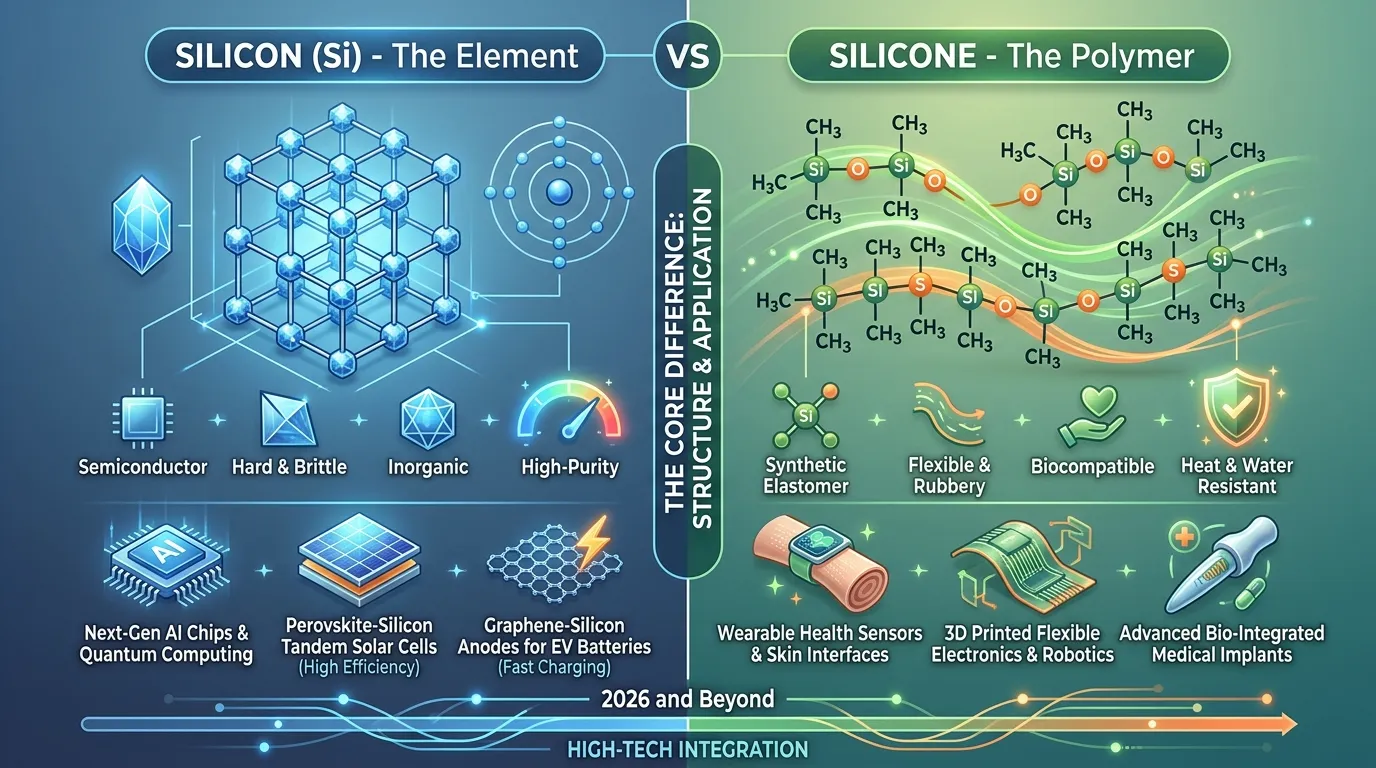
Silicon is a natural chemical element. It is found in sand, rocks, and soil. It is hard and shiny. People use silicon in computer chips, solar panels, and electronics.
Silicon is very important in modern technology because it helps electronic devices work properly.
History of Silicon
Scientists discovered silicon in 1824. A Swedish chemist named Jöns Jacob Berzelius first separated it from other materials. Later, people learned that silicon could carry electricity in a controlled way. This made it useful for electronics. In the 1900s, silicon became the main material for computer chips. Today, silicon is used in phones, laptops, calculators, and solar energy systems. Many experts even call modern tech areas “Silicon Valley” because of its importance in the computer world.
What is “Silicone”?
Silicone is a soft, flexible synthetic material. It is made using silicon along with oxygen, carbon, and hydrogen. Silicone can handle heat, water, and chemicals very well.
People use silicone in baking tools, sealants, medical products, and beauty items.
History of Silicone
Silicone was first developed in the early 1900s. Scientists wanted a material that could resist heat and water. Over time, silicone became popular because it was soft, flexible, and long-lasting. During World War II, industries used silicone in machines and equipment. Later, it became common in homes and hospitals. Today, people use silicone in kitchen tools, baby products, medical tubes, cosmetics, and waterproof sealants. It is now one of the most useful synthetic materials in daily life.
Silicon vs Silicone
Silicon is a natural element used in electronics.
Silicone is a soft synthetic material used in household and medical products.
Although their names sound alike, their jobs are completely different. Let’s understand them in detail.
How Silicon Works
Silicon controls electricity in electronic devices. It acts like a semiconductor. This means it can carry electricity under certain conditions.
Key Features
- Natural chemical element
- Hard and brittle
- Found in sand and rocks
- Used in electronics
- Conducts electricity in a controlled way
Example Sentences
🔵 Silicon is used inside computer chips.
🔵 Solar panels contain silicon cells.
Uses
- Computers
- Smartphones
- Solar panels
- Electronic devices
- Calculators
- Microchips
How Silicone Works
Silicone creates a flexible and heat-resistant layer. It can bend easily and still stay strong.
Key Features
- Soft and flexible
- Water-resistant
- Heat-resistant
- synthetic material
- Safe for medical and kitchen use
Example Sentences
🟢 The baking tray is made of silicone.
🟢 The plumber used silicone sealant around the sink.
Uses
- Kitchen utensils
- Phone covers
- Medical tubes
- Beauty products
- Sealants
- Baby products
Which One Should You Use?
Use silicon when talking about electronics, computers, or science.
Use silicone when talking about soft products, sealants, or kitchen tools.
10 Differences Between Silicon and Silicone
1. Meaning
Silicon is a natural chemical element.
🔴 Silicon is used in chips.
🔴 Silicon helps electronics work.
Silicone is a synthetic rubber-like material.
🔴 Silicone gloves resist heat.
🔴 Silicone sealant blocks water.
2. Type
Silicon is an element from nature.
🔴 Silicon exists in sand.
🔴 Silicon is part of the Earth.
Silicone is a synthetic compound.
🔴 Silicone is produced in factories.
🔴 Silicone is used in molds.
3. Texture
Silicon is hard and brittle.
🔴 Silicon can crack easily.
🔴 Silicon feels solid.
Silicone is soft and flexible.
🔴 Silicone bends easily.
🔴 Silicone feels rubbery.
4. Main Use
Silicon is used in electronics.
🔴 Silicon powers computers.
🔴 Silicon is used in chips.
Silicone is used in household products.
🔴 Silicone is used in spatulas.
🔴 Silicone is used in sealants.
5. Heat Resistance
Silicon handles electricity better than heat.
🔴 Silicon works in circuits.
🔴 Silicon is used in processors.
Silicone handles heat very well.
🔴 Silicone baking mats resist heat.
🔴 Silicone gloves protect hands.
6. Water Resistance
Silicon is not mainly used for waterproofing.
🔴 Silicon is found in tech products.
🔴 Silicon is used in solar cells.
Silicone is highly waterproof.
🔴 Silicone keeps water out.
🔴 Silicone is used around sinks.
7. Appearance
Silicon looks shiny and metallic.
🔴 Silicon has a gray color.
🔴 Silicon looks solid.
Silicone looks soft and rubbery.
🔴 Silicone can be clear.
🔴 Silicone can come in many colors.
8. Industry
Silicon belongs to the tech industry.
🔴 Silicon is used in laptops.
🔴 Silicon is used in electronics labs.
Silicone belongs to home and medical industries.
🔴 Silicone is used in hospitals.
🔴 Silicone is used in kitchens.
9. Flexibility
Silicon is stiff.
🔴 Silicon chips are rigid.
🔴 Silicon does not bend well.
Silicone is flexible.
🔴 Silicone tubes bend easily.
🔴 Silicone molds are soft.
10. Safety
Silicon is mainly used in machines.
🔴 Silicon stays inside devices.
🔴 Silicon supports electronic systems.
Silicone is safe for skin and food use.
🔴 Silicone baby spoons are safe.
🔴 Silicone bakeware is food-safe.
Why People Get Confused About Their Use
People get confused because the words “silicon” and “silicone” look and sound almost the same. Many companies and advertisements also use them incorrectly. Some people think both words mean the same material. However, one word belongs to technology, while the other belongs to household and medical products.
Table: Difference and Similarity
| Feature | Silicon | Silicone | Similarity |
| Type | Natural element | Synthetic material | Both are useful |
| Texture | Hard | Soft | Both are durable |
| Main Use | Electronics | Household items | Both help daily life |
| Heat Resistance | Moderate | High | Both handle some heat |
| Water Resistance | Low | High | Both can last long |
| Industry | Technology | Medical and home | Both are industrial materials |
| Flexibility | Rigid | Flexible | Both are manufactured for use |
| Source | Found in nature | Made in factories | Both contain silicon |
| Appearance | Metallic | Rubber-like | Both come in different forms |
| Popular Products | Chips, panels | Sealants, bakeware | Both are common worldwide |
Which is Better in What Situation?
Silicon is better for electronics and technology. It helps devices process information and carry electricity. That is why companies use it in phones, computers, and solar systems.
Silicone is better for flexible and heat-resistant products. It works well in kitchens, bathrooms, hospitals, and beauty products because it is soft, waterproof, and safe.
How Are “Silicon” and “Silicone” Used in Metaphors and Similes?
🟣 “His brain works like silicon chips.”
Meaning: Very smart and fast-thinking.
🟣 “Her skin felt smooth like silicone.”
Meaning: Very soft and smooth.
🟣 “The city became a silicon hub.”
Meaning: A center for technology companies.
Connotative Meaning
Silicon usually has a positive and modern feeling because people connect it with technology and innovation.
🟣 “Silicon Valley represents innovation.”
Silicone often has a practical and safe feeling because people connect it with comfort and flexibility.
🟣 “Silicone products are safe for babies.”
Both words are mostly neutral in normal conversation.
Idioms or Proverbs
There are no famous traditional idioms for silicon or silicone. However, modern expressions exist.
🟣 “Built like silicone.”
Meaning: Flexible and durable.
Example: “That phone cover is built like silicone.”
🟣 “Silicon dreams.”
Meaning: Dreams related to technology success.
Example: “Many young coders chase silicon dreams.”
Works in Literature
🟣 The Silicon Boys by David A. Kaplan (1999) — A book about technology companies and computer history.
🟣 Silicon Snake Oil by Clifford Stoll (1995) — A book discussing technology and society.
Movies Related to the Keywords
🟣 Silicon Cowboys (2016, USA) — The movie about the computer business world.
🟣 Jobs (2013, USA) — A film about technology and computer innovation.
Possible Questions
1. Is silicon the same as silicone?
No. Silicon is a natural element, while silicone is a synthetic material.
2. Which one is used in computers?
Silicon is used in computers and electronic chips.
3. Which one is soft and flexible?
Silicone is soft and flexible.
4. Is silicone safe for cooking?
Yes. Food-grade silicone is safe for cooking and baking.
5. Why do people confuse these words?
People confuse them because they sound and look similar.
Final Words
Learning new words can feel hard at first. However, small differences can become easy with practice. Silicon and silicone may look alike, but now you know they are very different. Keep learning step by step, and your English vocabulary will become stronger every day.
Conclusion
The difference between silicon and silicone is very important in science, technology, and daily life. Silicon is a natural element mainly used in electronics and computer chips. Silicone is a soft synthetic material used in kitchens, medical products, and sealants. Even though the words sound similar, their uses are completely different. Understanding these terms can help you avoid mistakes while studying, shopping, or talking about technology and household products. With simple examples and clear explanations, you can now easily remember which word to use in the right situation.

I’m Zahid Abbas, an educator, researcher, and digital publishing strategist with a passion for linguistics, grammar, and clear communication. As a content creator and SEO specialist, I craft research-driven, reader-focused content that empowers learners and makes knowledge accessible worldwide.










