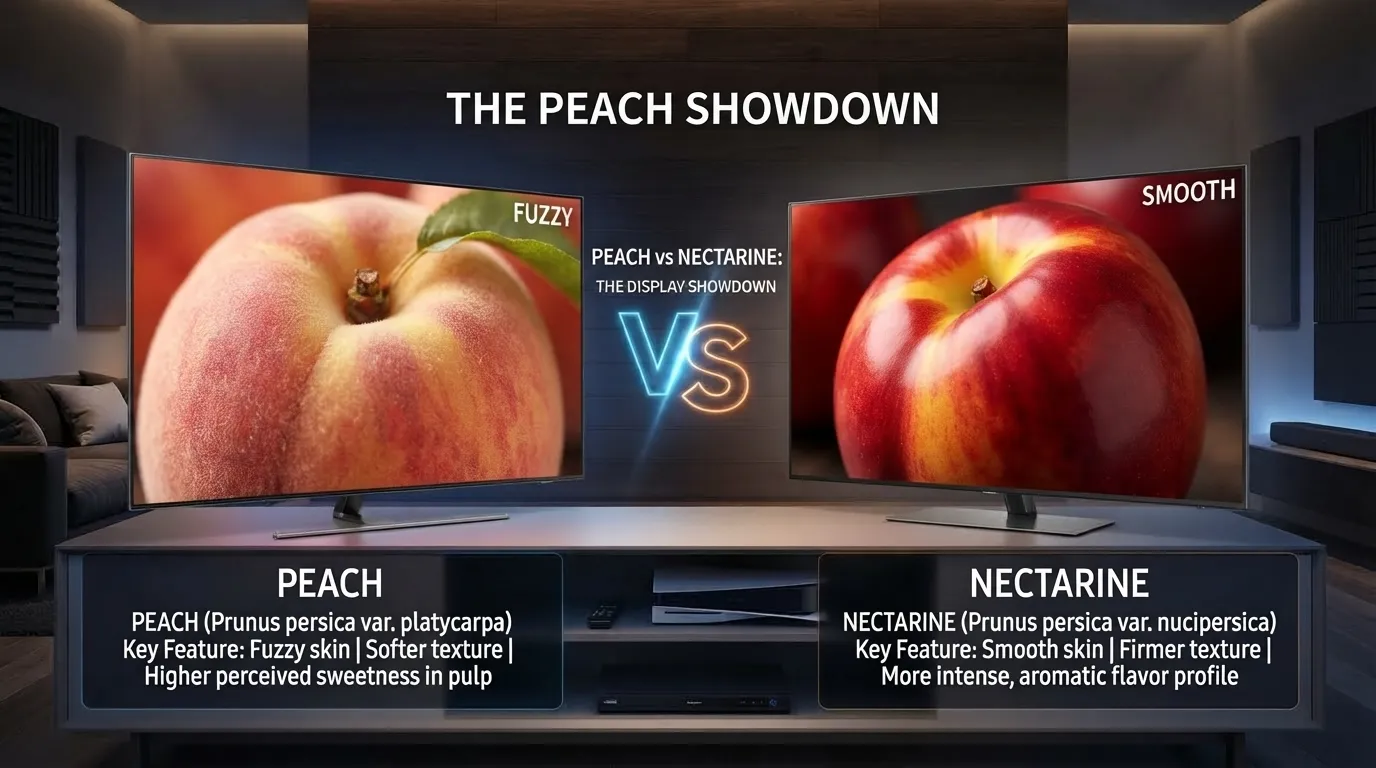
Last summer, I stood at a farmer’s market stall, staring at two baskets of fruit. One was fuzzy. One was smooth and shiny. The seller smiled and said, “Peach or nectarine? Take your pick.” I picked up both and asked, “Wait, aren’t these the same fruit?” She laughed and explained the truth. A peach and a nectarine come from the very same tree family. The only real difference sits in one tiny gene. That single gene decides fuzzy skin or smooth skin. The peach vs nectarine mix-up happens to shoppers all the time. Many people think they are two totally separate fruits. Once you learn the real peach vs nectarine difference, picking the right one gets much easier, whether you want fuzz-free snacking or classic peach flavor.
Key Difference Between Peach and Nectarine
A peach has fuzzy skin. A nectarine has smooth, shiny skin. This small difference comes from one gene. Everything else about the two fruits stays very close, since they are truly close cousins in the fruit world.
Why This Difference Matters for Learners and Experts
For shoppers, this knowledge helps pick the right fruit for snacking, baking, or gifting. For students of biology and food science, this knowledge is a simple, real-world example of how one gene can change how a fruit looks and feels. Food shapes daily life in every home and community. Knowing peach vs nectarine helps people shop smarter, cook better, and understand a small but interesting piece of plant science.
Pronunciation
Peach
- US English: /piːtʃ/ — said as “PEECH,” a short, simple word.
- UK English: /piːtʃ/ — said the same way, “PEECH.” Both countries say this word almost identically.
Nectarine
- US English: /ˈnɛktərin/ — said as “NEK-tuh-reen.”
- UK English: /ˈnɛktərin/ — said mostly the same, “NEK-tuh-reen,” though some British speakers say it slightly softer, closer to “NEK-truh-reen.”
Difference Between Peach and Nectarine
1. Skin texture A peach has fuzzy, soft skin. A nectarine has smooth, shiny skin. Example 1: Rubbing a peach feels a bit like touching soft velvet. Example 2: Rubbing a nectarine feels smooth, almost like touching a plum.
2. Genetic cause The fuzzy or smooth skin comes from one single gene. A peach carries the “fuzzy” version. A nectarine carries the “smooth” version. Example 1: Scientists can predict fuzzy skin in a peach seedling based on this one gene. Example 2: A nectarine can even grow on the same type of tree as a peach, due to this one small genetic change.
3. Size Peaches tend to be slightly larger. Nectarines tend to be slightly smaller. Example 1: A large peach can feel heavy and full in your hand. Example 2: A nectarine often feels a bit lighter and more compact.
4. Firmness Peaches often feel softer once ripe. Nectarines often feel firmer, even when ripe. Example 1: A ripe peach can feel slightly squishy near the stem. Example 2: A ripe nectarine often still feels firm enough to slice cleanly.
5. Flavor intensity Nectarines often taste slightly more intense and aromatic. Peaches often taste slightly sweeter and juicier. Example 1: A nectarine can taste a bit tangy alongside its sweetness. Example 2: A peach can taste rich and syrupy, with juice dripping down your hand.
6. Skin sensitivity Peach fuzz can bother some people’s skin or mouth. Nectarine’s smooth skin rarely causes this issue. Example 1: Some people feel a slight itch on their lips after eating peach skin. Example 2: A nectarine can be eaten skin-on with no fuzzy feeling at all.
7. Bruising and handling Nectarines bruise more easily, since their smooth skin offers less protection. Peaches resist bruising slightly better, thanks to their fuzzy layer. Example 1: A nectarine dropped on a counter may show a bruise mark quickly. Example 2: A peach can handle a light bump with less visible damage.
8. Use in cooking Peaches are common in pies, cobblers, and jams, since their soft texture breaks down well when cooked. Nectarines are common in salads and grilling, since their firm texture holds its shape. Example 1: A peach cobbler uses soft, juicy peach slices baked under a crust. Example 2: Grilled nectarine slices hold together well on a hot grill without falling apart.
9. Origin and history Both fruits trace back to China, where they were grown for thousands of years. Peaches became known worldwide first, while nectarines were often seen as a peach variety for a long time. Example 1: Ancient Chinese texts mention peaches as a symbol of long life. Example 2: Nectarines were once called “fuzzless peaches” in many old farming records.
10. Shopping confusion Since both fruits look similar in size, color, and shape from a distance, shoppers often confuse them at the store. Example 1: A shopper grabbing fruit quickly may pick a nectarine while thinking it’s a peach. Example 2: A recipe calling for “peaches” may still work fine with nectarines, since the flavor and texture stay so close.
The Nature and Behavior of Peach
A peach behaves like a soft, juicy fruit built for slow, sweet eating. Its fuzzy skin holds in moisture and offers some natural protection from bugs and light bruising. Peaches often ripen into a soft, fragrant fruit that feels best enjoyed fresh, with juice running down your fingers.
The Nature and Behavior of Nectarine
A nectarine behaves like a firmer, cleaner-eating fruit. Its smooth skin makes it easy to eat without wiping your hands first. Nectarines often hold their shape well, making them a strong choice for slicing, grilling, or packing in a lunch bag without much mess.
Why Do People Get Confused Between Peach and Nectarine?
Three reasons cause this mix-up. First, both fruits share almost the same size, shape, and color, so they look alike from a distance. Second, many people do not know that nectarines are simply a smooth-skinned type of peach, not a separate fruit entirely. Third, recipes and grocery stores often treat the two as interchangeable, blurring the line even further for everyday shoppers.
Peach vs Nectarine: Comparison Table
| Aspect | Peach | Nectarine |
| Skin texture | Fuzzy | Smooth |
| Genetic cause | Dominant “fuzzy” gene | Recessive “smooth” gene |
| Size | Slightly larger | Slightly smaller |
| Firmness | Softer when ripe | Firmer when ripe |
| Best cooking use | Pies, cobblers, jams | Salads, grilling |
| Bruising | Slightly more resistant | Bruises more easily |
| Similarity | Both come from the same species, Prunus persica | |
| Similarity | Both share a similar sweet flavor and juicy flesh |
Which Is Better in What Situation?
If you are baking a pie, cobbler, or jam, peaches work better. Their soft texture breaks down nicely when cooked, creating that classic soft, syrupy filling people expect.
If you want a fruit for salads, grilling, or a mess-free snack, nectarines work better. Their firm texture and smooth skin make them easy to slice, hold their shape on the grill, and eat without extra cleanup.
For most everyday snacking, either fruit works well, so the better choice often comes down to personal taste. Choose peaches for soft, juicy sweetness, and choose nectarines for a firmer bite and cleaner hands.
How Are Peach and Nectarine Used in Metaphors and Similes?
- “Soft as a peach” — used to describe someone or something gentle, kind, or delicate.
- “She’s a real peach” — used to describe someone sweet, kind, or wonderful to be around.
- “Smooth as a nectarine” — used less often, but sometimes describes something sleek, polished, or effortless.
Connotative Meaning
Peach
- Positive: Suggests sweetness, kindness, and warmth. Example: “Thanks for helping me move, you’re a real peach.”
- Negative: Rarely negative, though “peachy” can be used sarcastically. Example: “Oh great, just peachy,” said after bad news.
- Neutral: Used plainly to describe the fruit. Example: “I bought a bag of peaches at the market.”
Nectarine
- Positive: Suggests freshness and a clean, modern feel. Example: “This nectarine tastes perfectly fresh and juicy.”
- Negative: Rarely used negatively, since it carries little cultural baggage compared to “peach.”
- Neutral: Used plainly to describe the fruit. Example: “The recipe calls for two sliced nectarines.”
Idioms or Proverbs
- “Everything’s peachy” — means everything is going well or is just fine. Example: “How’s work going?” “Oh, everything’s peachy these days.”
- “She’s a real peach” — means someone is kind, sweet, or a joy to be around. Example: “Thanks for covering my shift, you’re a real peach.”
There are no widely known idioms or proverbs built around “nectarine.” It remains mostly a plain, descriptive fruit name in everyday language.
Works of Literature Featuring the Terms
- James and the Giant Peach — children’s fantasy novel, written by Roald Dahl, published in 1961.
No widely known novels, poems, or plays are built around “nectarine” as a title or theme.
Movies Made on These Terms
- James and the Giant Peach (1996, USA) — a stop-motion animated film based on Roald Dahl’s novel, featuring a boy who travels inside a giant magical peach.
No widely known films are built around “nectarine” as their title or main subject.
Five Frequently Asked Questions
1. Is a nectarine just a peach without fuzz? Yes, in simple terms. A nectarine is a type of peach with a gene that removes the fuzzy skin.
2. Can a peach tree grow nectarines, or the other way around? Yes, sometimes. Since the fuzzy and smooth traits come from one gene, both fruits can occasionally appear on the same type of tree through natural genetic mixing.
3. Do peaches and nectarines taste very different? Not by much. Nectarines often taste slightly more intense, while peaches often taste slightly sweeter and juicier, but both stay close in overall flavor.
4. Which fruit is better for baking, peach or nectarine? Peaches usually work better for baking, since their soft texture breaks down nicely into a smooth, juicy filling.
5. Are nectarines more expensive than peaches? Prices vary by season and location, but nectarines are sometimes priced slightly higher due to demand for their smooth, easy-to-eat skin.
How Are Peach and Nectarine Useful for Our Surroundings?
Both fruits bring real value to daily life and local communities. They support farmers and local markets during summer growing seasons, giving families fresh, healthy snack options. Both fruits also appear often in shared meals, from backyard barbecues to school lunches, helping bring people together over simple, natural food. Growing peach and nectarine trees also supports bees and other pollinators, adding a small but real benefit to local gardens and ecosystems.
Final Words
Peach and nectarine are closer than most people realize. One small gene decides fuzzy skin or smooth skin, and almost everything else stays nearly the same. Knowing this difference helps you shop smarter, cook better, and enjoy summer’s favorite fruits with a little more knowledge in hand.
Conclusion
Peach vs nectarine question comes down to one simple gene. Peaches have fuzzy skin and a slightly softer, juicier bite, while nectarines have smooth skin and a slightly firmer, more intense flavor. Knowing peach vs nectarine helps shoppers choose the right fruit for snacking or baking, helps students understand a simple example of plant genetics, and helps communities enjoy fresh, local produce with more confidence. Whether you love soft, syrupy peaches or firm, clean-eating nectarines, understanding peach vs nectarine helps you pick the perfect summer fruit every time.

I’m Zahid Abbas, an educator, researcher, and digital publishing strategist with a passion for linguistics, grammar, and clear communication. As a content creator and SEO specialist, I craft research-driven, reader-focused content that empowers learners and makes knowledge accessible worldwide.










