A few years ago, a friend of mine survived a serious car accident. Loud noises made her jump, and she had nightmares for months. A doctor diagnosed her with PTSD. Around the same time, another friend grew up in a home with ongoing abuse. She didn’t have one scary event — she had years of harm. Her therapist used a different term: CPTSD. Both friends carried real pain, but their experiences weren’t the same, and neither were their diagnoses. The difference between PTSD vs CPTSD matters, because it shapes how doctors treat each condition and how loved ones offer support. Understanding PTSD vs CPTSD helps everyone respond with more care and less confusion.
Key Difference Between PTSD and CPTSD

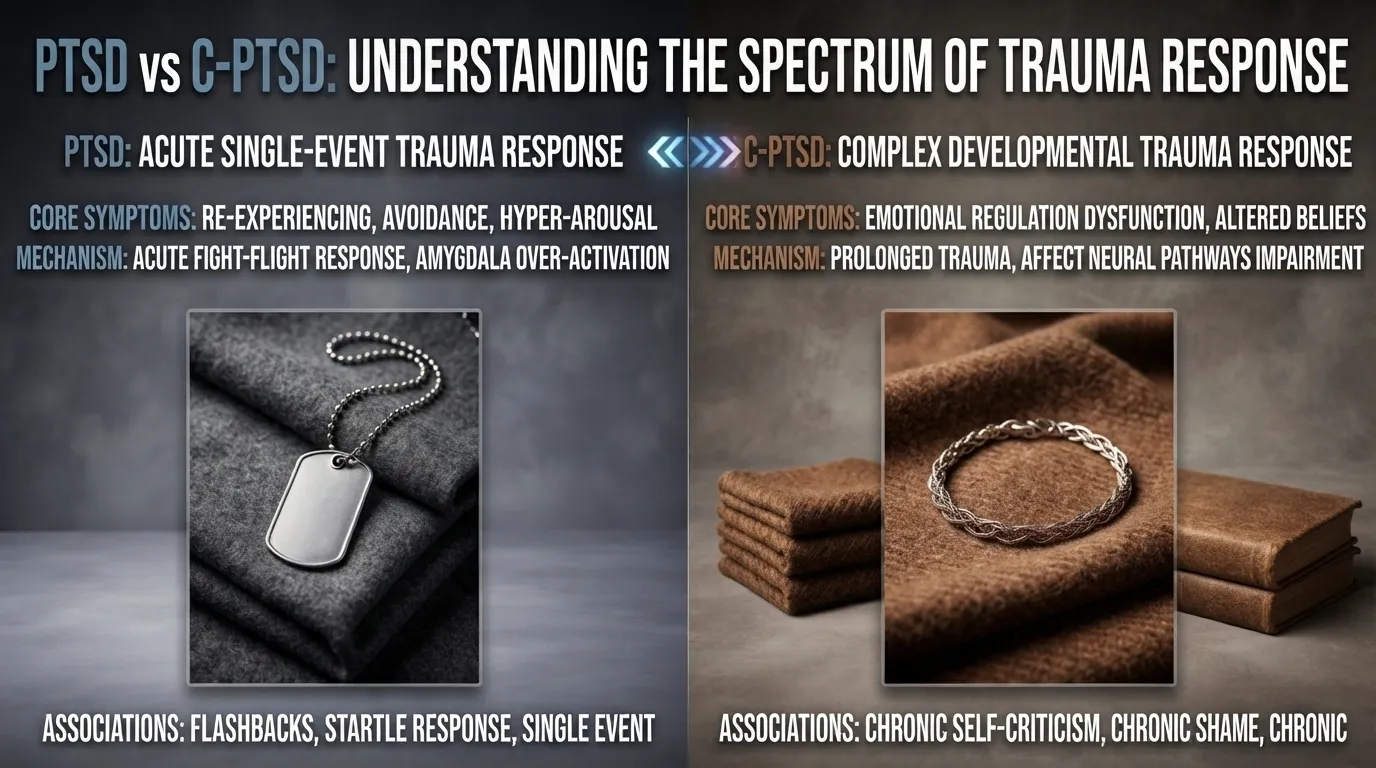
PTSD usually comes from one clear, frightening event, like an accident or attack. CPTSD usually comes from long-term, repeated trauma, like ongoing abuse. CPTSD includes all the signs of PTSD, plus extra struggles with emotions, self-image, and relationships.
Why This Difference Matters for Learners and Experts
For everyday people, this knowledge helps them support a struggling friend or family member. For psychology students and mental health workers, it shapes accurate diagnosis and treatment. Mental health touches schools, workplaces, and homes everywhere. Knowing PTSD vs CPTSD helps communities respond to trauma survivors with patience instead of judgment.
Pronunciation
PTSD — US and UK: /ˌpiː tiː ɛs ˈdiː/, said letter by letter, “P-T-S-D.” CPTSD — US and UK: /ˌsiː piː tiː ɛs ˈdiː/, said letter by letter, “C-P-T-S-D.” Many people also say “Complex PTSD” in full.
Difference Between PTSD and CPTSD
1. Type of trauma PTSD often follows one sudden event. CPTSD often follows trauma that repeats over time. Example: A crash survivor may develop PTSD after one accident. A child who faced years of abuse may develop CPTSD.
2. Core symptoms Both share flashbacks and strong fear. CPTSD adds more symptoms on top. Example: Someone with PTSD may relive a robbery through flashbacks. Someone with CPTSD has those flashbacks, plus deep struggles trusting others.
3. Sense of self PTSD doesn’t always change how someone sees themselves. CPTSD often creates deep shame or low self-worth. Example: A soldier with PTSD may still feel confident outside of triggers. A CPTSD survivor of abuse may feel worthless most of the time.
4. Emotional control PTSD causes strong reactions tied to specific triggers. CPTSD causes harder-to-control emotions across daily life. Example: A loud bang may trigger sudden panic in PTSD. In CPTSD, anger or sadness may surface without a clear trigger at all.
5. Relationships PTSD may affect trust mainly around triggers. CPTSD often affects the ability to trust people in general. Example: A dog-attack survivor with PTSD may avoid dogs but still trust people. A CPTSD survivor of neglect may struggle to trust even safe, loving people.
6. Diagnostic recognition PTSD is recognized worldwide. CPTSD is recognized in the ICD-11 guide, but it isn’t yet a separate diagnosis in the DSM-5-TR used in the US. Example: Most doctors can diagnose PTSD anywhere. A doctor using ICD-11 can diagnose CPTSD directly.
7. Length of trauma PTSD often links to trauma with a clear start and end. CPTSD often links to trauma with no clear end. Example: A robbery has one clear moment of danger. Growing up with an abusive parent has no single “end point.”
8. Physical stress response PTSD often shows stress tied to specific reminders. CPTSD often shows a more constant, ongoing stress response. Example: A PTSD survivor’s heart may race at a specific sound. A CPTSD survivor may feel tense most of the day.
9. Treatment approach PTSD treatment often focuses on one traumatic memory. CPTSD treatment takes longer and also targets emotional patterns and relationships. Example: A PTSD plan may use therapy focused on one event. A CPTSD plan may add long-term work on self-esteem and trust.
10. Public awareness PTSD is widely known. CPTSD is newer and less known, even though experts see it as equally important. Example: Many people recognize PTSD from stories about veterans. Many have never heard of CPTSD, even after living through the trauma linked to it.
Nature and Behavior of PTSD
PTSD behaves like an alarm system stuck “on” after one clear danger. The mind keeps reacting as if that danger could return, showing up as flashbacks, nightmares, and avoidance.
Nature and Behavior of CPTSD
CPTSD behaves like a nervous system shaped by long-term danger. Because the trauma repeated over time, it often shapes a person’s sense of self, trust, and emotional control more broadly, not just around reminders.
Why Do People Get Confused Between PTSD and CPTSD?
Both share core symptoms, so they can look similar from the outside. CPTSD also isn’t a separate diagnosis in every medical guide, so some doctors and articles use “PTSD” as a general term. Finally, public awareness of CPTSD is still growing, so many people simply haven’t learned the term yet.
PTSD vs CPTSD: Comparison Table
| Aspect | PTSD | CPTSD |
| Trauma type | Often one event | Repeated, long-term trauma |
| Core symptoms | Flashbacks, nightmares, avoidance | Same, plus more |
| Self-image | Usually stable | Often deeply affected |
| Emotional control | Tied to triggers | Harder to control daily |
| Trust in others | May stay intact outside triggers | Often deeply affected |
| Formal recognition | Recognized worldwide | Recognized in ICD-11 |
| Similarity | Both come from real trauma affecting the nervous system | |
| Similarity | Both can involve flashbacks and high alertness |
Which Is Better in What Situation?
This isn’t about which is “better,” since no one chooses either condition. It’s about which diagnosis fits which trauma history. A single, sudden event often points toward PTSD, since the trauma has a clear source and timeline.
A pattern of repeated trauma over months or years, especially trauma that shaped someone’s sense of self, often points toward CPTSD, since it captures deeper, long-term harm.
Only a qualified mental health professional can give an accurate diagnosis. This article offers general information, not a real evaluation.
How Are PTSD and CPTSD Used in Metaphors and Similes?
- “Shell-shocked” — an older wartime term, now used loosely for anyone stunned by a shocking event.
- “Walking on eggshells” — describes careful, anxious behavior often linked to CPTSD experiences.
- “Haunted by the past” — describes memories that won’t go away, similar to PTSD flashbacks.
These are everyday phrases, not clinical terms, and shouldn’t replace real diagnosis.
Connotative Meaning
PTSD
- Validating: “Getting a PTSD diagnosis helped her understand she wasn’t overreacting.”
- Stigmatized: “He hid his PTSD at work, afraid of seeming weak.”
- Neutral: “The clinic offers PTSD treatment for veterans.”
CPTSD
- Validating: “Learning about CPTSD finally explained her struggles with trust.”
- Overlooked: “He felt unseen, since his symptoms didn’t match typical PTSD.”
- Neutral: “Her therapist specializes in CPTSD treatment.”
Idioms or Proverbs
No traditional idioms exist for “PTSD” or “CPTSD” directly, since both are modern clinical terms. Older phrases carry similar meaning:
- “Shell-shocked” — “After the accident, he seemed shell-shocked for days.”
- “Walking on eggshells” — “She grew up walking on eggshells around her father’s temper.”
Works of Literature Featuring the Terms
- The Body Keeps the Score — nonfiction, Bessel van der Kolk, 2014. Explores how trauma, including PTSD, affects mind and body.
- Complex PTSD: From Surviving to Thriving — self-help, Pete Walker, 2013. Widely credited with bringing “CPTSD” into public conversation.
Movies Made on These Terms
- American Sniper (2014, USA) — a veteran’s struggle with PTSD after combat.
- The Deer Hunter (1978, USA) — explores trauma symptoms in veterans, tied to what we now call PTSD.
No major mainstream film is built explicitly around CPTSD, since public awareness of the term is still growing.
Five Frequently Asked Questions
1. Can someone have CPTSD without PTSD first? Yes. CPTSD develops from its own pattern of repeated trauma, not as a “stage after” PTSD.
2. Is CPTSD an official diagnosis? It’s recognized in the ICD-11, used worldwide. It isn’t yet separate in the DSM-5-TR used in the US, though many clinicians treat it.
3. Can one event cause CPTSD? Usually not. CPTSD links to repeated or long-term trauma, not a single event.
4. Are treatments the same? They overlap, but CPTSD treatment often takes longer and includes work on emotional regulation and relationships.
5. Should I self-diagnose? No. A licensed mental health professional can properly assess symptoms and offer real treatment.
How Are PTSD and CPTSD Useful for Our Surroundings?
Understanding these terms builds a more caring society. Workplaces that understand them offer better support, like flexible schedules. Schools respond to struggling students with patience instead of punishment. Families offer support instead of confusion. Knowing PTSD vs CPTSD helps everyday people build safer spaces for trauma survivors around them.
Final Words
PTSD and CPTSD aren’t competing labels. They’re two ways trauma can shape a person, depending on whether the pain came from one moment or many. Both deserve compassion and proper care, not comparison.
Conclusion
The PTSD vs CPTSD difference comes down to the type and length of trauma involved. PTSD often follows one frightening event, while CPTSD follows long-term, repeated trauma that also affects self-worth and trust. Knowing PTSD vs CPTSD helps loved ones offer better support, helps future clinicians build accurate knowledge, and helps society respond to trauma with compassion. If you or someone you know may be struggling, reaching out to a licensed mental health professional is the best next step toward real support and healing.

I’m Zahid Abbas, an educator, researcher, and digital publishing strategist with a passion for linguistics, grammar, and clear communication. As a content creator and SEO specialist, I craft research-driven, reader-focused content that empowers learners and makes knowledge accessible worldwide.